Hindi
Long tail of film distribution gets boost by digital technology


MUMBAI: The LA India Film Council, in association with the Center for Content Protection (CCP), hosted a panel discussion on The Long Tail Of Film Distribution and The Role Of Technological Protection Measures (TPMS) in conjunction with FICCI’s 4th MEBC in Chennai, India.
Motion Picture Dist. Association (MPDA) India managing director Uday Singh said, “The long tail is really happening. It‘s facilitated and enabled by digital technology. However it‘s essential that policy makers understand the need to create a proper infrastructure, which includes protection and security, transparent market access, and weeding out content theft.”
Films make most of their financial returns during the initial weeks of their release. However, theatrical is not the only return-on-investment for films given the emergence of Pay TV and other business models on platforms such as IPTV, mobile, packaged media and internet.

India’s National Telecom Policy 2011 envisions providing high speed and high quality broadband access to all village panchayats through optical fiber by the year 2014. The government intends to provide affordable and reliable broadband on demand by the year 2015 and to achieve 175 million broadband connections by the year 2017 and 600 million by the year 2020 at minimum 2 Mbps download speed. This paves the way for emerging business models and the need for content protection measures that are critical for the feasibility of these new delivery channels.
A special Council publication commissioned by Ernst & Young titled ‘Monetizing Your Content In A Digital World’ was unveiled on this occasion. The report focuses on the changing nature of media and entertainment consumption and the impact that these trends are having on Media and Entertainment companies’ digital strategies and how these companies are tailoring their products and service strategies to meet the increasing consumer demands for content anywhere, anytime and in any form.
“As distribution gets digitised, content choice for the consumer increases manifold leading to fragmented media landscape. Successful digital monetization, in a fragmented landscape, depends on sharp customer targeting, providing enhanced value in entertainment experiences and seamless integration of targeted advertising micropayment mechanisms. Media owners who rework their business models based on these parameters will be valued in the future,” commented Ernst & Young Segment Champion Digital Media Raghav Anand.
The panel further discussed the role of TPMS in the above scenario and went on to chart the road ahead for India. “There is so much potential for Indian films worldwide. With technologies many more communities worldwide can enjoy Indian movies after their theatrical release. We explored the most current aspects of digital distribution and technologies in our panel,” said Isa Seow, Managing Director, CCP.
Technology and accompanying digital rights are central in enabling new business models that meet consumer needs. Joining the panel were industry experts such as Krishnan Rajagopalan, Head of Technology, Group Digital Life, Singtel, Ankan Biswas, Chairman, Digital Broadcast Council, Consumer Electronics Appliances Manufacturers Association, Paul Jackson, Chief Engineer, NDS, Dr. Nagendra .S, Head -Sales and Strategy, Ignis Technology Solutions.






Hindi
Zee5 and Applause Entertainment team up for whodunnit ‘Everybody Loves Sohrab Handa’
Rajat Kapoor directs star-studded murder mystery streaming from 10 April.
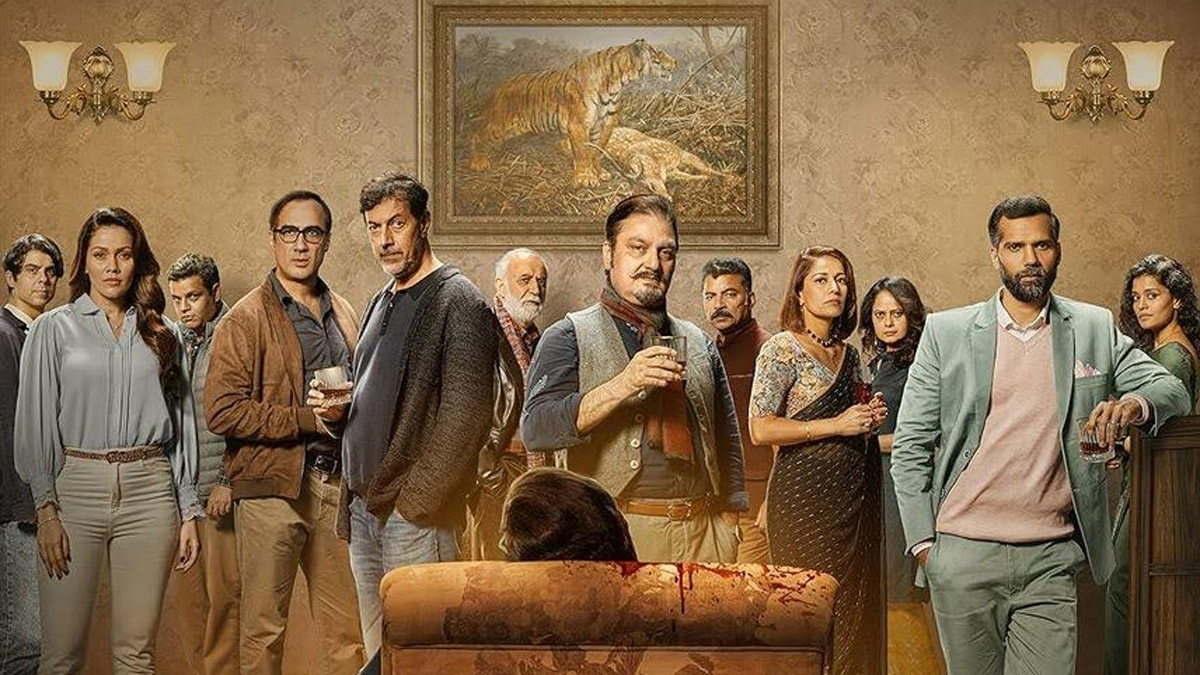
MUMBAI: Zee5 is serving up another killer collaboration and this time, the murder mystery comes with a generous side of dark humour and family dysfunction. The streaming platform has partnered with Applause Entertainment and Mithya Talkies to bring Everybody Loves Sohrab Handa, a fresh, twisted whodunnit written and directed by acclaimed filmmaker and actor Rajat Kapoor. The film will stream exclusively on Hindi Zee5 from 10 April.
The movie reimagines the classic murder mystery genre with a contemporary, darkly comic edge. It revolves around a group of friends and family who smile, drink, and celebrate together until the silence snaps and long-buried secrets spill out. The stellar ensemble cast includes Vinay Pathak, Ranvir Shorey, Waluscha De Sousa, Saurabh Shukla, Chandrachoor Rai, Neil Bhoopalam, Koel Purie, Palomi Ghosh, and Rajat Kapoor himself.
This latest offering continues the successful partnership between Zee5 and Applause Entertainment, which has previously delivered diverse hits such as Mithya, Bloody Brothers, and Jab Khuli Kitaab.
&TV Business Head of hindi Zee5 and chief channel officer Kaveri Das said, “Our collaboration with Applause Entertainment has consistently delivered distinct, high-impact storytelling. Everybody Loves Sohrab Handa is a natural progression, reinforcing our focus on genre-led content with a compelling whodunnit premise and a strong ensemble cast.”
Applause Entertainment business head for movies Sunil Chainani added, “This film adds yet another compelling layer to our slate with Rajat Kapoor’s unmistakable voice.”
Rajat Kapoor shared, “What interested me was not just the mechanics of a whodunnit, but the emotional violence that precedes physical violence. These are people who smile at each other, but there’s so much that is not said.”
The film promises razor-sharp writing, layered performances, and simmering tension, inviting viewers not just to solve the crime but to unravel the complex relationships at its heart.
If you love a good murder mystery served with wit and emotional depth, Everybody Loves Sohrab Handa looks set to be your next addictive watch. Mark your calendars, the whodunnit drops on Hindi Zee5 from 10 April.







