News Headline
Long live linear TV, courtesy of NextGenTV

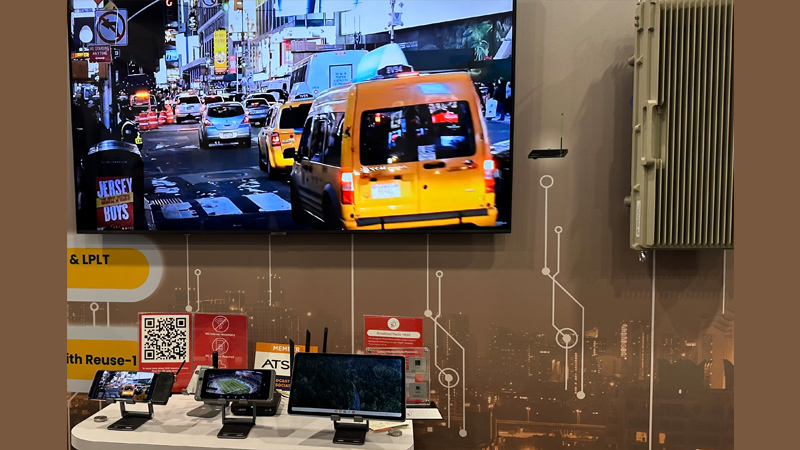
MUMBAI: Las Vegas. Normally labelled as Sin City. But in April it was all about the future of entertainment technology with the NAB Show opening with a bang. And what a bang it was. It is a hard knock for those who continue to resist the frenetic pace of technological evolution. One of these is ATSC 3.0 which is coming. Yes, even as it is spreading gradually in the US, it is being planned to come to India. That is if Sankhya Labs, Sinclair Broadcast, Doordarshan and Prasar Bharti succeed in its rollout.
I happened to see some trial broadcasts in the Las Vegas Convention Centre and it was awesome.
At early stages yet, ATSC 3.0 endeavours to wirelessly transmit data, video and audio, over the air without using the traditional terrestrial frequencies or the 4G, 5G or 6G spectrum. Also known as NextGen TV, it is a digital television standard developed by the Advanced Television Systems Committee (ATSC), offering features such as ultra-high-definition video, high-efficiency video coding (HEVC), high dynamic range (HDR), immersive audio, and interactive capabilities.

Sankhya Labs has been working on developing semiconductor solutions and software for ATSC 3.0-enabled devices. These solutions encompass various aspects of ATSC 3.0 technology, including receivers, modulators, demodulators, and related software stacks. Sankhya Labs aims to offer cost-effective and scalable solutions to enable the deployment of ATSC 3.0 infrastructure and consumer devices in India and other markets. Currently, it has developed – and continues to develop – the PCB, the software, the receiver and dongle, and set-top box designs which will then be farmed out for local manufacture.
I happened to see the transmitter developed by Sankhya at the NAB Show which will be mounted – when the service is ripe and ready to be rolled out – next to the cellular towers which dot Indian building terraces in urban and rural India. Then there is the dongle (looking like the early device we used to get connected to the internet) which will act as the receiver and can be attached to an ordinary smartphone with basic video capabilities and receive the transmitted video at almost no cost to the customer. (Remember there are more than 500 million smartphone users in this country and even if 10 per cent of them opt for ATSC 3.0 that will be a humungous base of 50 million viewers) For the home, users will have a set-top box (which Sankhya hopes to gradually decrease in size) that will sit next to the TV set to receive the signals for family viewing.
As it does for FreeDish, DD is likely to auction channels to private broadcasters who can reach viewers with another linear service, thus giving traditional TV a new lease on life and advertisers another medium to target the vast masses of television viewers. This is at a time when YouTube video, Instagram reels, free-to-air TV, and streaming services have totally disrupted satellite and cable pay TV services in India with cord-cutters, cord nevers reaching record highs. The streamers need help to retain clever viewers who are sharing passwords as well as churning when they finish watching shows that interest them in one service or another.
How long will ATSC 3.0 take to become a reality? Broadcasters, handset manufacturers, telcos have all blackballed it saying that it is a needless platform that is being created.
But Sankhya Labs and the NextGenTV committee would like it to spread tomorrow itself. Work has been going on for at least the past three to four years and it might take as much time for the government-owned broadcaster to give it a clear green signal. (I’m crossing my fingers DD moves fast once a government is formed at the Centre post the elections or a private company is given the responsibility of spreading ATSC 3.0 services in a public-private partnership.) One can be optimistic and only hope that this exciting technology which can lead to the creation of zillions of local channels monitoring local traffic conditions, weather conditions, long-distance medicine, education, etc etc comes quickly enough.
When it does arrive, it will come with the potential to revolutionise the way we consume our entertainment once again. And oodles of other services.






NEW DELHI: Hamdard Laboratories gathered a cross-section of India’s achievers in New Delhi on Friday, handing out the Hakeem Abdul Hameed Excellence Awards to figures who have left their mark across healthcare, education, sport, public service and the arts.
The ceremony, attended by minister of state for defence Sanjay Seth and senior officials from the ministry of Ayush, celebrated individuals whose work blends professional success with a sense of public purpose. It was as much a roll call of achievement as it was a reminder that influence is not measured only in profits or podiums, but in people reached and lives improved.
Among the headline awardees was Alakh Pandey, founder and chief executive of PhysicsWallah, recognised for turning affordable digital learning into a mass movement. On the sporting front, Arjuna Awardee and kabaddi player Sakshi Puniya was honoured for her contribution to the game and for pushing women’s participation onto bigger stages.
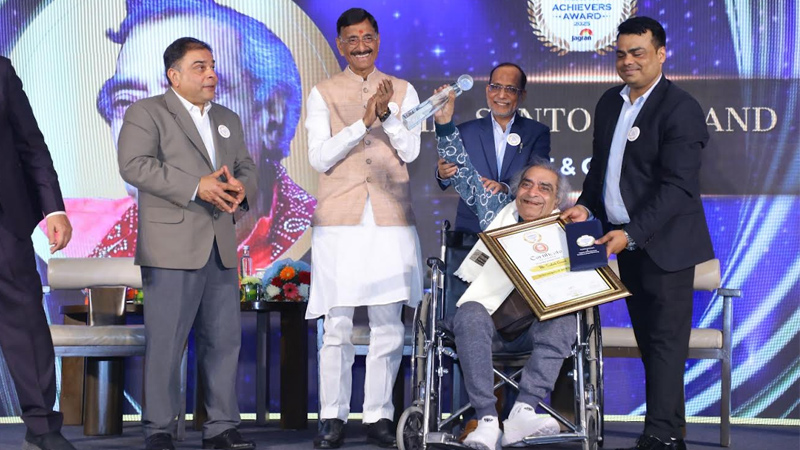
The cultural spotlight fell on veteran lyricist and poet Santosh Anand, whose songs have echoed across generations of Hindi cinema. At 97, Anand accepted the honour with characteristic humility, reflecting on a life shaped by perseverance and hope.
Healthcare honours spanned both modern and traditional systems. Manoj N. Nesari was recognised for strengthening Ayurveda’s place in national and global health frameworks. Padma shri Mohammed Abdul Waheed was honoured for his research-backed work in Unani medicine, while padma shri Mohsin Wali received recognition for his long-standing contribution to patient-centred care.
Education and social development also featured prominently. Padma shri Zahir Ishaq Kazi was honoured for decades of work in education, while former Meghalaya superintendent of Police T. C. Chacko was recognised for public service. Goonj founder Anshu Gupta received an award for his dignity-centred rural development initiatives, and the Hunar Shakti Foundation was honoured for empowering women and young girls through skill development.
The Lifetime Achievement Award went to former IAS officer Shailaja Chandra for her long career in public healthcare and governance, particularly in the traditional systems under Ayush.
Speaking at the event, Hamdard chairman Abdul Majeed said the awards were a tribute to those who combine excellence with empathy. “These awardees reflect Hakeem Sahib’s belief that healthcare, education and public service must ultimately serve humanity,” he said.
Minister Seth struck a forward-looking note, saying India’s young population gives the country a unique opportunity to become a global destination for learning, health and wellness by 2047.
The ceremony also featured the trailer launch of Unani Ki Kahaani, an upcoming documentary starring actor Jim Sarbh, set to premiere on Discovery on 11 February.
Instituted in memory of Unani scholar and educationist Hakeem Abdul Hameed, the awards have grown into a national platform that celebrates those building a more inclusive and resilient India. For one evening at least, the spotlight was not just on success, but on service with substance.







