News Headline
Life is more imaginative than fiction in a story like POW, says writer-director Gideon Raff

MUMBAI: Sometimes, coming back home after 17 years is not always a happy ending. “Prisoners of War” is the story of three Israeli soldiers, who were held captive for that many years following their kidnapping while on a secret mission with their unit.
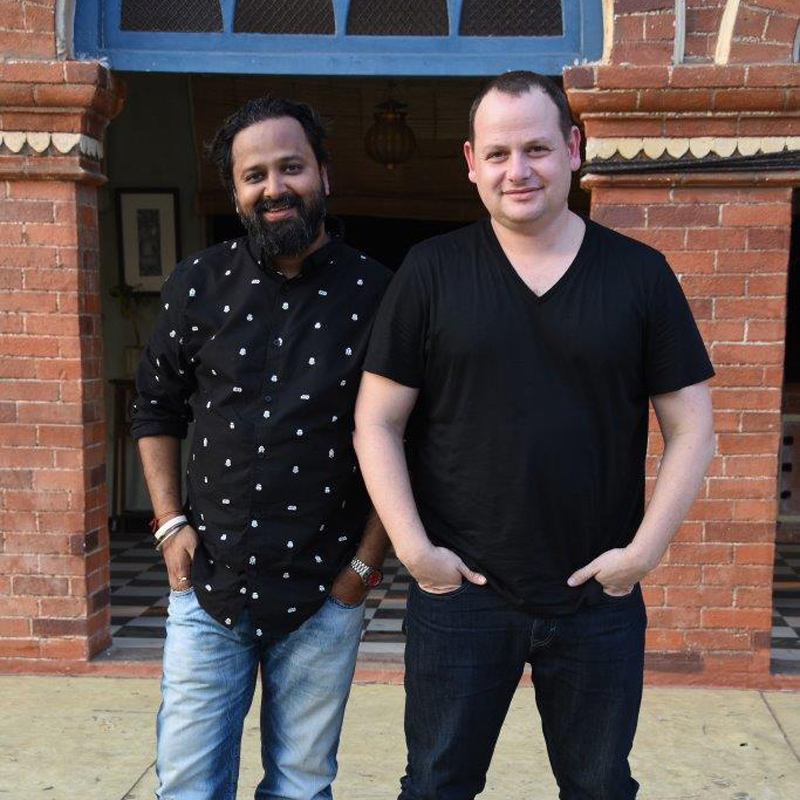
The man behind penning down a beautiful story full of emotions, Israeli film and television director, screenwriter and producer Gideon Raff was in India to visit the sets of “POW- Bandi Yuddh Ke” which is the Indian adaptation of its Israeli version “Hatufim”. It was also made into ‘Homeland’,a runaway global hit, courtesy US cable network Showtime.
“POW- Bandi Yuddh Ke” will be aired from 7 November at 10.30pm on Star Plus.

“I love the set of POW, it is very much similar to the Israeli version, Nikkhil Advani has done a great job,” says Raff in an interview with indiantelevision.com. Talking about the Indian adaptation, Raff informs that he met the entire cast of the show and loved the way Nikkhil has directed the story.
Commenting on the production cost of the original “Hatufim” (US$ 200,000), Raff says, “ It doesn’t matter how expensive the show is. Nothing can be better if connects with the audience because something is real about it.” Raff has not seen any Indian series so far, but he is eagerly waiting for the Indian version and, with “POW- Bandi Yuddh Ke”, he looks forward to watch more Indian content.
Excerpts:
How did you come up with the idea of “Prisoners of War”?
Israel is a very small country, and we all go to the army for the sake of training. The real stories of prisoners of war being brought back home always fascinated me. We learned that the government pays a high price to bring them back but we don’t hear about them once they are back. I started researching about the reasons.
When they came back, they go through a very tough journey and many of them have symptoms of Post Commencement Stress Disorder (PCSD), many of them can’t get a job, and many of them get divorced. There is a high percentage of emotional and physical diseases among the PoWs. I found that it’s worth telling the story of people coming back, and that coming back is the first episode and not the last one.
I researched and met many prisoners of war and spoke to their kids, sisters, wives, parents and doctors, and found that it’s a story that has to be told. I realized that there is a world of drama there that hasn’t been tapped into. And, it is a fact when they come back, it’s not a happy ending.
Israel is known for its air force and military. Everybody needs to serve in the forces for a fixed period. Has this created a general demand for stories that speak of the lives of soldiers?
When I started my show, I thought it’s a story of soldiers, but it’s not. It’s a story of the people of Israel, and now it’s a story of Indians. It’s not a military show in that sense.

You were also drafted into the Israeli army. Please share your experience while you were there. Do your experiences reflect in the story?
Yes, it does. I can pinpoint what are my experiences. But, the fact is that I am an Israeli, the fact is that I was in army for three years all of that is a part of my story-telling. Also, the part that I am vegan is a part of storytelling and I am gay is a part too. But, there are significant lessons from the years in the army — definitely.
How do you think the story will be received in India? Are you happy with the little changes that have been made in the storyline and setting?
I think Star (Star Plus) is very brave to take a story like this and Nikhil (Nikhil Advani ) is very brave in the way he told the story. You can only do the best as an artiste, and then it’s in the hands of the audience. I think and hope that whatever happened in the Israeli version as they recognized the reality and truth about human conditions and really wanted to see more. I hope the same happens in India as well. I support the changes that have been made.
How different was it to collaborate with the Indian broadcaster as compared to the US?
I was more hands-on in the US version, and in the Indian version, I am more of a fan and spectator. They kept me in the loop and told me stuff, they loved to hear my ideas.
How are shows such as Hatufim adapted for different territories? Which was an easier adaptation?
The Indian version is an adaptation of “Prisoners of War”, and is very close to the Israeli version in terms of storyline, plot, emotions and the journey that characters go through. In the American version, we took the interrogation, the investigation part into the heart of the show because that was a bit easy for Americans to digest.
Why is it important to have a real-life stories such as those of prisoners and then create fiction around it? Couldn’t there be pure work of fiction?
Life is more imaginative than fiction in a story like POW and people have lived this. Hence, there is a responsibility to tell a story which is incredible. It is based on real life and real facts, and then fictionalised and pushed to make little bit dramatic.






NEW DELHI: Hamdard Laboratories gathered a cross-section of India’s achievers in New Delhi on Friday, handing out the Hakeem Abdul Hameed Excellence Awards to figures who have left their mark across healthcare, education, sport, public service and the arts.
The ceremony, attended by minister of state for defence Sanjay Seth and senior officials from the ministry of Ayush, celebrated individuals whose work blends professional success with a sense of public purpose. It was as much a roll call of achievement as it was a reminder that influence is not measured only in profits or podiums, but in people reached and lives improved.
Among the headline awardees was Alakh Pandey, founder and chief executive of PhysicsWallah, recognised for turning affordable digital learning into a mass movement. On the sporting front, Arjuna Awardee and kabaddi player Sakshi Puniya was honoured for her contribution to the game and for pushing women’s participation onto bigger stages.
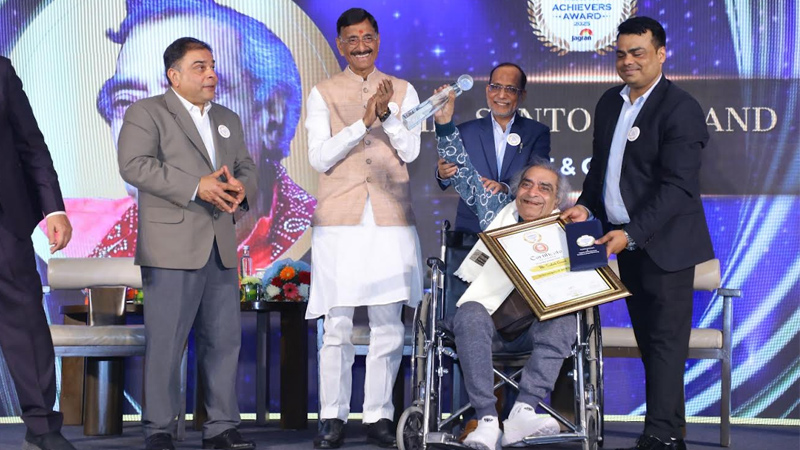
The cultural spotlight fell on veteran lyricist and poet Santosh Anand, whose songs have echoed across generations of Hindi cinema. At 97, Anand accepted the honour with characteristic humility, reflecting on a life shaped by perseverance and hope.
Healthcare honours spanned both modern and traditional systems. Manoj N. Nesari was recognised for strengthening Ayurveda’s place in national and global health frameworks. Padma shri Mohammed Abdul Waheed was honoured for his research-backed work in Unani medicine, while padma shri Mohsin Wali received recognition for his long-standing contribution to patient-centred care.
Education and social development also featured prominently. Padma shri Zahir Ishaq Kazi was honoured for decades of work in education, while former Meghalaya superintendent of Police T. C. Chacko was recognised for public service. Goonj founder Anshu Gupta received an award for his dignity-centred rural development initiatives, and the Hunar Shakti Foundation was honoured for empowering women and young girls through skill development.
The Lifetime Achievement Award went to former IAS officer Shailaja Chandra for her long career in public healthcare and governance, particularly in the traditional systems under Ayush.
Speaking at the event, Hamdard chairman Abdul Majeed said the awards were a tribute to those who combine excellence with empathy. “These awardees reflect Hakeem Sahib’s belief that healthcare, education and public service must ultimately serve humanity,” he said.
Minister Seth struck a forward-looking note, saying India’s young population gives the country a unique opportunity to become a global destination for learning, health and wellness by 2047.
The ceremony also featured the trailer launch of Unani Ki Kahaani, an upcoming documentary starring actor Jim Sarbh, set to premiere on Discovery on 11 February.
Instituted in memory of Unani scholar and educationist Hakeem Abdul Hameed, the awards have grown into a national platform that celebrates those building a more inclusive and resilient India. For one evening at least, the spotlight was not just on success, but on service with substance.







