News Broadcasting
Let entertainment rule this decade – I&B minister

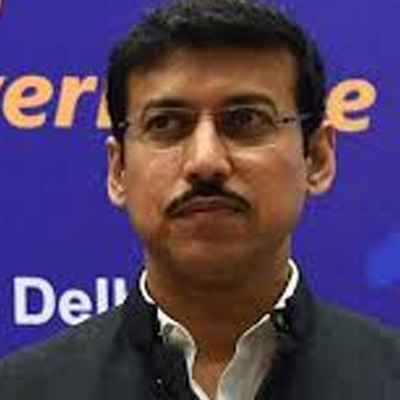
NEW DELHI: India’s information and broadcasting minister Ravi Shankar Prasad today said that the media and entertainment (M&E) industry needs to vigorously
educate the policy-makers, government officials and politicians about the vast revenue and employment-generating potential that it has, even as he declared “let this decade be the decade for entertainment sector.”
The minister was also of the opinion that conditional access (CAS) is a positive thing to happen, but it should be implemented side by side with set top boxes (STBs) being made available in the market. Prasad also said he would look into the issue of migration to revenue sharing in the private FM radio segment.
“I considered myself fairly aware of things, but today after interacting with you all, I again learnt that the global entertainment and media industry’s (including sports) turnover would be touching $1.2 trillion this fiscal,” Prasad said, adding, “That’s why I reiterate that
policy-makers, politicians and officials need to be educated more on the potential of this industry.”

Replying to a slew of issues raised by the entertainment and media industry today under the aegis of the Ficci entertainment committee, that is slated to hold M&E conclave Frames 2003 in Mumbai next month, Prasad spoke about various issues. He assured the representatives of various companies and organisations that it would be his endeavour to help in strengthening the laws and regulations to arrest the growing menace of piracy, under-declaration of cable subscriber base and duty rationalisation of components.
Prasad exhorted the industry to come to him with a structured paper on issues like piracy, involving all segments of M&E industry, which also presents a
comparative legislative view of other countries for him to take up the matter with other ministries concerned.
For example, on the issue of lax enforcement of copyright laws, that was raised by the Indian Music Industry (IMI) representatives, Prasad said, “Certain matters raised by you all need not necessarily fall within the ambit of my ministry, but let me assure you that I am willing to take up these matters with ministries like human resources development along as I get your co-operation.”
Then addressing the issue of conditional access system (brought up by the likes of SET India chief executive Kunal Dasgupta, HTMT’s Ashok Mansukhani and CETMA’s Suresh Khanna), the minister pointed out that that his agenda would be to complete the unfinished task of his predecessor Sushma Swaraj, but along with it he’d like to tread cautiously.
“CAS as a concept is good, but I would not like it to become an issue like CNG,” the minister said, hinting that before CAS is implemented certain assurances must come on availability of set-top boxes which would be needed as the government has mandated that all pay channels have to go through STBs.
His alluding to CNG (classic case of supply vs demand situation) is significant as when the Delhi government, on being directed by the Supreme Court, introduced compressed natural gas-run public transport like auto rickshaws and buses, for several months last year there was total chaos as availability of CNG was not proportionate to the demand.
“But I am ready to do anything that is best for the (cable) consumer,” Prasad said, adding that he would like to adhere to the deadline of 14 July for implementation of CAS.
Those who were present at the star-studded Ficci meet included senior government officials from the I&B ministry — who incidentally came in for high praise from the industry — filmmaker and chairman of the Ficci entertainment panel Yash Chopra, Bollywwod bigwigs like Subhash Ghai, Yash Johar and Bobby Bedi, UTV’s Ronnie Screwvala. Sahara TV president Mahesh Prasad, BBC World’s resident director Vinod Bakshi, Reliance Entertainment’s Amit Khanna, Universal Music India’s president and managing director V Lazarus, Tips’ director Ramesh Taurani, PVR’s managing director Ajjay Bijli, Atul Goel from E-city Entertainment, Ravi Nirula from Radio Mirchi, Star/RadioCity representatives, Showtime’s managing director Michael Menezes and Moving Pictures’ CMD Ramesh Sharma, Win Radio’s Gautam Radia, apart from a host of other people from sectors like animation, film distribution, multiplexes and legal fraternity.
The minister also took a swipe at Bollywood’s underworld connections and said that he would ensure transparent governance. But the film industry, on a growth path, should also reciprocate the gesture, he said. “Issues like bringing in corporate governance should be looked into by you people,” Prasad said, responding to various grievances of the likes of Ghai and Raj Tilak.
The minister further said: “If we want to make India globally competitive (in M&E), then we must have good trained professionals and that is why India could make a mark in the infotech sector.”
Some of the main issues that were raised during the two-hour meeting are as follows:
* Government sops to open institutes for training manpower for the M&E industry as also doing some R&D to locate fresh talent
* Strict implementation of laws regarding piracy and copyright (IMI represented that over the last three years the music industry’s losses have mounted to Rs 18 billion because of rampant piracy and inadequate laws).
* Removing laws that are antiquated and involves government officers approving scripts of foreign productions that result in revenue loss to the government (global companies according to Teamwork Four’s Roy spend about $ 2.5 billion annually on shooting at various locales round the globe and out of which India gets only 1 per cent because of cumbersome laws).
* Rationalisation of taxes and duties on components used in equipment meant for the M&E industry
* Simplifying rules for uplinking and other such issues as broadcasters are forced to go abroad to save on tax (Sahara’s Prasad said withholding tax is one such issue).
* Creation of a national fund to fight piracy with contribution from the government as also adoption of a national task force on issues like IPR.
* Need for co-production treaties.
* Shifting from licence regime to revenue sharing in the FM radio sector.
* Rationalisations of entertainment tax though it’s a state subject.
* Content regulation and clarity in laws regarding that.
Click here for issues related for detailed transcripts of the representations made by the constituents of the entertainment industry


News Broadcasting
UDF poised to return to power in Kerala, says Manorama-CVoter survey
Massive opinion poll projects shift in Kerala politics ahead of 2026 Assembly elections.
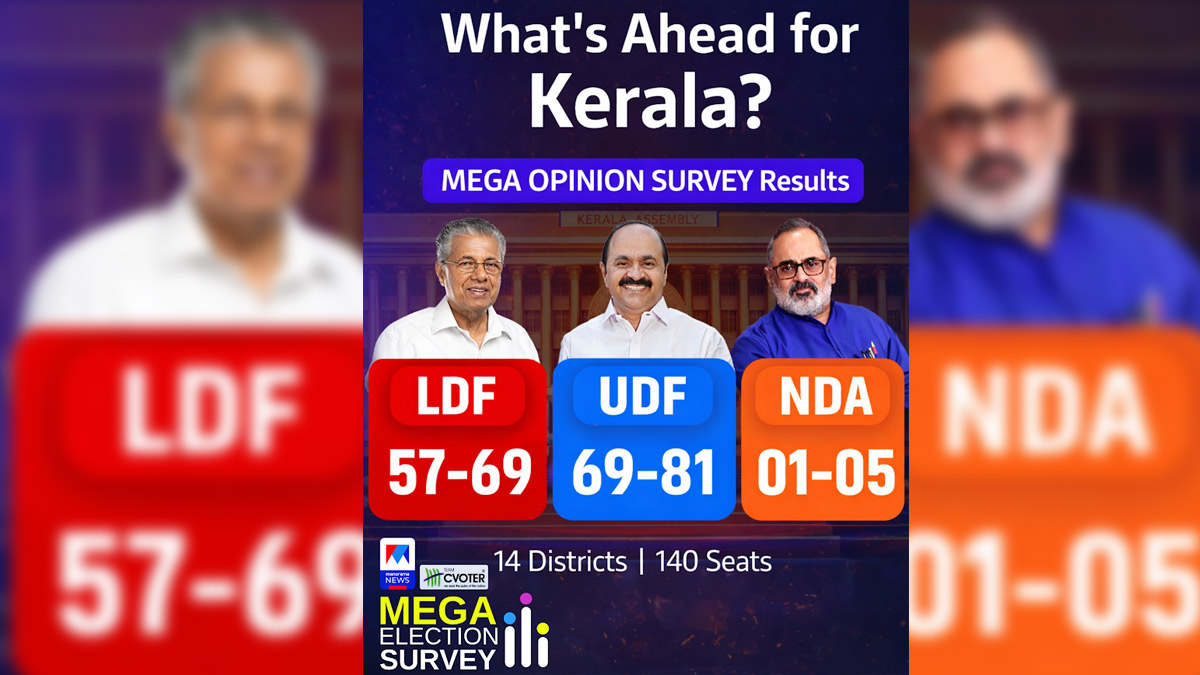
MUMBAI: The winds of change appear to be blowing through Kerala’s political landscape and this time, they seem to favour the United Democratic Front. A comprehensive mega opinion survey conducted by Manorama News in partnership with CVoter projects a potential comeback for the UDF in the upcoming Kerala Legislative Assembly Elections 2026. The survey, covering all 140 constituencies with a massive sample size of nearly 90,000 respondents, predicts the UDF could win between 69 and 81 seats.
The ruling Left Democratic Front (LDF) is expected to secure 57 to 69 seats, a significant drop from the 99 seats it won in the 2021 elections. This would mean the LDF losing 30 to 42 of its sitting seats. Meanwhile, the National Democratic Alliance (NDA), which drew a blank in 2021, is projected to open its account with 1 to 5 seats.
Region-wise, the UDF is expected to make strong gains in Malabar, winning 25 to 34 out of 48 seats, and in Central Kerala, where it could bag 29 to 33 out of 53 seats. In South Kerala, the LDF is likely to retain an edge with 21 to 25 seats, while the UDF may improve to 12 to 16 seats. The NDA could pick up 1 to 3 seats in the southern region.
The survey was conducted between 14 and 26 March 2026, with additional tracker and snap polls carried out from December 2025 to March 2026. A total of 89,693 respondents participated, ensuring representation across all demographics and social segments.
Manorama News has a strong track record of accuracy, with its previous projections closely matching the actual results of the 2019 and 2024 Lok Sabha elections as well as the 2021 Kerala Assembly polls.
In Kerala’s famously fierce political battles, this survey suggests the pendulum may be swinging back. Whether the final verdict matches these numbers or throws up another surprise, one thing is clear, the 2026 Assembly elections are shaping up to be one of the most keenly watched contests in the state’s history.






