Hindi
Legendary filmmaker D Ramanaidu is no more, mourned by film industry

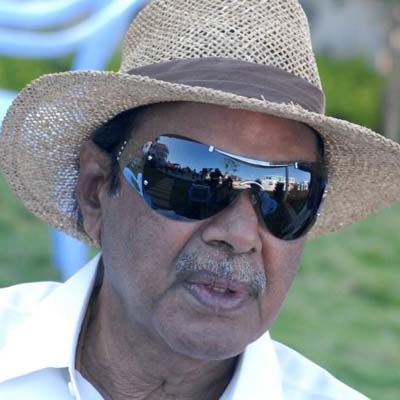
NEW DELHI: Popular multilingual film producer D Ramanaidu died this morning of prostate cancer, aged 79.
He had been suffering for the few days and is survived by his sons Suresh Babu who took over the Ramanaidu Studios in Hyderabad and younger son Venkatesh Daggubati who is a prominent actor, daughter Daggubati Lakshmi and grandsons Rana, Abhiram, Arjun, Naga Chaitanya, granddaughters Malavika, Hayavahini, Ashritha and Bhavana.

Ramanaidu made his production debut with Ramudu Bheemudu in 1964 with NTR in the lead role. The movie was a blockbuster. He founded Ramanaidu Studio in Hyderabad in 1989. He also donned grease paint and did few roles, guest appearances in several films.
He also forayed into politics and joined the Telugu Desam Party. He represented Bapatla Lok Sabha constituency (1999-2004) and lost the seat in the subsequent elections and then stayed away from politics.
Winner of the Dadasaheb Phalke Award for lifetime achievement in 2009, he produced more than 150 films in 13 Indian languages. Ramanaidu was the 41st recipient of the award instituted in 1969 (the birth centenary of D. G. Phalke, who is generally regarded as the father of Indian cinema) and the 10th producer to have received the award.
Born in June 1936, Ramanaidu was founder of Suresh Productions and holds the Guinness Book of World Records for the most films produced by an individual.
In 2012, Ramanaidu was conferred with the third highest civilian award in the Republic of India, the Padma Bhushan in recognition for his contribution to Telugu cinema.
Ramanaidu had contributed a substantial part of his earnings to numerous philanthropic purposes including the Ramanaidu Charitable Trust that was founded in 1991.
Suresh Productions was started with his childhood friends including G Rajendra Prasad (Madhavi Combines).
In 1968, B Nagireddy’s sons and Ramanaidu combined to form a company called Vijaya Suresh Combines and Suresh Movies. They did 4 movies together and in 1970, when they suffered a few losses, they decided to break up the partnership and go their separate ways.
While producing the movie Secretary, he visited Hyderabad for shooting. He had never before considered moving to Hyderabad but during the shoot, he thought of building a studio in Hyderabad. Back then, Hyderabad was an underdeveloped and hilly area and many criticised him for risking his fortune on building a studio there.
Premnagar by him in 1971 was a huge success under the Suresh Productions banner and then he produced up to 74 films from 1993 to 2005 in several languages.
Brahmaputrudu was a big commercial hit and ended up helping him pay off the debts for his studio launched in 1989. In 1990, Ramanaidu Colour Lab was launched, and in 1994 he launched Cine Village in Nanakramguda, which was used by the entire industry for outdoor shoots.
During his career as a producer, he introduced 24 directors and several actors and music directors who have since become very famous and owe their success to him. The Andhra Pradesh Government nominated him and director Bapu in November 2012.
Ramanaidu has received an honorary doctorate from Sri Venkateswara University, Tirupati.
Preminchu movie won 5 Nandi Awards during the year 2001 – 2002,
He played different roles in various films under his own banner. For the first time he played a full-length role in a film named Hope which dealt with teenage suicides, educational stress in South India. This film also won the National Film Award on other social causes in the year 2007.
He won the National Film Award for Best Feature Film in Bengali – Asukh – 1999; the Filmfare Best Film Award (Telugu) – Jeevana Tarangalu (1973); Filmfare Best Film Award (Telugu) –Soggadu (1976) and Filmfare Lifetime Achievement Award – South (2000).
His 17 Hindi films include Kuch tum kaho kuch hum kahein, Aghaaz, Hum aapke dil me rehte hain, Santaan, Pem Quaidi, Tohfa, Dildaar and Prem Nagar.


Hindi
India’s telecom subscribers cross 1.32 billion in February 2026
Broadband base swells past 1.06 billion as Jio and Airtel tighten grip on the market.
MUMBAI: India’s telecom sector is ringing in steady growth once again adding millions of new connections every month while the race for broadband supremacy continues to heat up like a fiercely contested cricket match. According to the latest data released by the Telecom Regulatory Authority of India (TRAI) on 1 April 2026, the total telephone subscriber base in the country reached 1,321.31 million at the end of February 2026. This marked a net addition of 7.31 million subscribers during the month, translating into a monthly growth rate of 0.56 per cent.
Wireless subscribers (including mobile and Fixed Wireless Access) stood at 1,273.31 million, registering a net addition of 6.97 million and a growth rate of 0.55 per cent. Within this, urban wireless connections grew to 730.75 million (growth 0.70 per cent), while rural wireless subscribers reached 542.56 million (growth 0.35 per cent).
Wireline subscribers, though much smaller in scale, showed slightly faster growth. The total wireline base increased to 47.99 million, with a net addition of 0.34 million and a monthly growth rate of 0.70 per cent. Urban areas continued to dominate wireline connections with a share of 89.41 per cent.
Overall tele-density in India improved to 92.66 per cent. Urban tele-density stood at 150.68 per cent, while rural tele-density edged up to 60.02 per cent.
The broadband subscriber base crossed a significant milestone, reaching 1,059.05 million at the end of February 2026. This reflected a healthy net addition of 6.33 million subscribers and a monthly growth rate of 0.60 per cent from January’s figure of 1,052.72 million.
Segment-wise, mobile wireless access continued to drive the majority of growth with 996.52 million subscribers. Fixed Wireless Access (including 5G FWA) added 16.51 million, while wired broadband stood at 46.02 million.
Reliance Jio Infocomm Ltd. maintained its commanding lead with 519.64 million broadband subscribers. Bharti Airtel Ltd. followed with 364.14 million, Vodafone Idea Ltd. with 129.36 million, Bharat Sanchar Nigam Ltd. with 28.70 million, and Atria Convergence Technologies Ltd. with 2.38 million.
Together, these top five players command a massive 98.60 per cent share of the total broadband market.
In the wireless (mobile) segment, private operators continued to dominate with 92.59 per cent market share, leaving public sector undertakings (BSNL and MTNL) with just 7.41 per cent.
Out of the total 1,257.29 million wireless (mobile) subscribers, 1,177.60 million were active on the peak Visitor Location Register (VLR) date, representing an impressive 93.66 per cent activity rate. Bharti Airtel led in this metric with 99.42 per cent of its subscribers active.
Meanwhile, 14.47 million subscribers submitted requests for Mobile Number Portability (MNP) in February, indicating healthy competition and customer churn across zones.
While urban areas still lead in absolute numbers, rural connectivity is slowly catching up. Rural wireless tele-density stood at 59.46 per cent, compared with the much higher urban figure of 142.32 per cent.
Fixed Wireless Access using 5G technology also showed promising traction, growing to 11.93 million subscribers. Reliance Jio and Bharti Airtel are the primary players driving this segment.
The data paints a picture of a maturing yet still rapidly expanding telecom ecosystem. With total telephone subscribers now well past the 1.32 billion mark and broadband users comfortably above 1.06 billion, India continues to solidify its position as one of the world’s largest and most dynamic digital markets.
From bustling city streets to remote villages, more Indians are staying connected than ever before proving that when it comes to telecom, the country’s appetite for growth shows no signs of hanging up anytime soon.






