News Broadcasting
Leave CAS, pricing to market forces, Guthrie urges

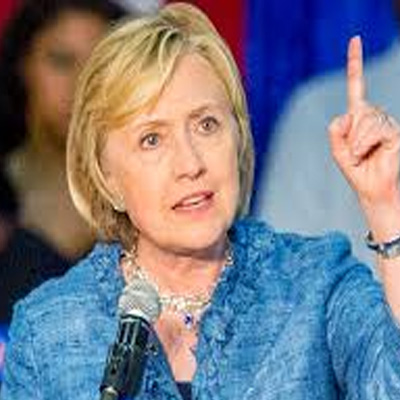
MUMBAI: Content, scale and customer service and marketing were the three key areas Star TV CEO Michelle Guthrie identified as the driving forces for the development of pay TV markets in her address at the plenary session of Frames 2004.
Referring specifically to India and the current regulatory debates going on, she stressed on three points. It would be incorrect on the part of the government to try and mandate the introduction of addressability or CAS. On the related issues of pricing as well as packaging of channels in bouquets or tiers, she said the norm globally was that these were driven by market forces and not mandated.
Packaging of channels is the norm globally and should be allowed because it allows providers to package the products they have to suit market and customer requirements, she said.

We really believe in this market and to help expand the pie, all players should work together, she added.
As a climax to the three-day convention- Creating opportunities: Vision 2020- Future Perfect?, the plenary session had Infocomm Development Authority (IDA) of Singapore assistant director Kimberley Foo talking about digital asset revolution. We, at Singapore, have a similar problem like yours. We have massive information, which is yet not organised, she said. In a bid to showcase IDAs digital capabilities, Foo spoke on how India could benefit from a collaborative deal with Singapore. With their expertise in digital cinema technology, games technology, video and audio distribution and association with the organization meant better and organised future for the Indian media.
After a technically sound pitch, Guthrie stepped up to offer her take on the pay TV scenario worldwide and especially in India. Comparing the status of Indias pay TV market to the rest of the world, she insisted that pay TV definitely has a future. Continuing the line she had taken at her maiden speech earlier in the day, Guthrie insisted that the despite the initial skirmishes, pay TV has a future. With a promise to cater to quality, interactivity, scale and consumer service, pay TVs value for money proposition would be beneficial not only for the operators but also for the consumer, she said. If you have a price cap, then there is very little initiative, she insisted.
In her speech, she also added that it was rather unwise to fight for a la carte option in pay TV scenario as logistically it was difficult to manage.
On a pointed question from indiantelevision.com that it was the free market which drove the subscriber base to 50 million in this country, and the same dynamics that has led to the conflict among players in the business, what should be role of a regulator, Guthrie would not be drawn on a clear answer except to say that there should be more dialogue between the parties.
Guthrie also sees potential in more niche channels entering India. I dont see a womens channel, health channel, gardening channel so there is certainly space for some more on the horizon, she said.


News Broadcasting
UDF poised to return to power in Kerala, says Manorama-CVoter survey
Massive opinion poll projects shift in Kerala politics ahead of 2026 Assembly elections.
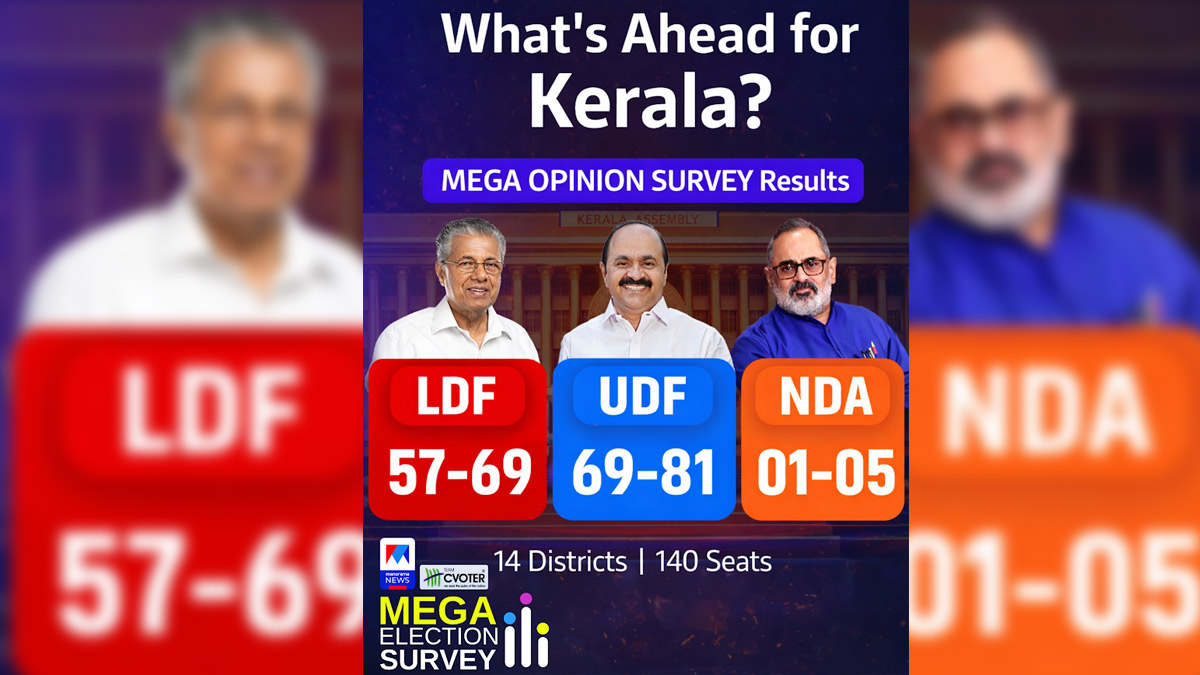
MUMBAI: The winds of change appear to be blowing through Kerala’s political landscape and this time, they seem to favour the United Democratic Front. A comprehensive mega opinion survey conducted by Manorama News in partnership with CVoter projects a potential comeback for the UDF in the upcoming Kerala Legislative Assembly Elections 2026. The survey, covering all 140 constituencies with a massive sample size of nearly 90,000 respondents, predicts the UDF could win between 69 and 81 seats.
The ruling Left Democratic Front (LDF) is expected to secure 57 to 69 seats, a significant drop from the 99 seats it won in the 2021 elections. This would mean the LDF losing 30 to 42 of its sitting seats. Meanwhile, the National Democratic Alliance (NDA), which drew a blank in 2021, is projected to open its account with 1 to 5 seats.
Region-wise, the UDF is expected to make strong gains in Malabar, winning 25 to 34 out of 48 seats, and in Central Kerala, where it could bag 29 to 33 out of 53 seats. In South Kerala, the LDF is likely to retain an edge with 21 to 25 seats, while the UDF may improve to 12 to 16 seats. The NDA could pick up 1 to 3 seats in the southern region.
The survey was conducted between 14 and 26 March 2026, with additional tracker and snap polls carried out from December 2025 to March 2026. A total of 89,693 respondents participated, ensuring representation across all demographics and social segments.
Manorama News has a strong track record of accuracy, with its previous projections closely matching the actual results of the 2019 and 2024 Lok Sabha elections as well as the 2021 Kerala Assembly polls.
In Kerala’s famously fierce political battles, this survey suggests the pendulum may be swinging back. Whether the final verdict matches these numbers or throws up another surprise, one thing is clear, the 2026 Assembly elections are shaping up to be one of the most keenly watched contests in the state’s history.






