Cable TV
LCOs may decrease in number in the next three years


KOLKATA: Lately, indiantelevision.com has done a series of reports about local cable operators (LCOs) being unhappy with the process of digitisation. A critical area of concern being the Telecom Regulatory Authority of India’s (TRAI) ruling on consumer application forms (CAFs) and billing, which according to LCOs, makes multi system operators (MSOs) the owners of their hard-won subscribers.
On the back of these reports comes another disturbing finding: experts say LCOs in the city’s DAS area – currently pegged at 7,000 to 8,000 – will drastically decrease in numbers in the next three years.
Says Mrinal Chatterjee, who runs Akash Sutra, a cable network in Bangur and its adjoining areas: “During analogue times, the share between the MSOs and us used to be 20:80 but after DAS, it has come down to 65:35. The business model is not at all lucrative enough. A major number of operators might look at other options for existence.” Many others are thinking of ways to ‘only exist’ in the cable TV business, wherein they have invested nearly 20 years of their life; he adds.

Whereas, Suresh Sethia, Siticable Kolkata director says: “Small operators will become a part of larger networks but will still be in business.” Asked to define the term ‘small operators’ Sethia goes on to explain that LCOs with 100-150 subscribers are small while those with 2,000 and more customers are big. “There are groups of LCOs having more than 10,000 subscribers that are considered large,” he says.
Sources however say that in Kolkata, most cable ops are yet to sign revenue-sharing agreements with their MSOs.
An MSO says while the company has asked affiliated LCOs to educate subscribers about the different packages on offer, LCOs are not doing their work. “Secondly, the LCOs did not pay us for each connection in the analogue regime. But with installed set top boxes and the number of connections transparent, LCOs are not supporting us properly implement the new system,” he says.
By contrast, an LCO who is part of the recently formed Bengal Broadband initiative (GIVE LINK TO OUR STORY) argues: “A multi system operator may provide cable TV services directly to subscribers. They don’t need our services and we are not mere collection agents. So, I will try to become a MSO.”
Another cable op questions: “Filling up forms to gather information about viewers’ preferences coupled with sharing of network could result in monopoly of MSOs. Where are we in the system?”
According to Swapan Chowdhury, convener of the Cable Operators Digitalisation Committee of the Association of Cable Operators, the authorities must do something in favour of operators. But he is quick to assure that people who have spent years in this industry will be here and ‘nothing will change’.
Corpus Media consultant GK Viswanath corroborates Chowdhury’s view and says: “LCOs will not leave the industry. They’ve spent time and money here. LCOs will be the franchisees or payment collectors.” Going forward, he feels the small LCOs will merge with the MSOs and not with big LCOs.




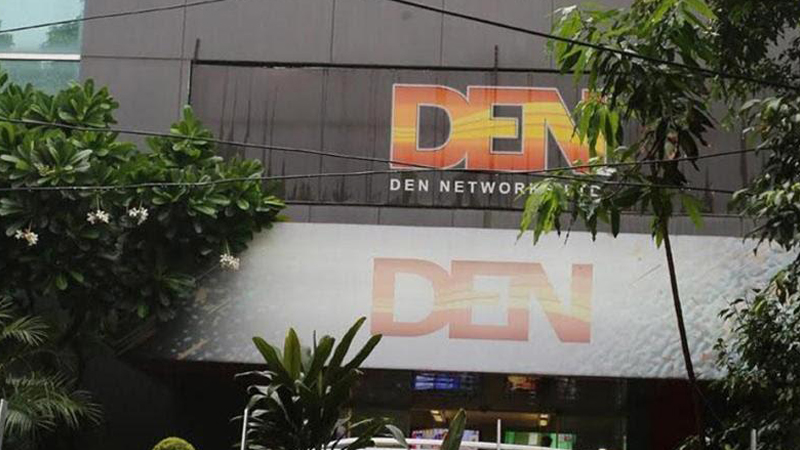
MUMBAI: When margins wobble, liquidity talks and in Q3 FY25-26, cash did most of the talking. Den Networks Limited closed the December quarter with consolidated revenue of Rs.251 crore, marginally higher than the previous quarter but down 4 per cent year-on-year, even as profitability stayed resilient on the back of strong cash reserves and disciplined cost control.
Subscription income softened to Rs.98 crore, slipping 3 per cent sequentially and 14 per cent from last year, while placement and marketing income offered some cheer, rising 15 per cent quarter-on-quarter to Rs.148 crore. Total costs climbed faster than revenue, up 7 per cent QoQ to Rs.238 crore, driven largely by higher content costs and operating expenses. As a result, EBITDA dropped sharply to Rs.13 crore from Rs.19 crore in Q2 and Rs.28 crore a year ago, pulling margins down to 5 per cent.
Yet, the bottom line refused to blink. Profit after tax stood at Rs.40 crore, up 15 per cent sequentially and only marginally lower than last year’s Rs.42 crore. A healthy Rs.57 crore in other income helped cushion operating pressure, keeping profit before tax at Rs.48 crore, broadly stable quarter-on-quarter despite the tougher cost environment.
The real headline-grabber, however, sits on the balance sheet. The company remains debt-free, with cash and cash equivalents swelling to Rs.3,279 crore as of December 31, 2025. Net worth rose to Rs.3,748 crore, while online collections accounted for 97 per cent of total receipts, underscoring strong cash discipline across operations, including subsidiaries.
In short, while Q3 showed signs of operating strain, the financial backbone remains solid. With zero gross debt, steady profits and a formidable cash war chest, the company enters the next quarter with flexibility firmly on its side proving that in uncertain markets, balance sheet strength can be the best growth strategy.