GECs
Large US broadcasters to profit from DTV bill: S&P Equity Research


MUMBAI: With the growing likelihood that the US House and Senate will pass the Digital Transition and Public Safety Act of 2005 early next year, Standard & Poor’s (S&P) Equity Research forecasts that large media operators may be in the best position to exploit the many opportunities the new legislation creates.
The announcement was made on Standard & Poor’s MarketScope, the firm’s electronic platform for financial advisors and asset managers featuring intra-day market commentary and independent investment research and analysis.
In effect, the current bill wending its way through both houses of Congress sets a Digital Television (DTV) “hard date” of 17/2/2009. By that time local TV broadcasters would surrender analogue broadcast spectrum to the US government. This process could fetch over $10 billion in a public auction.

Standard & Poor’s equity analyst for the Broadcasting, Cable & Satellite industries Tuna Amobi says that the final Bill may also include a pro-consumer provision on the potentially thorny issue of government subsidies for digital-to-analogue down converter boxes for qualifying US households.
In terms of impacts on specific companies’ fortunes, Amobi suggests that these developments will continue to favor larger media operators. “Local TV broadcasters that are part of media conglomerates such as Disney Viacom and News Corp’s Fox TV, mostly with leading O&O stations in major US markets, are well-positioned to negotiate adequate “in-kind” compensation, including further launches of branded cable networks, or increasingly, forced carriage of multiple digital streams.
Amobi states, “Conspicuously missing from the proposed DTV Bill is the intertwined issue of digital ‘multi-cast must-carry’ — which would address the pre- and post-DTV mandate
for cable carriage of dual analogue/digital broadcast signals, as well as multiple digital streams from local TV stations.”
Still, with a total of $1.5 billion designated to subsidise what S&P estimates to be over 20 million US homes relying exclusively on free over-the-air broadcasting, combined with 35 million or so analog cable homes (in many cases several homes with multiple TV sets), the proposal could fall short of insuring an orderly transition.
While the US cable industry scored a key win with a favorable FCC vote on digital multicasting earlier in 2005, the issue is likely to resurface on the Congressional agenda in 2006, perhaps through a separate Bill or an Appropriations amendment. Over the course of the DTV transition, however, Amobi expects local TV broadcasters to increasingly attempt to extract additional revenues from cable operators,
through increased “cash-for-carriage” demands for retransmission consent.
S&P believes that not all operators will do as well by the legislation. Amobi predicts a possible squeeze for smaller cable operators such as Mediacom, RCN, Insight or Cable One, and similarly for independent local broadcasters such as LIN TV, Young Broadcasting and Hearst Argyle – many of who now already face declines in network compensation, amid tepid growth in traditional ad revenues.
“Furthermore, bigger cable operators such as Comcast, vertically integrated Time Warner or well-clustered Cablevision, with relatively manageable spectrum constraints, are likely to face relatively minimal DTV or retransmission consent exposure,” adds Amobi.






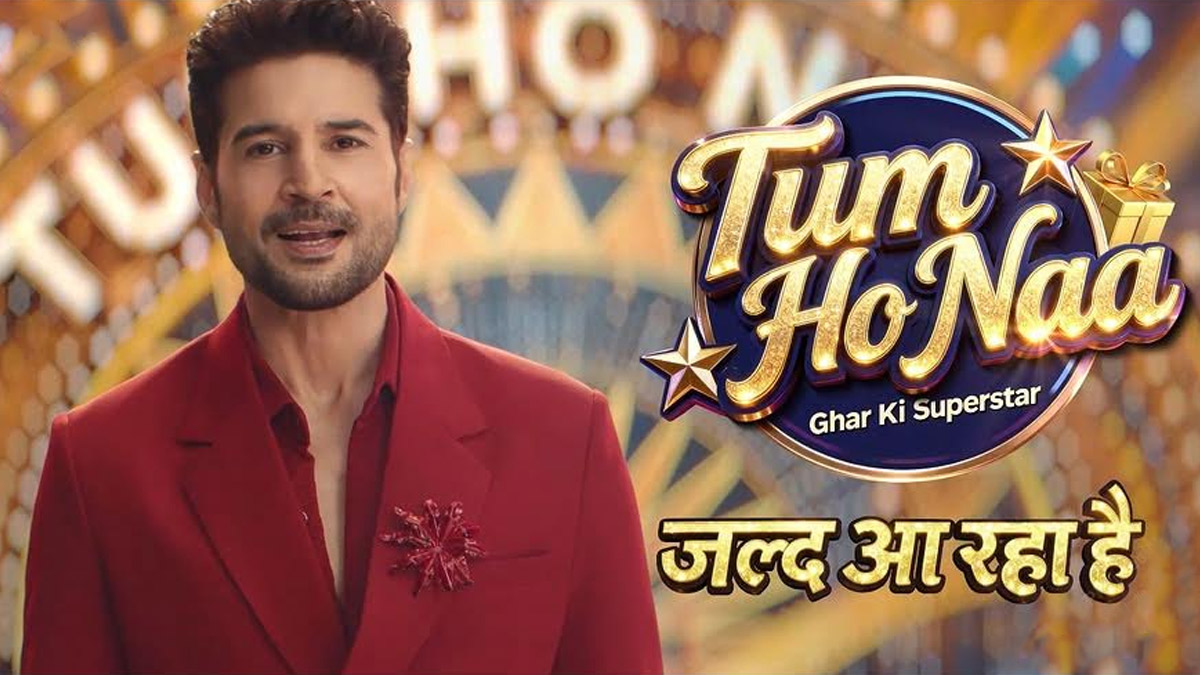
MUMBAI: Lights, camera… connection because this time, the game isn’t just about winning, it’s about who’s with you. Sony Pictures Networks India is gearing up to launch a new reality game show, Tum Ho Naa, expanding its unscripted slate with a format that promises both emotion and engagement.
The show will premiere soon on Sony Entertainment Television and stream on Sony LIV, with Rajeev Khandelwal stepping in as host. Known for his measured screen presence and selective choices, Khandelwal’s return to television adds a layer of familiarity and credibility to the upcoming format.
While specific details of the gameplay remain under wraps, the positioning suggests a reality format that leans as much on emotional resonance as it does on competition, an increasingly popular blend in Indian television, where audiences are gravitating towards content that offers both stakes and storytelling.
Khandelwal, reflecting on his return, noted that his choices have often been guided by instinct rather than convention, describing Tum Ho Naa as a project that feels “close to the heart”. His association also signals Sony’s continued focus on anchoring new formats with recognisable faces who bring both relatability and depth.
The launch comes at a time when broadcasters are doubling down on original non-fiction formats to drive appointment viewing, even as digital platforms expand parallel reach. By placing the show across both linear television and OTT, Sony appears to be aiming for a dual-audience strategy capturing traditional viewers while engaging digital-first consumers.
As the countdown to premiere begins, Tum Ho Naa positions itself not just as another game show, but as a reminder that sometimes, the biggest prize on screen isn’t the jackpot, it’s the journey shared along the way.






