News Headline
‘Language feeds can get us 30 per cent more viewership’ : Shashi Kalathil – Neo Sports CEO

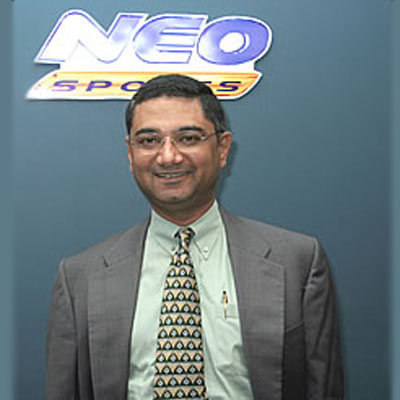
Neo Sports has had a testing time. The distribution deal with Star did not work out and the two channels – Neo Sports and Neo Sports Plus – did not find space on cable networks. This, in turn, impacted ad revenues.
Now with Australia and Pakistan touring India, Neo is ramping up the distribution of its two channels. And it is hoping that strong content will drive in viewership and revenue.
In an interview with Indiantelevision.com's Ashwin Pinto, Neo Sports CEO Shashi Kalathil reveals the gameplan for the company.

Excerpts:
|
Has Neo Sports gone through a rough weather ever since its launch almost a year back? |
||
|
What were the factors that made you terminate the distribution contract with Star and decide to do it on your own? |
||
|
Did it also badly impact your ad revenue? |
||
|
How have you worked out on your distribution strategy? |
||
|
Since the matches have to be shared with Doordarshan, doesn't it affect the kind of deals that Neo is able to strike with the cable operators? We have a situation where the pubcaster does not bid for cricket but takes feed when it wants to do so. Besides, there is the issue of encryption. |
||
|
What was the write off that Neo Sports got from BCCI due to the non-encryption of DD's signals? |
||
|
Right now there are a lot of cricket rights coming up for grabs. Is Neo Sports going after any of these or are you first trying to justify the BCCI investment? If someone gets the BCCI rights which are huge, you will see polarisation happening around the ICC rights. These two rights are the definitive ones in the cricket world; nothing else comes close. About 70 per cent of cricket that India plays in the next 13 months will be on Neo. That is an awesome depth to have. |
||
|
For the Australia and Pakistan tours, in terms of coverage what are the kind of innovations being looked at? We are looking at virtual advertising and programming innovations. We are also looking at interactivity on DTH. |
||
|
How challenging is it to push up ad rates to match rising acquisition costs? There is also a proliferation of general entertainment and movies channels which is resulting in further fragmentation. This will make the monolithic viewership of cricket more cost effective for brands and more valuable. Break viewership is becoming a serious issue for advertisers. On movie channels, often the break might be too long and people surf. Cricket's format is built to counter this. You will eventually be able to do multiple visual feeds for advertising. Now, though, it is still expensive and messy. With addressable delivery platforms like DTH coming in, the dependence on advertising will gradually fall. |
||
|
||
|
How would you describe the perception of cricket at the moment among viewers and advertisers? There is huge interest in the Australia series as it takes place during the festive season. Cricket in media parlance offers viewership that other programming cannot match. This will not change. |
||
|
Which are the clients with whom Neo Sports has signed long term deals? |
||
|
How many anchor sponsors do you want to have? |
||
| During the World Cup there was a lot of grumbling about the deluge of ads. Steve Waugh went public about it in a column. What is Neo Sports' gameplan to ensure that commercial considerations do not interfere with viewer enjoyment? Cricket has a certain format which allows you space for ads – between overs, when a wicket falls, and also during the lunch interval. I think that the World Cup was a situation where matches were going beyond midnight. So perhaps the broadcaster was trying to get in as many ads as possible in the first half as viewership would certainly drop precipitously during the second half. |
||
|
In terms of domestic cricket with the push that has been given to it by Neo Sports, has there been any increase in viewership? We don't air every domestic match. Cricket is tiered at various levels. We broadcast the best part of it. I have heard arguments about having less matches and fewer teams which I will leave for the administrators to settle. But at the end of the day, a Ranji Trophy final has value. It is the question of packaging it. There is also an awareness issue. People have not gotten used to watching domestic cricket. However when they find that the coverage quality is as good as what you get for an international match, there is stickiness. Last year's data shows that domestic cricket has potential. It is for us to develop that. |
||
| However, the ad fraternity does not seem to be getting on board domestic cricket. Is there a perception problem in the market? The product needs to be developed and defined. Once you do that and take it to the advertiser, it will draw interest. But it will not happen overnight. There is still work to be done. |
||
|
What is the status regarding your second channel Neo Sports Plus? Neo Sports Plus also airs other sports like German soccer, Italian league. We have badminton, cycling, motorsports. We have also found that rugby got a strong niche viewership among males. Can we flesh out the definition of Neo Sports Plus to go beyond cricket? That is something we are working on. Other sports have a growing niche. In the long term, you can grow it to a mass level like what EPL has done. Activities were done that led to the product definition being unique. However, no other sport can substitute cricket. The assumption that if India does poorly, a cricket fan will watch another sport is wrong. Our research tells us that a lot of ODI watchers in India do not watch any other sport. |
||
| Could you shed light on the investments made in technology? We are set to go live with broadcast management system ForeTV from MSA Focus. This follows the solution's recent implementation at Neo's Mumbai headquarters for $4 million. The Fore TV Broadcast management system allows Neo Sports the ability to efficiently manage the proliferation of new revenue streams that these rights will inevitably generate. Unlike traditional systems which treat each stream separately, ForeTV offers a consolidated solution for total revenue management, encompassing income from Internet Protocol Television (IPTV), advertising, sponsorship, pay-per-view (PPV), interactive (iTV) and video on demand (Vod). This system will be fully integrated into workflow of the channel, automation, editing and financial software allowing seamless process from acquisition, production and post production, transmission and billing at the end of the process. On the production front, we have installed Vizrt Virtual studio, a virtual studio for sport production. This allows Neo to create a number of different sets for each sport and change it at the flick of a button. There is no need for storing and changing physical sets. The advantages of using Vizrt virtual studio are flexibility in different backdrops, virtual monitors in the set and incorporation of sport results directly to the set. Vizrt Graphics are template based, allowing for rapid changes and are especially suited for the ever changing sport environment. |




NEW DELHI: Hamdard Laboratories gathered a cross-section of India’s achievers in New Delhi on Friday, handing out the Hakeem Abdul Hameed Excellence Awards to figures who have left their mark across healthcare, education, sport, public service and the arts.
The ceremony, attended by minister of state for defence Sanjay Seth and senior officials from the ministry of Ayush, celebrated individuals whose work blends professional success with a sense of public purpose. It was as much a roll call of achievement as it was a reminder that influence is not measured only in profits or podiums, but in people reached and lives improved.
Among the headline awardees was Alakh Pandey, founder and chief executive of PhysicsWallah, recognised for turning affordable digital learning into a mass movement. On the sporting front, Arjuna Awardee and kabaddi player Sakshi Puniya was honoured for her contribution to the game and for pushing women’s participation onto bigger stages.
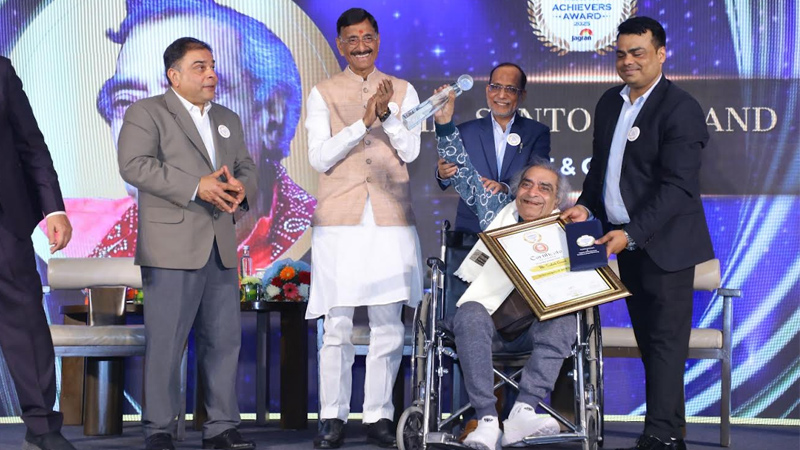
The cultural spotlight fell on veteran lyricist and poet Santosh Anand, whose songs have echoed across generations of Hindi cinema. At 97, Anand accepted the honour with characteristic humility, reflecting on a life shaped by perseverance and hope.
Healthcare honours spanned both modern and traditional systems. Manoj N. Nesari was recognised for strengthening Ayurveda’s place in national and global health frameworks. Padma shri Mohammed Abdul Waheed was honoured for his research-backed work in Unani medicine, while padma shri Mohsin Wali received recognition for his long-standing contribution to patient-centred care.
Education and social development also featured prominently. Padma shri Zahir Ishaq Kazi was honoured for decades of work in education, while former Meghalaya superintendent of Police T. C. Chacko was recognised for public service. Goonj founder Anshu Gupta received an award for his dignity-centred rural development initiatives, and the Hunar Shakti Foundation was honoured for empowering women and young girls through skill development.
The Lifetime Achievement Award went to former IAS officer Shailaja Chandra for her long career in public healthcare and governance, particularly in the traditional systems under Ayush.
Speaking at the event, Hamdard chairman Abdul Majeed said the awards were a tribute to those who combine excellence with empathy. “These awardees reflect Hakeem Sahib’s belief that healthcare, education and public service must ultimately serve humanity,” he said.
Minister Seth struck a forward-looking note, saying India’s young population gives the country a unique opportunity to become a global destination for learning, health and wellness by 2047.
The ceremony also featured the trailer launch of Unani Ki Kahaani, an upcoming documentary starring actor Jim Sarbh, set to premiere on Discovery on 11 February.
Instituted in memory of Unani scholar and educationist Hakeem Abdul Hameed, the awards have grown into a national platform that celebrates those building a more inclusive and resilient India. For one evening at least, the spotlight was not just on success, but on service with substance.






