GECs
Kool comedy debuts on Zee today

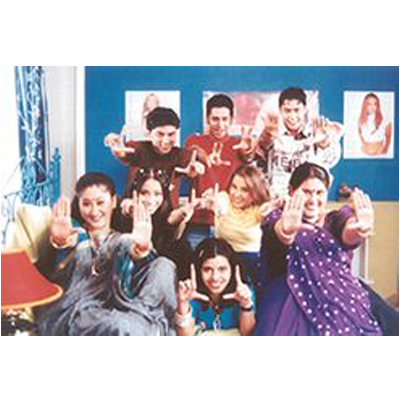
After Hum Paanch, comes another comedy from the Balaji stable on Zee.
Kitne Kool Hain Hum, if the hoardings all over Mumbai are to be believed, is a comedy in the glorious tradition of Hum Paanch. Positioned in the 8 pm slot, the storyline of KKHH revolves around a family that inherits a lot of money and moves from the interiors of Gujarat to the manic madness that’s Mumbai. The episodes trace the family’s gaffes as they try to cope with life in the big city. Based loosely on Beverly Hillbillies, KKHH will supposedly play on the simplicity of life.

Even as Balaji attempts to bring in a sense of humour into a Gujarati family’s escapades, (current rage Kyunkii… is all about a Gujarati family’s more serious doings), Star Plus has beaten it to the game by introducing a Gujarati family in Hum Saath Aath Hain, its own daily evening comedy show. Of the Hum Paanch cast, Shoma Anand is repeated. Newcomers including Jaity Bhatia, Darshan Jhaveriwala and Anurag Prappana make their debut in this show.






GECs
Asianet Television Awards 2026 celebrates women power in Malayalam TV
“She is the Colour” theme honours icons as ceremony airs on March 14 and 15 at 7 PM.

MUMBAI: If television lights up living rooms, this year Asianet decided to let women provide the colour. The Asianet Television Awards 2026 turned the spotlight firmly on women empowerment with the theme “She is the Colour”, celebrating the strength, resilience and achievements of women who continue to shape society and the Malayalam entertainment industry.
The ceremony honoured several distinguished personalities whose journeys have left a lasting cultural imprint. Among them was legendary playback singer Vimala Varma, widely recognised as the first Malayalam playback singer. The evening also paid tribute to Padma Shri awardees Devaki Amma and Vimala Menon for their exceptional contributions in their respective fields.
Leading women from the Malayalam film industry were also recognised during the event, including actor Shweta Menon, who currently serves as president of the Association of Malayalam Movie Artists, and National Award winning actor Surabhi Lakshmi.
The awards ceremony brought together a glittering lineup of actors and industry figures, including Jayasurya, Vijay Babu, Asha Sarath, Lena, Esther Anil, Anumol, Akhila Bhargavan, Sarayu Mohan, Prajod Kalabhavan, Gayathri Suresh, Sabumon Abdusamad, Swasika, Tini Tom, Sijoy Varghese, Kailash, Veena Nandakumar, Sabareesh Varma, Ansiba Hassan and Dinesh Prabhakar. Kishan Kumar, executive vice president Malayalam at JioStar, was also present at the event.
Beyond individual recognitions, the awards celebrated excellence across Malayalam television, acknowledging artists and technicians whose work continues to drive the industry forward.
The evening also offered plenty of spectacle, with elaborate dance performances, stunt acts and comedy skits performed by popular television and film personalities, turning the ceremony into a full fledged entertainment showcase.
Viewers will get to watch the celebrations when the Asianet Television Awards 2026 air on Asianet on March 14 and 15, Saturday and Sunday, from 7 pm onwards, bringing the star studded tribute to homes across Kerala and beyond.







