Cable TV
Kolkata LMOs in talks with STB and headend vendors


KOLKATA: The last mile owners (LMOs) in Kolkata are gearing up to stake claim on their subscribers. Apart from uniting and setting up their own control room and tie-ups with existing DAS license holders, the LMOs have initiated talks with the STB and headend suppliers and other vendors in India and as well as abroad.
The LMOs have already made an agreement with a DAS license holder, who will levy a minimum price against every set top box (STB). “Recently, more than 150 LMOs signed the deal. And thousands of LMOs from different MSOs are also showing interest to join in this mission,” says a LMO on the condition of anonymity.

“The LMOs have already formed a company as they intend to counter the MSO business. We are also trying to take control over our business,” informs Cable Operators Sangram Committee general secretary Apurba Bhattacharya.
He adds, “It is a survival battle; either we set up our own headend or partner with MSOs. As for the investment, every LMO will put in the amount according to their pockets. In fact, some financiers are also ready to invest in it.” He further explained that the investment would be based on the size of LMO’s network.
Tying up with existing license holders ensures LMOs power of billing to subscribers, distribution of package according to the choice of subscribers, share of carriage fee and ownership of STBs.
There are some DAS license holders who might go ahead and increase their topline and bottomline by strengthening their presence.




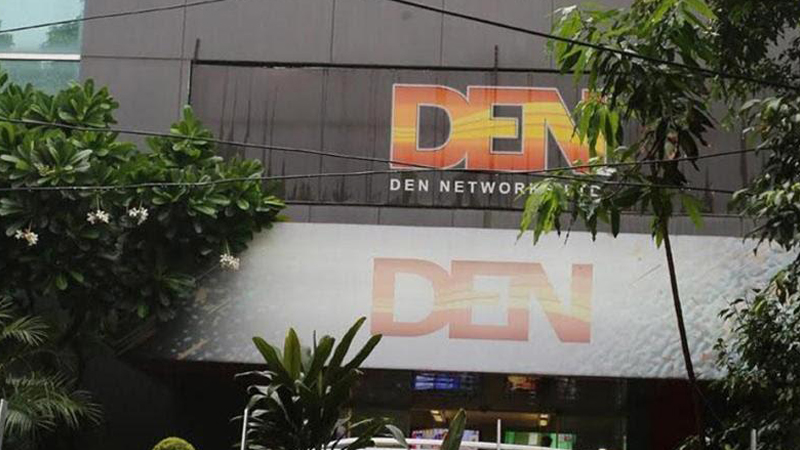
MUMBAI: When margins wobble, liquidity talks and in Q3 FY25-26, cash did most of the talking. Den Networks Limited closed the December quarter with consolidated revenue of Rs.251 crore, marginally higher than the previous quarter but down 4 per cent year-on-year, even as profitability stayed resilient on the back of strong cash reserves and disciplined cost control.
Subscription income softened to Rs.98 crore, slipping 3 per cent sequentially and 14 per cent from last year, while placement and marketing income offered some cheer, rising 15 per cent quarter-on-quarter to Rs.148 crore. Total costs climbed faster than revenue, up 7 per cent QoQ to Rs.238 crore, driven largely by higher content costs and operating expenses. As a result, EBITDA dropped sharply to Rs.13 crore from Rs.19 crore in Q2 and Rs.28 crore a year ago, pulling margins down to 5 per cent.
Yet, the bottom line refused to blink. Profit after tax stood at Rs.40 crore, up 15 per cent sequentially and only marginally lower than last year’s Rs.42 crore. A healthy Rs.57 crore in other income helped cushion operating pressure, keeping profit before tax at Rs.48 crore, broadly stable quarter-on-quarter despite the tougher cost environment.
The real headline-grabber, however, sits on the balance sheet. The company remains debt-free, with cash and cash equivalents swelling to Rs.3,279 crore as of December 31, 2025. Net worth rose to Rs.3,748 crore, while online collections accounted for 97 per cent of total receipts, underscoring strong cash discipline across operations, including subsidiaries.
In short, while Q3 showed signs of operating strain, the financial backbone remains solid. With zero gross debt, steady profits and a formidable cash war chest, the company enters the next quarter with flexibility firmly on its side proving that in uncertain markets, balance sheet strength can be the best growth strategy.






