International
Kodak seeks exit from Hollywood theatre sponsorship

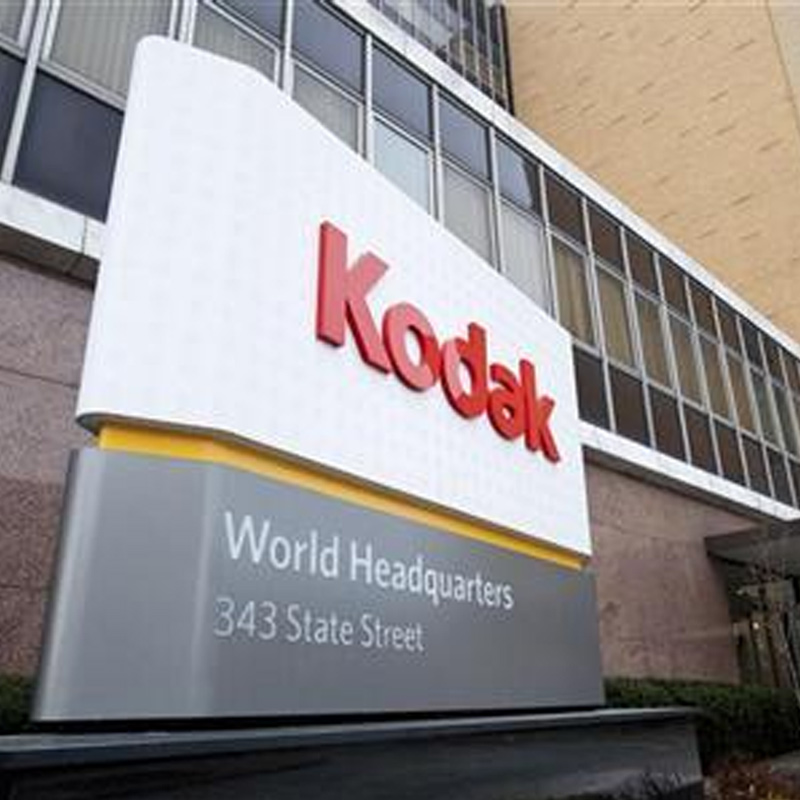
MUMBAI: New York-headquartered digital imaging company, Eastman Kodak Company, has opted for a pre-mature exit from its 20-year naming rights deal worth $75 million for Hollywood‘s Kodak Theatre, which is also the home of Academy Awards.
The development comes close on the heels of the company filing for Chapter 11 Bankruptcy Protection and obtaining a $950 million, 18-month credit facility from Citigroup to enable it to continue trading.
In a filing before U.S bankruptcy court judge, the company requested that it be relieved of the contract since company‘s debtors have determined that “any benefits on the rights does not exceed or equal the debtors‘ costs associated with the contract”.

The 3,332 seat theatre was built by CIM Group, a leading real estate and infrastructure investment firm, at a cost of $94 million.
A crown jewel of the Hollywood & Highland Center retail, dining and entertainment complex located in the heart of historic Hollywood, the Kodak Theatre was designed by the internationally-renowned Rockwell Group.
The naming of Kodak Theatre, which was expected to run through to 2020, was believed to be one of the most significant non-sports corporate sponsorships of that time.






LOS ANGELES: Acting has never been an easy profession, but in recent years, it has acquired a new existential anxiety. Artificial intelligence can now mimic faces, clone voices and, in theory at least, speak any language it is fed. The fear that actors may soon be replaced by algorithms no longer belongs exclusively to science fiction. And yet, despite the rise of digital inauthenticity, some performers remain stubbornly resistant to replacement. The reason is not celebrity, nor even talent. It is language.
On paper, this should not be a problem. AI can translate. It can imitate accents. It can string together grammatically correct sentences in dozens of languages. But acting, inconveniently, is not about grammatical correctness. It is about meaning, and meaning is where AI still falters.
Machine translation offers a cautionary tale. Google Translate, now powered by neural AI, has improved markedly since its debut in 2006. It can manage menus, emails and airport signage with impressive efficiency. What it struggles with, however, are the moments that matter most: idioms, metaphors, irony, and cultural shorthand. Ask it to translate a joke, a threat disguised as politeness, or a line heavy with emotional subtext, and it begins to unravel. Acting lives precisely in those gaps.
This matters because film language is rarely literal. Scripts, particularly in independent cinema, rely on figurative speech and symbolism to convey what characters cannot say outright. Pedro Almodóvar’s Volver is a useful example. The film’s recurring use of red operates on multiple levels: grief, desire, repression, liberation, and memory. These meanings are inseparable from the Spanish cultural context and emotional cadence. A translation may convey the words, but not the weight they carry. An AI-generated performance might replicate the sound, but not the sense.
This is where multilingual actors gain their edge. Performers such as Penélope Cruz and Sofía Vergara do not simply switch between languages; they move between cultural logics. Their fluency allows them to inhabit characters without flattening them for international consumption. Language, for them, is not an accessory but a structuring force.
Beyond European cinema, this becomes even more pronounced. Languages such as Hindi, Arabic and Mandarin are spoken by hundreds of millions of people and underpin vast cinematic traditions. As global audiences grow more interconnected, the demand for authenticity increases rather than diminishes. Viewers can tell when a performance has been filtered through approximation. Subtle errors, misplaced emphasis, and an unnatural rhythm break the illusion.
There is also a practical dimension. Multilingualism expands opportunity. Sofía Vergara has spoken openly about how learning English enabled her to work beyond Colombia and access Hollywood roles. But this movement is not a one-way export of talent into English-speaking cinema. Multilingual actors carry stories, styles and sensibilities back with them, enriching multiple industries at once.
Cinema has always thrived on such hybridity. Denzel Washington’s performances, for instance, draw on the cultural realities of growing up African American in the United States, while also reflecting stylistic influences from classic Hollywood and Westerns. His work demonstrates how identity and influence intersect on screen. Multilingual actors extend this intersection further, embodying multiple cultural frameworks simultaneously.
At times, linguistic authenticity is not merely artistic but ethical. Films that confront historical trauma, such as Schindler’s List, rely on language to anchor their moral seriousness. When Jewish actors perform in German, the choice is not incidental. Language becomes a site of memory and confrontation. It is difficult to imagine an automated voice carrying that responsibility without hollowing it out.

This is why claims that AI heralds the death of language miss the point. Language is not just a delivery system for information. It is a repository of history, humour, power and pain. Fluency is not only about knowing what to say, but when to hesitate, when to understate, and when to let silence do the work. These are not technical problems waiting to be solved; they are human instincts shaped by lived experience.
AI may one day improve its grasp of metaphor and nuance. It may even learn to sound convincing. But acting is not about sounding convincing; it is about being convincing. Until algorithms can acquire memory, cultural inheritance and emotional intuition, multilingual actors will remain irreplaceable. AI may learn to speak. But it cannot yet learn to mean.
In an industry increasingly tempted by shortcuts, language remains stubbornly resistant to automation. And for actors who can move between worlds, linguistic, cultural, and emotional, that resistance is not a weakness, but a quiet, enduring advantage.