News Broadcasting
‘Kasautii’ edges past Balaji siblings to reign over ratings


MUMBAI: Once might be perceived as the luck of the draw. But two weeks running certainly raises questions?
Balaji offspring Kasautii Zindagi Kay, for long the lesser sibling of Kyunki Saas Bhi Kabhi Bahu Thi and Kahaani Ghar Ghar Kii, has shot past both to lead the stakes for the second week in a row in the ratings just released by TAM for the week ended 24 May 2003.
Kasautii …has usurped the first three slots dominated by the other two ‘K’ serials in the last two years. More importantly, Kasautii… has helped pull the ratings scorecard into double digits once again. In a slot occupied once by the mighty Kyunki… with TVRs that went over 12, Kasautii…today is at a respectable 10.9.

However, another slow and steady winner, Aruna Irani’s Des Mein Niklla Hoga Chand, which topped the heap for the week ended 10 May, continues to hold its own against the mighty Balaji rivals, save Kasautii…, of course. Des Mein… this week appears at the fourth spot with a TVR of 9.5 (erstwhile Balaji star Amarr Upadhyay who split with the production house to try his luck in films, is back on the small screen with Des… for the last one week, incidentally).
Kyunki… makes its appearance only at the sixth place and Kahaani…. finds pride of place only further down at the eighth place, with a TVR of 8.1.
Are the two mighty pillars of Star Plus’ programming finally entering their autumn period? Another week of similar ratings and it could be said with more certainty whether there is a trend developing here.
Will the next few months see a battle royale between Ekta’s Kasautii…. and Irani’s Des Mein….? The ratings will tell.



News Broadcasting
Kamlesh Singh receives Haldi Ghati Award from MMCF
India Today Group editor honoured for three decades of journalism at Udaipur ceremony.
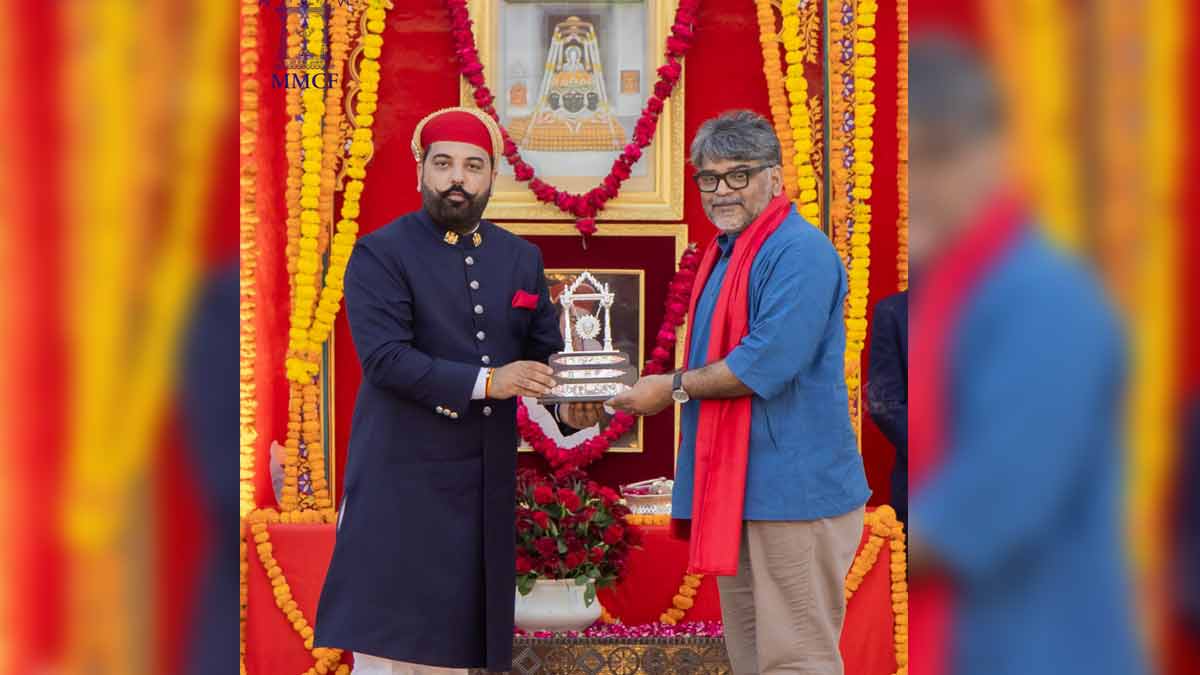
MUMBAI- Kamlesh Singh just turned a lifetime of sharp words into a shiny shield because when journalism wakes up a society, even the Maharana of Mewar wants to pin a medal on it.
The Maharana of Mewar Charitable Foundation (MMCF) conferred its prestigious Haldi Ghati Award on Kamlesh Singh, a senior editor at the India Today Group, during a ceremony in Udaipur on 15 March 2026. The national award, instituted in 1981-82, recognises “work of permanent value that initiates an awakening in society through the medium of journalism.”
Singh, who leads several editorial initiatives including Aaj Tak Radio, the Teen Taal community and The Lallantop, was presented the honour by Lakshyaraj Singh Mewar, Managing Trustee of MMCF. The citation highlighted his three decades of contributions to Indian media, innovations in digital journalism, mentoring young reporters, and his popular podcast persona “Tau” on Teen Taal, which fosters thoughtful public discourse.
The Haldi Ghati Award, named after the historic Battle of Haldighati symbolising valour and resilience, is one of four national awards given annually by MMCF. Past recipients include Tavleen Singh, Piyush Pandey and Raj Chengappa.
Other honourees this year included Padma Vibhushan Pt Hari Prasad Chaurasia, Vedamurti Devvrat Rekhe, Treeman of India Marimuthu Yoganathan, Vir Chakra Capt Rizwan Malik, and US-based researcher Molly Emma Aitken, who received the Colonel James Tod Award for contributions to understanding Mewar’s spirit and values.
In an era where headlines often shout louder than substance, the MMCF quietly reminded everyone that real journalism isn’t about noise, it’s about the quiet, persistent work that stirs society awake, one thoughtful story at a time.







