Hindi
Karisma Kapoor’s comeback film ‘Dangerous Ishhq 3D’ releasing on 11 May


NEW DELHI: ‘Dangerous Ishhq‘, the comeback film of ‘Biwi no. 1‘ Karisma Kapoor, is to be released globally on 11 May in both 2D and 3D.
Director Vikram Bhatt told indiantelevision.com that a total of 700 prints will be released in 2D and around 330 in 3D.
The mystery thriller which is based on past life regression has been produced by Reliance Entertainment, DAR Motion Pictures (A Division of DAR Media) and BVG Films (A Division of ASA).

It is the second film in India to be shot in stereoscopic 3D using state of the art technology and a leading international technical crew after the success of Haunted- 3D in 2011 which was also directed by Vikram Bhatt.
Others in the cast are Jimmy Shergill, Rajneesh Duggal, Divya Dutta, Sameer Kochar, Gracy Singh, and Ruslaan Mumtaz.
Addressing a press meet here earlier, Bhatt said he also been influenced by the book Many Lives, Many Masters by Dr Brian Weiss.
He said the film was drawn from the experiences of his own life. “I had a tryst with emptiness that took me on to the path of spirituality and the search for answers. I studied psychic meditation and then slowly the art of regression into past lives. I know that all this sounds like a lot of nonsense to the people who won‘t believe but to someone like me who has been through the fire of that experience there is no turning back.”
Asked about the casting of Karishma, he said he had approached her a long time earlier – before his film ‘Haunted‘ – but she had consented just last year.
Karishma said the story had fascinated her and it had been a challenge to play many roles and speak five different dialects in one film.
She indicated that this was not a one-film foray on her return to Bollywood and she was considering other offers.
Duggal who had also appeared in a main role in ‘1920‘ by Vikram Bhatt said he had felt nervous initially about acting with Karishma, but she put him at ease.
Dangerous Ishhq 3D is the story of Sanjana (Karisma Kapoor) – a super model – and Aditya (Rajneesh Duggall), the son of a big industrialist, who vanishes under mysterious conditions. The film is Sanjana‘s tryst with destiny – her journey into the past to save her future.
The film has music by Himesh Reshammiya, lyrics by Sameer and Shabbir Ahmed, written by Amin Hajee and dialogues by Girish Dhamija. The director of photography Pravin Bhatt captures over 500 years of Indian history in 3D and Abbas Ali Moughal heralds the action.




Hindi
Zee5 and Applause Entertainment team up for whodunnit ‘Everybody Loves Sohrab Handa’
Rajat Kapoor directs star-studded murder mystery streaming from 10 April.
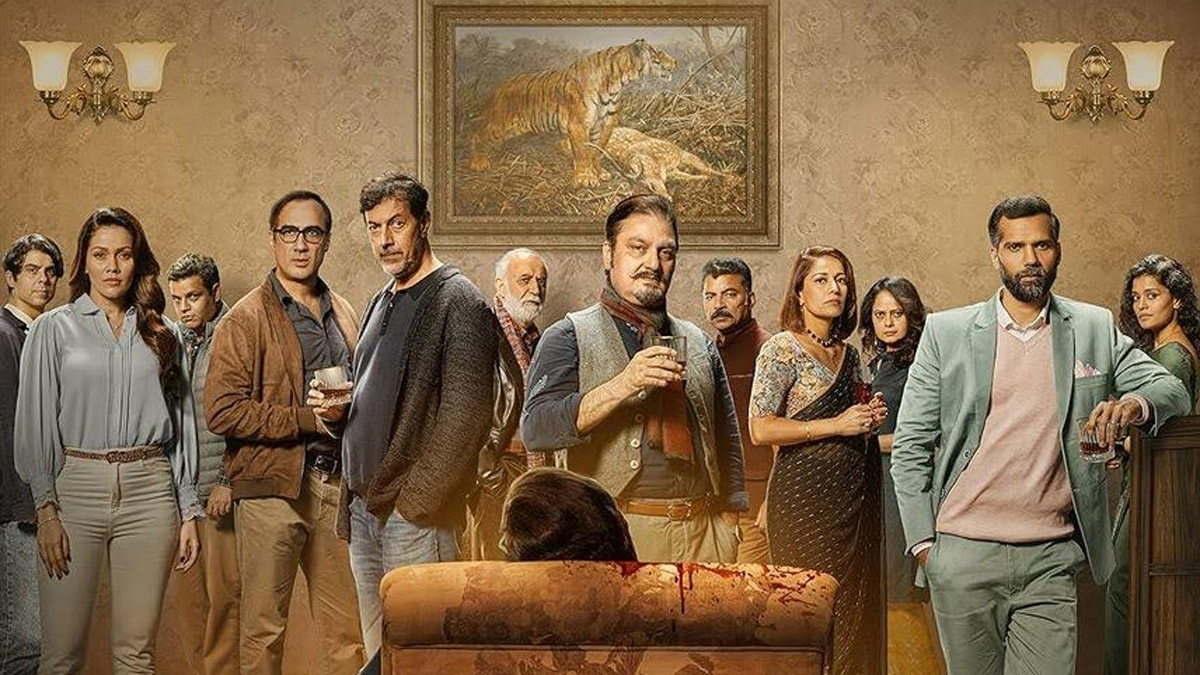
MUMBAI: Zee5 is serving up another killer collaboration and this time, the murder mystery comes with a generous side of dark humour and family dysfunction. The streaming platform has partnered with Applause Entertainment and Mithya Talkies to bring Everybody Loves Sohrab Handa, a fresh, twisted whodunnit written and directed by acclaimed filmmaker and actor Rajat Kapoor. The film will stream exclusively on Hindi Zee5 from 10 April.
The movie reimagines the classic murder mystery genre with a contemporary, darkly comic edge. It revolves around a group of friends and family who smile, drink, and celebrate together until the silence snaps and long-buried secrets spill out. The stellar ensemble cast includes Vinay Pathak, Ranvir Shorey, Waluscha De Sousa, Saurabh Shukla, Chandrachoor Rai, Neil Bhoopalam, Koel Purie, Palomi Ghosh, and Rajat Kapoor himself.
This latest offering continues the successful partnership between Zee5 and Applause Entertainment, which has previously delivered diverse hits such as Mithya, Bloody Brothers, and Jab Khuli Kitaab.
&TV Business Head of hindi Zee5 and chief channel officer Kaveri Das said, “Our collaboration with Applause Entertainment has consistently delivered distinct, high-impact storytelling. Everybody Loves Sohrab Handa is a natural progression, reinforcing our focus on genre-led content with a compelling whodunnit premise and a strong ensemble cast.”
Applause Entertainment business head for movies Sunil Chainani added, “This film adds yet another compelling layer to our slate with Rajat Kapoor’s unmistakable voice.”
Rajat Kapoor shared, “What interested me was not just the mechanics of a whodunnit, but the emotional violence that precedes physical violence. These are people who smile at each other, but there’s so much that is not said.”
The film promises razor-sharp writing, layered performances, and simmering tension, inviting viewers not just to solve the crime but to unravel the complex relationships at its heart.
If you love a good murder mystery served with wit and emotional depth, Everybody Loves Sohrab Handa looks set to be your next addictive watch. Mark your calendars, the whodunnit drops on Hindi Zee5 from 10 April.






