Movies
Kannada film starring Esha Deol enters Oscars race in mainstream awards

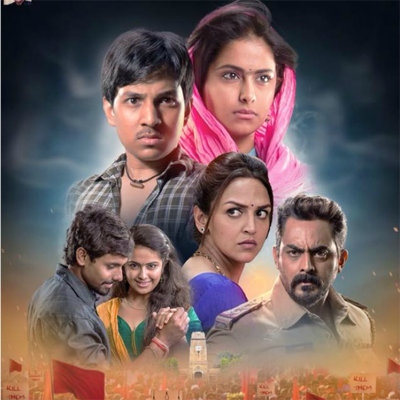
NEW DELHI: Though the Marathi film Court by Chaitnya Tamhane has been selected as the official entry for the Best Foreign language film category race in the Academy Awards, south Indian director Kishan Srikkanth’s film Care of Foothpath 2 (Kill them Young) in Kannada starring Esha Deol has made a ‘lateral’ entry.
Srikkanth is known as the boy who features in the Guinness book of records for being the youngest director of a feature film at the age of nine years.

The movie is an action film, based on the story of four slum teenagers who are believed to be criminals. Srikkanth spent two years researching juvenile crime for the movie.
Explaining the ‘lateral’ entry, Srikkanth says that he wants the film to compete in that category so that he can seek awards for technicians and actors, like Best Film, Best Director, Best Actor in a leading role, Best Adaptive Screenplay etc. under the guidelines of Academy Awards.
The film also fulfils intricate technical specifications with regard to the quality of sound, picture, and such other parameters, which they adhered to while shooting the movie. The Academy loves films, which have unique scripts and different and follow high creative standards.
Srikkanth said, “We are thankful to Esha. We approached her for the challenging role of an advocate, who specialises in juvenile crime. She absolutely loved the concept and came onboard. She was so supportive. The film is a sequel to my 2006 film, which deals with juvenile delinquency. We got in touch with the Academy a year and half ago who explained to us that besides our creative script, the strict standards and technical specifications.”
“The film has to be released in the US with all publicity in the mainstream media and get it reviewed and rated. We would be releasing the film in October in Los Angeles, and have earmarked a budget for the same,” he added.
Besides Deol, the film also stars well known TV artiste Avika Gor. Srikkanth hopes that with his film, the flood gates will open for Indian made films in the mainstream category for the Academy Awards.






Movies
Green Gold Animation creates CG character for Telugu film Rākāsā
Chhota Bheem studio expands into mainstream VFX with dialogue-free digital lead.
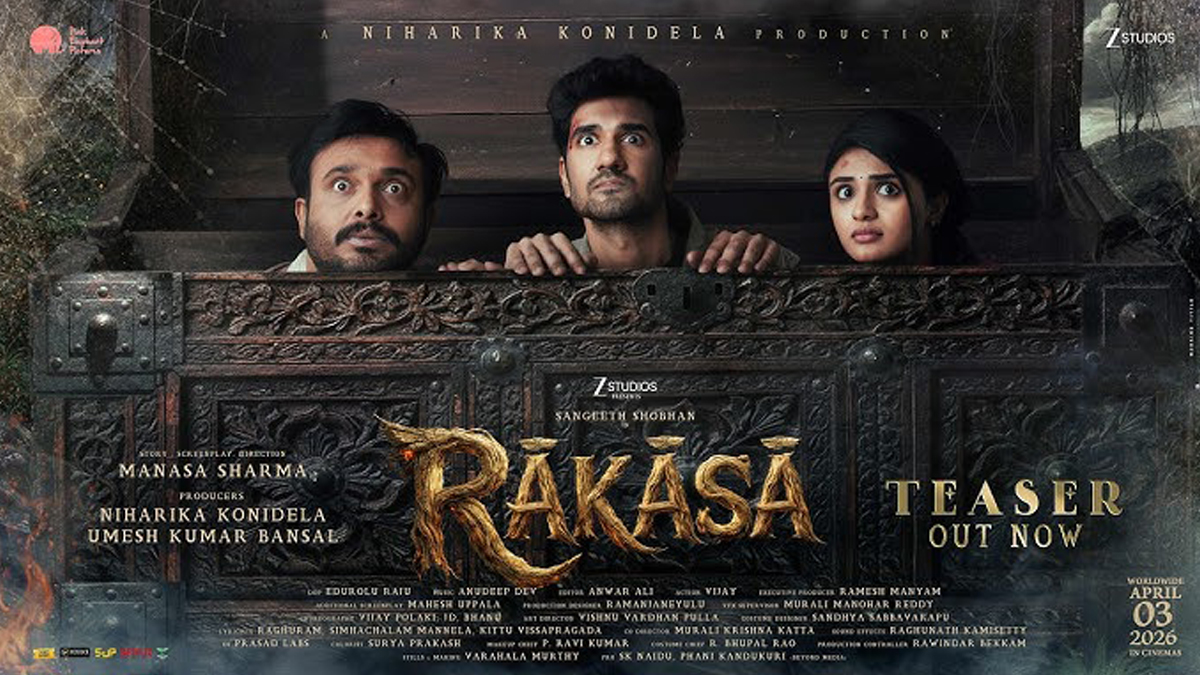
MUMBAI: Green Gold Animation, the house that gave India Chhota Bheem, is now stepping out of the kids’ zone and into the big screen with a rather silent but powerful performer. The Hyderabad-based studio’s VFX division has delivered a fully computer-generated character for the upcoming Telugu-language comedy-fantasy thriller Rākāsā, set for theatrical release on 3 April 2026. Directed by Manasa Sharma and produced by Niharika Konidela under Pink Elephant Pictures in collaboration with Zee Studios, the film marks a notable move for Green Gold into complex, character-driven work for mainstream cinema.
What makes the project stand out is its ambitious central character, a completely digital creation that does not speak a single line. Instead, the character relies entirely on animation, movement, facial expressions and body language to convey emotion and connect with audiences. This is a relatively unexplored approach in Telugu cinema at this scale.
Green Gold’s VFX team was involved from early pre-production through to final delivery, completing over 750 CG shots with a team of more than 100 artists. The work included detailed character animation, performance design and fluid simulations, all executed within tight timelines and practical budgets through strong planning and close collaboration.
Green Gold Animation founder & CEO Rajiv Chilaka said the project pushed the team to approach character creation differently. “Building a fully digital character where every emotion had to come through performance and detailing was very meaningful,” he noted.
Green Gold VFX supervisor and VFX creative director Murali Manohar Reddy added that the emotional depth had to be communicated entirely through visual performance. “This wasn’t about reinventing technology, but about using our tools and processes with precision to serve the story,” he said.
Producer Niharika Konidela praised the collaboration, saying the Green Gold VFX team understood the vision and brought strong detail and emotion to the character while working within practical constraints.
The film blends humour, action and mythological elements, following an NRI protagonist on a chaotic and magical adventure. It stars Sangeet Shobhan, Nayan Sarika, Vennela Kishore, Brahmaji and Ashish Vidyarthi, with music by Anudeep Dev.
For a studio best known for colourful kids’ animation, delivering a silent, emotionally expressive CG lead for a mainstream theatrical release is quite the plot twist. With Rākāsā, Green Gold Animation is quietly proving it can speak volumes even without dialogue.






