Hindi
Kangana shares her wedding jitters in Queens teaser

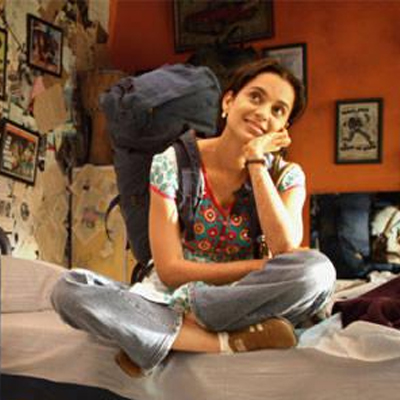
MUMBAI: Content plays a key role while promoting any film. Keeping that in mind, Viacom 18 Motion Pictures has presented an innovative teaser to promote their upcoming movie Queen, starring Kangana Ranaut.
The teaser stands out from a traditional one-minute glimpse into the entire film. Queen’s teaser has Kangana addressing the viewers, asking them for tips for her honeymoon, in an endearing, coy manner. Kangana plays the role of ‘Rani’ in the film, a shy bride-to-be who shares her wedding-jitters in the teaser.

Kangana’s character has developed an instant connect with the audience, with the teaser going viral and viewers loving the personal approach adopted by Viacom18 Motion Pictures, to present the teaser. There’s a strong word-of-mouth doing the rounds as viewers have been sharing the teaser link on all social platforms including Twitter, Facebook and Whatsapp.
A strong character, a flawless actor and a powerful script well presented with simplicity has resulted into a clutter breaking Bollywood teaser. Says Viacom18 Motion Pictures head of marketing Rudrarup Datta in a release: “Our objective is to make the audience love Rani for what she is. A simple innocent girl, who will win your heart with her honesty. The teaser is the first step towards that, which not only gets your attention but also compels you to engage. We are thrilled with the response to the teaser which will now lead into the main theatrical trailer for the film.”
Going by the initial audience response, the idea certainly seems to work for the film. Queen, directed by Vikas Bahl and produced by Viacom18 Motion Pictures is scheduled for release on 28 February, 2014.







Hindi
Rashmika Mandanna, Shanaya Kapoor and Naila Grrewal climb IMDb’s Indian celebrity rankings
Upcoming films and returning shows are driving fan interest across Bollywood and streaming

MUMBAI: Bollywood’s popularity contest has a new weekly scorecard, and the numbers are telling. IMDb’s Popular Indian Celebrities list for this week places Shanaya Kapoor at number six, buoyed by buzz around her film Tu Yaa Main. Naila Grrewal slots in at seven on the back of the returning comedy series Maamla Legal Hai, while Rashmika Mandanna climbs to eighth, riding mounting anticipation for Cocktail 2.
The list, available exclusively on the IMDb app for Android and iOS, tracks trending Indian entertainers and filmmakers each week, drawing on data from more than 200m monthly visits to the platform worldwide.
Further down the rankings, Raaka is keeping two of its biggest names in the spotlight. Deepika Padukone holds 11th position, with Allu Arjun close behind at 13th, as the film continues to find traction with audiences.
The list offers fans a weekly pulse on who is breaking through, who is holding steady, and who is fading. It is a barometer as unsparing as the box office itself.







