I&B Ministry
Kamal Haasan, Gautam Ghose join Benegal’s committee on film certification

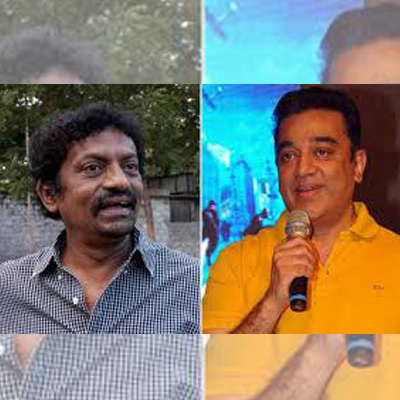
NEW DELHI: Filmmaker Gautam Ghose and actor-filmmaker Kamal Haasan have been added to the Committee headed by Shyam Benegal to suggest a paradigm that ensures that artistic creativity and freedom do not get stifled/curtailed even as films are certified.
Benegal said it had been felt that more regions of the country should be given representation on the panel.

The Committee had over the weekend held its first meeting with Information and Broadcasting Minister Arun Jaitley, Minister of State Rajyavardhan Rathore, and Secretary Sunil Arora.
The other Members of the Committee include filmmaker Rakeysh Omprakash Mehra, creative director Piyush Pandey, media veteran Bhawana Somayya, National Film Development Corporation MD Nina Lath Gupta and Joint Secretary (Films) Sanjay Murthy as Member Convenor. The Committee has been requested to submit its recommendations within two months.
When setting up the Committee on New Year’s Day, the Ministry had said that “in most countries of the world there is a mechanism/process of certifying feature films and documentaries,” an official release also said that the attempt should also be that “the people tasked with the work of certification understand these nuances.”
The recommendations of this Committee are expected to provide a holistic framework and enable those tasked with the work of certification of films to discharge their responsibilities keeping in view this framework.
The note said Indian films have a glorious history and a whole lot of Indian films have enriched the cultural milieu of the country besides making astonishing advances in technical aspects of film making.
During their deliberations, the Committee would be expected to take note of the best practices in various parts of the world, especially where the film industry is given sufficient and adequate space for creative and aesthetic expression.
The Committee will recommend broad guidelines and procedures under the provisions of the Cinematograph Act 1952, Rules for the benefit of the chairperson and other members of the Screening Committee. The staffing pattern of Central Board of Film Certification would also be looked into in an effort to recommend a framework, which would provide efficient and transparent user friendly services.




I&B Ministry
AIDCF moves TDSAT over Waves plan to stream linear TV channels
Industry body flags regulatory gap as OTT push sparks broadcast turf war
NEW DELHI: The battle between traditional television distributors and digital platforms has found its way to the courts, with the All India Digital Cable Federation (AIDCF) moving the Telecom Disputes Settlement and Appellate Tribunal (TDSAT) against Prasar Bharati’s latest OTT play.
At the heart of the dispute is Waves, Prasar Bharati’s OTT platform, which has invited applications to onboard linear satellite TV channels. Aidcf, which represents multi-system operators (msos), argues that this move sidesteps existing broadcasting rules and risks tilting the playing field in favour of digital platforms.
The federation’s petition hinges on a key provision in the Uplinking and Downlinking Guidelines, 2022. Clause 11(3)(f) allows broadcasters to downlink channels only if they provide signal decoders to recognised distribution platforms such as MSOS, DTH operators, hits operators and iptv platforms. OTT platforms, aidcf points out, do not feature on that list.
In simple terms, AIDCF’s argument is this: if OTT platforms are not officially recognised distributors, they should not be receiving broadcast signals in the first place. By inviting channels onto Waves, the federation claims, Prasar Bharati is opening a backdoor that lets broadcasters bypass long-standing rules.
The concern goes beyond legal interpretation. Aidcf says OTT platforms currently operate without a clear regulatory framework, allowing them to expand into traditional broadcasting territory without the compliance burden that cable and satellite operators must carry. That, it argues, creates an uneven contest.
There is also a warning for broadcasters. If they provide signal decoders to an OTT platform like Waves, they could risk breaching the very conditions under which their downlinking permissions were granted.
For its part, Prasar Bharati’s Waves initiative is positioned as a step towards wider access and digital reach, bringing linear television into the streaming era. But critics say the move blurs the line between regulated broadcasting and largely unregulated streaming.
The matter is expected to come up before tdsat next week. The outcome could do more than settle a single dispute. It may help define how India regulates the fast-merging worlds of television and OTT, where the lines are getting fuzzier by the day and the stakes, sharper than ever.