News Headline
Kalanithi Maran, Sun TV: the evolution

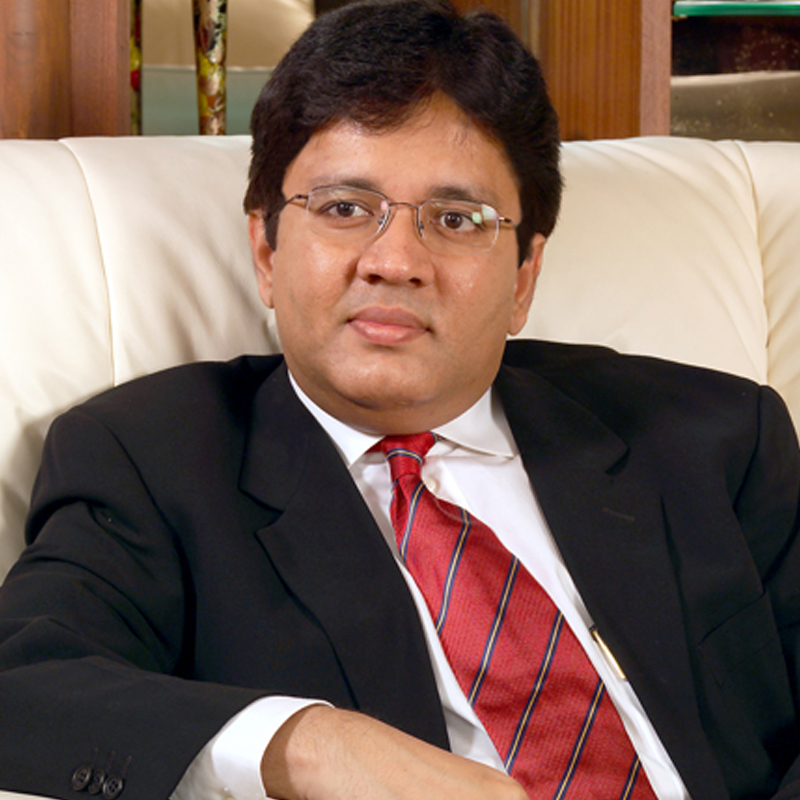
MUMBAI: In the late eighties, a scrawny young man returned to India from the US having completed his MBA from the University of Scranton. He had lights in his eyes, fascinated as he had become by television in the US during his management freshman and graduation days.
But television in India was a domain restricted to only state-owned Doordarshan. For a while, he dabbled in the print media that his family owned but the lure of the moving image proved too strong. So, he did the next best thing: he started producing a video magazine in Tamil.
Kalanithi Maran had bigger ambitions; he wanted to start a TV channel in Tamil; not just a TV channel; TV channels in the various south Indian languages. With that goal in mind, he approached the then-emerging TV baron Subhash Chandra whose Zee TV had caught the imagination of the nation with edgy fast-paced general entertainment programming.

The young man wanted a slot (one in the afternoon) on Zee TV’s service to start his own TV channel; but a Zee TV executive saw no merit in the plan and turned it down. He never got a chance to meet the goateed Chandra. It was to prove to be a colossal mistake. However, another cable TV operator–Siddhartha Srivastava–who has the distinction of launching the first Indian private TV channel (not Subhash Chandra as many commonly believe) called ATN was more giving and provided him with a slot.
Kalanithi cobbled together his savings and also got his father the late Murosali Maran to guarantee a bank loan for him. The same 25 friends who were working on the video magazine–Poomalai (which was by then plagued by piracy) and the cable TV programme Tamizh Maalai–stood by him and drew up the programming for the to-be-launched channel.
Thus, Sun TV was born on 14 April 1993 beaming off the wobbly Russian satellite called Gorizont. The programming was primarily film entertainment-based. Kalanithi and his team had to work hard to build cable TV distribution infrastructure in the state, coaxing shop owners to become cable TV operators and set up headends and distribute Sun TV so that it could be seen by Tamilians who had little else to watch in the comfort of their homes.
His efforts bore fruit: cable TV operators soon thereafter popped up all over Tamil Nadu, courtesy consumer demand for the channel. Both fuelled each other and, by 1996, Sun TV was notching up revenue of Rs 450 million with a penetration of 86 per cent in the state. Apart from Zee TV, it was the only other channel that was sporting a black bottom line at that time.
Kalanithi went about fulfilling his dream to have a southern Indian language network, just as Chandra was expanding his Zee Network. The aggressive young entrepreneur launched Udaya TV in Karnataka in 1994, took over Gemini TV soon thereafter and Surya TV followed. There has been no stopping him and, today, the group runs 33 channels and another nine are being added. His portfolio covers the genres of entertainment, news, comedy, music, movies, kids and classic.
Along the way, Kalanithi appears to have shed his inhibitions of foraying outside his comfort zone of the south–Tamil, Telugu, Kannada and Malayalam. For some time now, the Sun group has been gestating Bengali and Marathi language channels. Six to eight months from now, the two are slated to be launched and teams have been hired in Kolkata and in Mumbai. Hectic parleys are going on to decide the programming, the positioning, the distribution and marketing of the two channels.
Kalanithi also owns 42 FM radio stations, the second-largest Tamil-circulated daily newspaper in India Dinakaran, and five other magazines, DTH platform Sun Direct and the Sunrisers Hyderabad IPL cricket team. Then, there is the cable TV network SCV, which has presence in Chennai. The Sun group made an ill-informed dash to acquire and run an airline SpiceJet, which Kalanithi found challenging to do and quickly did a volte face and sold it to Ajay Singh who has since been doing a better job. And then there is the network’s new OTT offering Sun Nxt.
Recently, the group celebrated 25 years of its television existence with full front-page ads across select newspapers and a week of celebrations with its 1,500 employees nationwide. The ads crowed about Sun TV’s no 1 status in India and then went on to thank everyone saying it would not have been possible without “your support.” Silver coins, plates were given out to long-serving employees during the celebrations. Print ads aside, the Sun network did no press or public relations blitz–in the mainline nor the trade media.
That’s in keeping with Kalanithi’s innate tendency to stay away from the limelight. He and the group have been publicity shy to the T. The company does not have any media relations to speak of or have a structured communications department like the other big four networks do. Star India, Zee, Viacom18, Sony Pictures Networks Television, do. Zee TV, Viacom18 and Sony Pictures all celebrated lavishly during their individual anniversaries inviting important partners, clients, and vendors.
The shunning of the media probably stems from the fact that his roots are in one of the most important political families in the country. His grand uncle M Karunanidhi heads the DMK party, his uncles are politicians while his late father Murosali Maran held ministerial positions in various political regimes and his brother, Dayanidhi Maran, has been a minister, too.
This apart, the group also owns powerful print media titles, which serve as a very strong platform to communicate the messaging Kalanithi wants to convey.
All along, mutters have been doing the rounds that the Sun network got several benefits and favours courtesy Kalanithi’s political lineage. Allegations have also been hurled that Sun TV Network misused the clout and used strong-arm tactics with Tamil film producers demanding movie titles for broadcasting on his network to the exclusion of other television stations. And at surprising prices.
Additionally, most media went to town alleging that the Sun TV network worked as a strong supporter of the DMK party. But which news channel in India does not have political backing, leaning or favourites? And Kalanithi’s DMK leaning was probably at a time when the AIADMK was going hammer and tongs against the DMK with its own party mouthpiece Jaya TV. Even then, Sun TV’s reportage at times caused heartburn to DMK supporters as Kalanithi worked on maintaining a balance.
Moreover, over the years, most Indian TV news channels have become more blatant in their support of specific political agendas and parties–whether national or state wise or region wise. So, singling out Kalanithi as a political beneficiary is like the pot calling the kettle black.
Finally, that myth must have been totally exploded following the distancing of grand-nephew from grand uncle and the launching of a competing television network by the DMK patriarch. Also, oodles of trouble followed with Kalanithi and Dayanidhi in relation to the 2G telecom scandal. Both have been since absolved and freed of the charges by the courts.
The fact is that it is not political equations that have allowed Kalanithi to build his Sun group. It has been his savvy ability to see opportunity where others don’t, grab it and diligently make it successful. And he has done this fearlessly time and again–with the exception of SpiceJet. His radio stations are some of the more innovative ones and attract a wide demographic with a lot of it being youth. They are profitable. His newspapers give him wide reach and coverage and, in the process, media clout. And they make money.
What’s above all this is the fact that Sun is highly profitable and its stock price has been holding strong when others have not. That itself speaks highly of the confidence the investor community has in him. As a businessman and as an innovator. No other media enterprise has come even close to breaking the stranglehold he has on viewers in the south; the programmers seem to understand the pulse of the Sun Network viewers. Several have tried including smaller players and the big four. But none has managed to race ahead of the Sun network.
The Sun TV stock appears to be an investor’s darling, often times being talked of being undervalued. Both investors and shareholders have come to terms and have accepted the high pay cheques Kalanithi hands out to himself and his wife Kavery every year, ranking him among the top-paid CEOs in India.
Many scions of political leaders have been given similar silver spoons but none have been able to scale up their ventures to the level that Kalanithi and the team Sun TV have. Clearly, credit should be given to his business acumen rather than just the political lineage.
Clearly, it’s about time–during its silver jubilee year–Kala be given his due place in the media sun as an entrepreneur who has made it big. On his own steam.





NEW DELHI: Hamdard Laboratories gathered a cross-section of India’s achievers in New Delhi on Friday, handing out the Hakeem Abdul Hameed Excellence Awards to figures who have left their mark across healthcare, education, sport, public service and the arts.
The ceremony, attended by minister of state for defence Sanjay Seth and senior officials from the ministry of Ayush, celebrated individuals whose work blends professional success with a sense of public purpose. It was as much a roll call of achievement as it was a reminder that influence is not measured only in profits or podiums, but in people reached and lives improved.
Among the headline awardees was Alakh Pandey, founder and chief executive of PhysicsWallah, recognised for turning affordable digital learning into a mass movement. On the sporting front, Arjuna Awardee and kabaddi player Sakshi Puniya was honoured for her contribution to the game and for pushing women’s participation onto bigger stages.
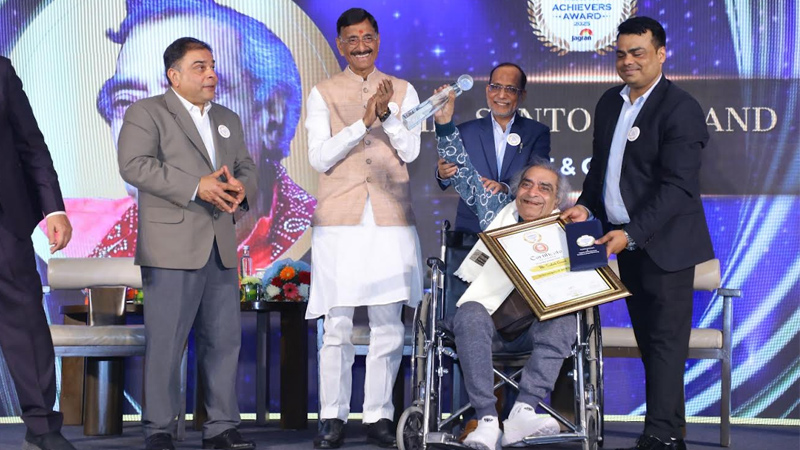
The cultural spotlight fell on veteran lyricist and poet Santosh Anand, whose songs have echoed across generations of Hindi cinema. At 97, Anand accepted the honour with characteristic humility, reflecting on a life shaped by perseverance and hope.
Healthcare honours spanned both modern and traditional systems. Manoj N. Nesari was recognised for strengthening Ayurveda’s place in national and global health frameworks. Padma shri Mohammed Abdul Waheed was honoured for his research-backed work in Unani medicine, while padma shri Mohsin Wali received recognition for his long-standing contribution to patient-centred care.
Education and social development also featured prominently. Padma shri Zahir Ishaq Kazi was honoured for decades of work in education, while former Meghalaya superintendent of Police T. C. Chacko was recognised for public service. Goonj founder Anshu Gupta received an award for his dignity-centred rural development initiatives, and the Hunar Shakti Foundation was honoured for empowering women and young girls through skill development.
The Lifetime Achievement Award went to former IAS officer Shailaja Chandra for her long career in public healthcare and governance, particularly in the traditional systems under Ayush.
Speaking at the event, Hamdard chairman Abdul Majeed said the awards were a tribute to those who combine excellence with empathy. “These awardees reflect Hakeem Sahib’s belief that healthcare, education and public service must ultimately serve humanity,” he said.
Minister Seth struck a forward-looking note, saying India’s young population gives the country a unique opportunity to become a global destination for learning, health and wellness by 2047.
The ceremony also featured the trailer launch of Unani Ki Kahaani, an upcoming documentary starring actor Jim Sarbh, set to premiere on Discovery on 11 February.
Instituted in memory of Unani scholar and educationist Hakeem Abdul Hameed, the awards have grown into a national platform that celebrates those building a more inclusive and resilient India. For one evening at least, the spotlight was not just on success, but on service with substance.








