Hindi
Joker no more a 3D project


MUMBAI: Going back to the original plan to shoot Joker directed by Shirish Kunder in 3D, the makers UTV Movies has decided that the film starring Akshay Kumar, Sonakshi Sinha and Minissha Lamba would be in the regular 2D format.
Said Disney UTV Studios MD Siddharth Roy Kapoor, “For a movie featuring a supersta, the draw is more of the star power and the content. We have seen this in case of many films over the past year that have clicked at the BO more for the film itself rather than the incremental business from 3D screens. Given this experience, we took a collective decision with Akshay, Shirish and his wife Farah Khan to complete Joker in the regular 2D format only.”
In 1947 when the maps of India and Pakistan were being drawn, the village of Paglapur didn’t find a place in either country due to an oversight. The village had the distinction of housing the largest mental asylum in the region and in the melee that ensued during partition, the asylum inmates broke loose, drove away the villagers and established their own republic Paglapur.

And that’s how it stayed for the next 60 years! While the world outside changed, Paglapur remained isolated, with no electricity, television or sanity! Now, decades after the world forgot this village, a Nasa scientist of Indian origin, Raj and his wife Manali find themselves on the road to Paglapur. Raj is working on a top secret project for creating a device to communicate with aliens. What ensues forms the crux of the film.
Kunder said, “Initially we had plans to make Joker in the 3D format. But that is not to be. Taking into account the recent responses of 3D movies, we decided to reach out to a wider audience.”
Going by recent performances of our 3D films, the genre has still a long way to go. Even Rakesh Roshan, who had earlier planned to convert Krrish 3 that was shot in the 2D format into 3D, is a little hesitant. “Whether to incorporate 3D or not depends on the length of the film,” he averred.







Hindi
Zee5 and Applause Entertainment team up for whodunnit ‘Everybody Loves Sohrab Handa’
Rajat Kapoor directs star-studded murder mystery streaming from 10 April.
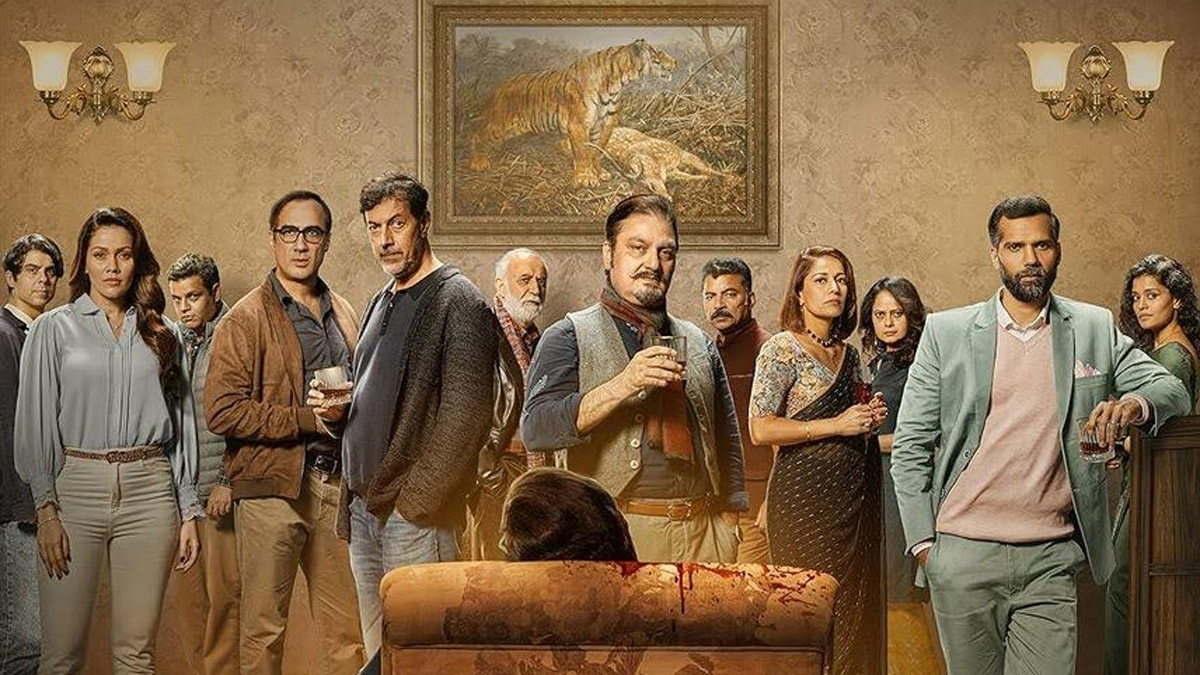
MUMBAI: Zee5 is serving up another killer collaboration and this time, the murder mystery comes with a generous side of dark humour and family dysfunction. The streaming platform has partnered with Applause Entertainment and Mithya Talkies to bring Everybody Loves Sohrab Handa, a fresh, twisted whodunnit written and directed by acclaimed filmmaker and actor Rajat Kapoor. The film will stream exclusively on Hindi Zee5 from 10 April.
The movie reimagines the classic murder mystery genre with a contemporary, darkly comic edge. It revolves around a group of friends and family who smile, drink, and celebrate together until the silence snaps and long-buried secrets spill out. The stellar ensemble cast includes Vinay Pathak, Ranvir Shorey, Waluscha De Sousa, Saurabh Shukla, Chandrachoor Rai, Neil Bhoopalam, Koel Purie, Palomi Ghosh, and Rajat Kapoor himself.
This latest offering continues the successful partnership between Zee5 and Applause Entertainment, which has previously delivered diverse hits such as Mithya, Bloody Brothers, and Jab Khuli Kitaab.
&TV Business Head of hindi Zee5 and chief channel officer Kaveri Das said, “Our collaboration with Applause Entertainment has consistently delivered distinct, high-impact storytelling. Everybody Loves Sohrab Handa is a natural progression, reinforcing our focus on genre-led content with a compelling whodunnit premise and a strong ensemble cast.”
Applause Entertainment business head for movies Sunil Chainani added, “This film adds yet another compelling layer to our slate with Rajat Kapoor’s unmistakable voice.”
Rajat Kapoor shared, “What interested me was not just the mechanics of a whodunnit, but the emotional violence that precedes physical violence. These are people who smile at each other, but there’s so much that is not said.”
The film promises razor-sharp writing, layered performances, and simmering tension, inviting viewers not just to solve the crime but to unravel the complex relationships at its heart.
If you love a good murder mystery served with wit and emotional depth, Everybody Loves Sohrab Handa looks set to be your next addictive watch. Mark your calendars, the whodunnit drops on Hindi Zee5 from 10 April.






