News Broadcasting
Jain Television into exclusive content arrangement with 18 leading publications


NEW DELHI: Jain Television, set to become the first Business & News Channel in Hindi, has entered into an exclusive content sharing arrangement with 18 leading regional publications, across the country.
Through this unique tie-up, Jain Television will share the content of its Budget special programme, Mere Sau Rupaye with these publications and get their editors and journalists on the programme.
According to Jain Television managing editor Ankur Jain, “The idea is to bring news into peoples language, even if it means simplifying the complex business and finance matters.”

“Moreover, appearance of senior mediapersons on the programme will provide unbiased and expert opinion to the viewers”, added Jain. The transcripts of Mere Sau Rupaye, aired on Jain Television every day between February 22 – March 5, 2003, between 7.00 – 10.00 pm will be published in key regional dailies such as:
North
Aaj all Editions in UP
Jansatta Express Lucknow
Prabhat Khabar Ranchi, Patna
Greater Kashmir Jammu
Navabharat Nagpur, Mumbai and Bhopal
Jansatta – Raipur
East
Prabhat Khabar Kolkata
Dharitri Bhubaneswar
Purvanchal Prahiri Assam
Amar Assam Assam
West
Loksatta – Ahmedabad
Jansatta – Ahmedabad
Sambhav – Ahmedabad
Mumbai Samachar – Mumbai
Navjyoti Ajmer
South
Siasat – Hyderabad
Vaartha (Hindi/ Telugu) Hyderabad
New Indian Express Hyderabad, Bangalore, Chennai
In line with its plans to become the first free-to-air Business and News Channel in Hindi, Jain Television is totally changing the look and feel of the current programme content, aiming to reach out to all the news watchers in 40 million Cable & Satellite (C&S) households in the country.
Jain Television has started a series of new programmes where the countrys leading economists, financial analysts, corporate heads, former prime ministers and finance minsters will give their expert opinions about the Budget. This includes series such as Mere Sau Rupaye, Agar Aap FM Hote and Sau Rupaye Ka Chutta.



News Broadcasting
News18 India launches Command Centre war explainer with Arya
New show shifts from debates to decoding global conflicts and impacts
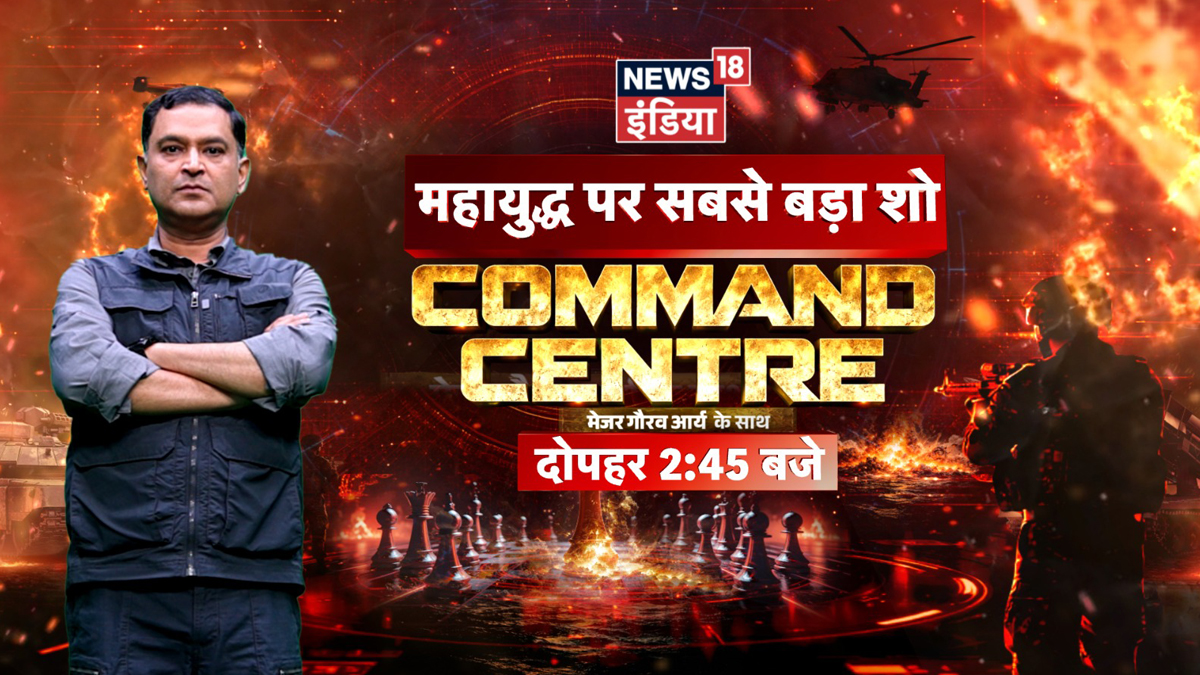
MUMBAI: News18 India has rolled out a new war-focused programme, Command Centre, featuring Gaurav Arya, as it looks to offer viewers a sharper, more grounded take on global conflicts amid rising tensions in West Asia.
Positioned as an “insider war room”, the show moves away from conventional panel debates and instead focuses on explaining military developments, decoding strategy and connecting global events to their everyday impact, from fuel prices to economic shifts.
The format leans heavily on visuals and data. The studio has been designed like a command hub, complete with large LED war maps, real-time graphics and an alert system to track developments as they unfold.
At the centre of it all is Arya, who brings his military background to simplify complex war strategies for viewers. His signature line, “Seedhi baat samjhiye”, anchors the show’s promise of clarity over noise.
News18 India managing editor Jyoti Kamal said, “Command Centre, featuring Major Gaurav Arya is designed to deliver accurate insights and a clear perspective on how evolving conflicts impact everyday life, from household budgets to national security. With expert voices analysing every development in real time, the show goes beyond headlines to decode what’s happening now, what it means, and what could come next.”
Echoing the intent, Gaurav Arya added, “In times of war, confusion is the biggest threat. With News18 India’s Command Centre, we are bringing viewers inside the war room, decoding strategies, tracking every escalation, and explaining, in the simplest terms, what it means for India and for every household. Seedhi baat samjhiye, this is where you understand not just what is happening, but what happens next.”
The weekday show will air in the afternoon slot and will also feature Gaurav Shukla, adding to its editorial depth.
With its mix of analysis, visuals and a clear focus on impact, the show reflects a broader shift in news consumption. Viewers are no longer just watching events unfold, they are looking to understand what those events mean for them.






