Hindi
Jagran Filmfest to screen over 100 films in Mumbai


NEW DELHI: Commenced on 22 September in Mumbai, the fifth Jagran Filmfest is showcasing over 100 films from more than 35 countries.
The festival was inaugurated by Irrfan Khan along with Neetu Chandra, script writer-director Vinod Pandey, screenplay writer Sanjay Masoom, festival strategic consultant Manoj Srivastava and Vinod Srivastava of the Jagran Group.

The festival began with a 106 minute film The Woods Are Still Green by Slovenian filmmaker Marko NaberSnik. Based on the First World War, the lead actor of the movie, Michael Kristof, was also present at the Filmfest.
Apart from showcasing Indian and International cinema, an integral part of the festival is the Master Class, where directors take listeners through the journey of film making.
The festival features films under several sections including Cinema of the Uprising, First World War Movies, International Competition, Indian Showcase and Country Focus (Cyprus).
The workshops include ‘Finding spaces in film festivals’, ‘Cinematography’, ‘Is independent cinema taking over Bollywood?’, ‘Starting small with shorts’ and ‘Casting? What do directors lookout for?’, ‘Reviewing cinema’, and ‘Making advertising films.’
Renowned filmmaker Phillip Cheah, Cyprus international film festival director Lokim Milonas and former Entertainment Society of Goa CEO Manoj Srivastava will also be addressing various workshops and ‘Master of Cinema’ sessions at the Festival which will continue till 28 September.
The Festival is an initiative by the Jagran Group towards creating a culture of cinema appreciation. The festival screens films across genres, documentaries and world classics apart from student films and ad films.
The festival will also hold a series of Panel Discussions with the cast and crew of the movie to discuss various elements of the films with the audiences.
Jagran Film Festival is the country’s only festival which runs across 16 cities including Delhi, Kanpur, Lucknow, Allahabad, Varanasi, Gorakhpur, Agra, Meerut, Dehradun, Patna, Ranchi, Jamshedpur, Raipur, Indore, Bhopal and Mumbai.
Films are being screened at two venues in the city: PVR Andheri, and Cinemax, Versova.




Hindi
Zee5 and Applause Entertainment team up for whodunnit ‘Everybody Loves Sohrab Handa’
Rajat Kapoor directs star-studded murder mystery streaming from 10 April.
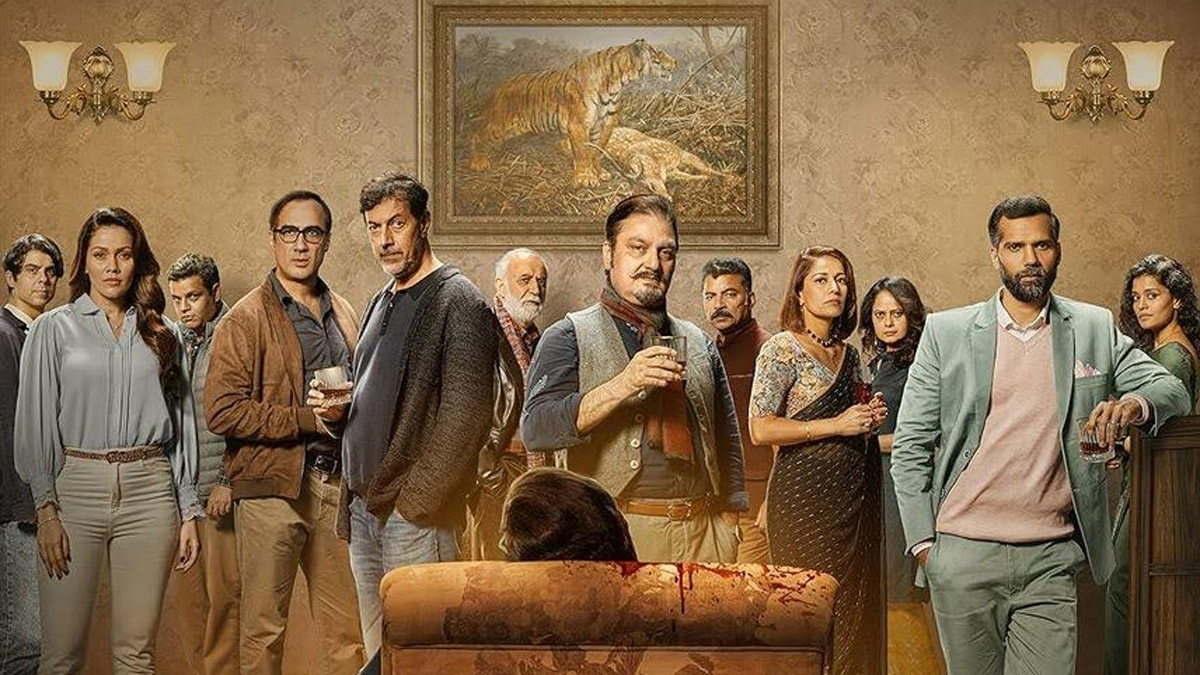
MUMBAI: Zee5 is serving up another killer collaboration and this time, the murder mystery comes with a generous side of dark humour and family dysfunction. The streaming platform has partnered with Applause Entertainment and Mithya Talkies to bring Everybody Loves Sohrab Handa, a fresh, twisted whodunnit written and directed by acclaimed filmmaker and actor Rajat Kapoor. The film will stream exclusively on Hindi Zee5 from 10 April.
The movie reimagines the classic murder mystery genre with a contemporary, darkly comic edge. It revolves around a group of friends and family who smile, drink, and celebrate together until the silence snaps and long-buried secrets spill out. The stellar ensemble cast includes Vinay Pathak, Ranvir Shorey, Waluscha De Sousa, Saurabh Shukla, Chandrachoor Rai, Neil Bhoopalam, Koel Purie, Palomi Ghosh, and Rajat Kapoor himself.
This latest offering continues the successful partnership between Zee5 and Applause Entertainment, which has previously delivered diverse hits such as Mithya, Bloody Brothers, and Jab Khuli Kitaab.
&TV Business Head of hindi Zee5 and chief channel officer Kaveri Das said, “Our collaboration with Applause Entertainment has consistently delivered distinct, high-impact storytelling. Everybody Loves Sohrab Handa is a natural progression, reinforcing our focus on genre-led content with a compelling whodunnit premise and a strong ensemble cast.”
Applause Entertainment business head for movies Sunil Chainani added, “This film adds yet another compelling layer to our slate with Rajat Kapoor’s unmistakable voice.”
Rajat Kapoor shared, “What interested me was not just the mechanics of a whodunnit, but the emotional violence that precedes physical violence. These are people who smile at each other, but there’s so much that is not said.”
The film promises razor-sharp writing, layered performances, and simmering tension, inviting viewers not just to solve the crime but to unravel the complex relationships at its heart.
If you love a good murder mystery served with wit and emotional depth, Everybody Loves Sohrab Handa looks set to be your next addictive watch. Mark your calendars, the whodunnit drops on Hindi Zee5 from 10 April.






