News Broadcasting
iTV Network launches water sustainability project to celebrate World Water Day


MUMBAI: With 22 March marking World Water Day, iTV Network and Atom Technologies in partnership with AquaKraft Projects Pvt Ltd have initiated a special programme for administering water ATMs and public utility services.
The programme will cover the length and breadth of the country including D, E, and F category railway stations under the CSR programme facilitated by IRCTC and CMAI Association of India. Forty one water ATMs and ten state of the art public utility toilets will be initially inaugurated in the key areas of North Eastern railway district. Similar types of utility stations have already been implemented in Maharashtra, Karnataka and Rajasthan and are currently being implemented in Baramati (Maharashtra) by Aquakraft.
A water ATM works like how an ATM works. A user swipes a prepaid card, following which the water dispenser’s screen flashes the chosen amount for which the user wishes to collect water and deducts the amount from the water ATM prepaid card. Public utility toilets that are connected to the network can also be used with the card.

The major issue in India on water consumption is clean drinking water, health, hygiene and sanitation. To cope with these issues, government has undertaken several initiatives like Swachh Bharat Abhiyan, Clean Ganga Project to create an enabling environment for innovation and sustainability.
iTV Network founder and promoter Kartikeya Sharma said, “iTV Network has always been at the forefront of using media as a platform for change. Availability of clean drinking water is one of the key challenges today and we at iTVnetwork are happy to work closely with Aqua Kraft to create a revolution in the distribution of clean and safe drinking water.”
Aquakraft chairman and CEO Subramany Kusnur said, “Water management is an important requirement for ecologically sustainable development. Efficient consumption of water is a major issue in today’s society, thus our project has been set up to create products that can help preserve one of our key natural resources and at the same time fulfil the requirements of clean and healthy water to the nation.”
Atom technologies CEO Dewang Neralla added, “We are extremely elated to work with Aquakraft for powering their AquATMs with our prepaid cards. We strongly believe this will benefit the clusters of villages and communities around the stations and will not only provide safe drinking water but also help foster greater financial inclusion through enablement of payments for water as well as other services using the prepaid cards.”




News Broadcasting
Kamlesh Singh receives Haldi Ghati Award from MMCF
India Today Group editor honoured for three decades of journalism at Udaipur ceremony.
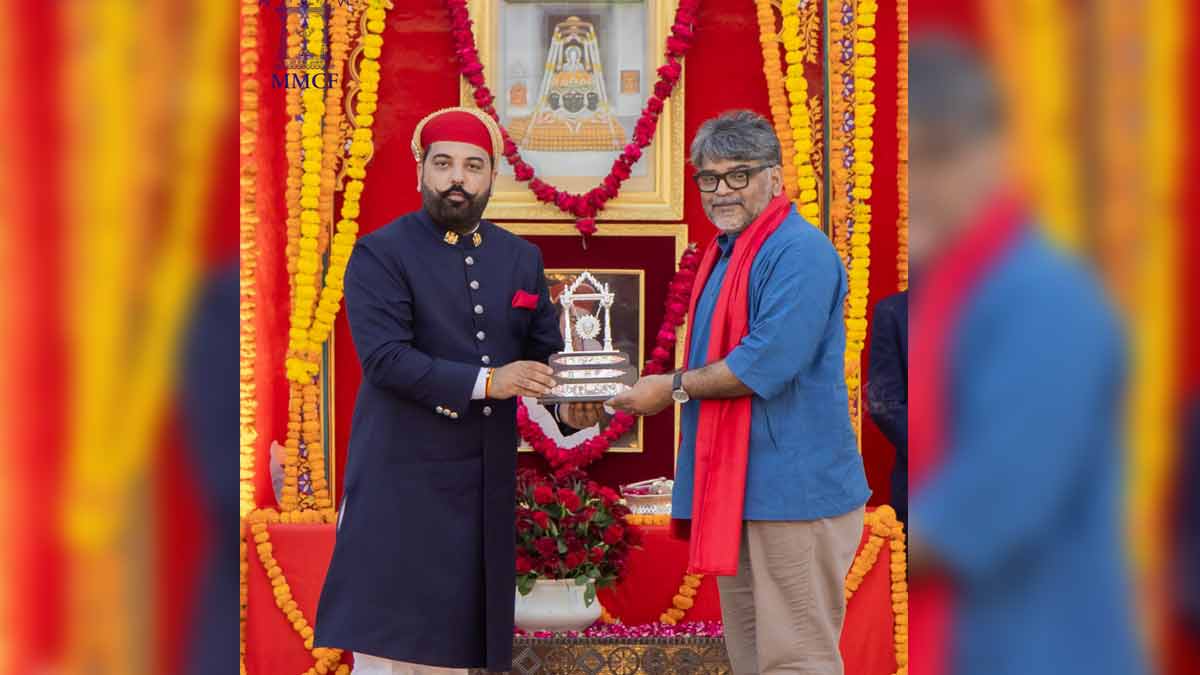
MUMBAI- Kamlesh Singh just turned a lifetime of sharp words into a shiny shield because when journalism wakes up a society, even the Maharana of Mewar wants to pin a medal on it.
The Maharana of Mewar Charitable Foundation (MMCF) conferred its prestigious Haldi Ghati Award on Kamlesh Singh, a senior editor at the India Today Group, during a ceremony in Udaipur on 15 March 2026. The national award, instituted in 1981-82, recognises “work of permanent value that initiates an awakening in society through the medium of journalism.”
Singh, who leads several editorial initiatives including Aaj Tak Radio, the Teen Taal community and The Lallantop, was presented the honour by Lakshyaraj Singh Mewar, Managing Trustee of MMCF. The citation highlighted his three decades of contributions to Indian media, innovations in digital journalism, mentoring young reporters, and his popular podcast persona “Tau” on Teen Taal, which fosters thoughtful public discourse.
The Haldi Ghati Award, named after the historic Battle of Haldighati symbolising valour and resilience, is one of four national awards given annually by MMCF. Past recipients include Tavleen Singh, Piyush Pandey and Raj Chengappa.
Other honourees this year included Padma Vibhushan Pt Hari Prasad Chaurasia, Vedamurti Devvrat Rekhe, Treeman of India Marimuthu Yoganathan, Vir Chakra Capt Rizwan Malik, and US-based researcher Molly Emma Aitken, who received the Colonel James Tod Award for contributions to understanding Mewar’s spirit and values.
In an era where headlines often shout louder than substance, the MMCF quietly reminded everyone that real journalism isn’t about noise, it’s about the quiet, persistent work that stirs society awake, one thoughtful story at a time.







