Hindi
It came at the right time – in the birth centenary year of Dadasaheb Phalke: Gulzar

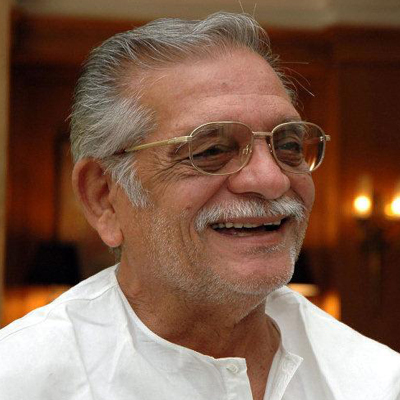
NEW DELHI: Later this year, eminent director-screen writer-lyricist Gulzar will be honoured with the prestigious Dadasaheb Phalke Award (2013) by President Pranab Mukherjee along with the National Film Awards (2013). Gulzar will be the third lyricist after Majrooh Sultanpuri (1994) and Kavi Pradeep (1998) to win the award.
According to Information & Broadcasting Ministry Secretary, Bimal Julka, the seven-member selection committee was unanimous in its recommendation of Gulzar for what is the nation’s highest award in cinema.

“I am particularly happy since the choice was made by an independent committee, though set up by the Government,” said Gulzar. While many feel the honour was bestowed on him rather late, he only said, “This was special, as it came at the right time- in the birth centenary year of Dadasaheb Phalke.”
An institution into himself, Gulzar has not only penned several Hindi film songs and dialogues but also directed a clutch of notable films. As one of the greatest authorities in the history of song in Indian cinema, he has given talks on the subject, both in India and abroad. Often accused of selecting other people’s novels/stories for adaptation, there’s no denying his talent for optimally adapting the same to Indian/Hindi film audiences.
Biography
Gulzar was born as Sampooran Singh Kalra to Makhan Singh Kalra and Sujan Kaur in Dina, Jhelum district, in undivided India, in what is now Pakistan. Sampooran started off as a car mechanic in a garage in Mumbai but went on to become a writer, assuming the pen name, Gulzar Deenvi. His father rebuked him for becoming a writer saying, “As a writer, you will have to depend on your brothers”. He started his film career as a lyricist, going on to write dialogues and screen plays, and later, even directing many critically acclaimed films.
Gulzar began as a songwriter with music director Sachin Dev Burman in the movie Bandini (1963) with the song, Mora Gora Ang Lai le picturised on Nutan. Gulzar’s most successful songs as a lyricist came out of his association with S D Burman’s son, Rahul Dev Burman, whom he described as the anchor in his life. Gulzar’s lyrics were special in that they formed part of the narrative. As a lyricist, he also had award-winning associations with music directors Salil Chowdhury (Anand, Mere Apne), Madan Mohan (Mausam) and more recently Vishal Bhardwaj (Maachis, Omkara, Kaminey), A. R. Rahman (Dil Se.., Guru, Slumdog Millionaire, Raavan) and Shankar–Ehsaan–Loy (Bunty aur Babli).
Some of Gulzar’s more notable songs are: Maine Tere Liye Hi from the film Anand; Bole Re Papihara Papihara from the film Guddi; Koii Hota Jisko Apna, a nostalgic number from Mere Apne; Aanewala Pal Janewala (Golmaal); Sun Sun Sun Didi (Khubsoorat); Ae Zindagi Gale Laga Le (Sadma); Roz Roz Aankhon Tale (Jeeva); Tum Aa Gaye Ho Noor and Tere Bina Zindagi Se from the film Aandhi; Saare ke saare gaama ko lekar gaate chale (Parichay); and Dil Dhoondhta hai (Mausam).
Gulzar won international fame when he was awarded the prestigious Oscar Award (with A R Rehman and Sukhwinder Singh) for writing the Best Original Song Jai Ho from the film, Slumdog Millionare. He was also honoured with the Grammy Award for Best Song Written for a Motion Picture, Television or Other Visual Media.
Apart from films, he has written ghazals for ghazal king (late) Jagjit Singh’s albums “Marasim” and “Koi Baat Chale”. Both albums were a great success.
For the peace campaign (Aman ki Asha) jointly flagged off by leading media houses from India and Pakistan, he wrote the anthem “Nazar Main Rehte Ho”, which was recorded by Shankar Mahadevan and Rahat Fateh Ali Khan.
Gulzar’s poetry is partly published in three compilations: Chand Pukhraaj Ka, Raat Pashminey Ki and Pandrah Paanch Pachattar (15-05-75).
Gulzar also wrote dialogues and screen plays for films like Aashirwad, Anand, Khamoshi and more. His short stories are published in Raavi-paar (also known as Dustkhat in Pakistan) and Dhuan (smoke). He has penned dialogues and lyrics for several Doordarshan serials including Jungle Book, Alice in Wonderland, Guchche, Hello Zindagi, Potli Baba ki and more recently, the children’s audio-book series, Karadi Tales.
Fluent in several languages and dialects, Gulzar has written in Braj Bhasha, Khariboli, Haryanvi and Marwari though he primarily writes in Hindustani (Hindi-Urdu) and Punjabi.
He forayed into direction with Mere Apne(1971). The film was a remake of Tapan Sinha’s Bengali film Apanjan (1969), where Meena Kumari played the lead role of Anandi Devi, an old widow caught between the local fights of unemployed and tormented youngsters. Anandi Devi’s death in one of the fights makes the youth realise the futility of violence. The film was rated “Above Average” at the Box Office.
He then directed Parichay and Koshish, with the former based on a Bengali novel Rangeen Uttarain by Raj Kumar Maitra and inspired by the Hollywood classic, The Sound of Music. Whereas Koshish, written by Gulzar, depicts the struggle of a deaf and dumb couple. Sanjeev Kumar won the National Film Award for Best Actor for his performance in the film. The year 1973 saw another directorial venture from Gulzar named Achanak, inspired by the real-life sensational 1958 murder case K M Nanavati vs State of Maharashtra. The story writer, Khwaja Ahmed Abbas, earned a Filmfare nomination for Best story.
Gulzar’s Aandhi, based on the Hindi novel “Kaali Aandhi” by the renowned writer Kamleshwar, told the story of a separated couple against the backdrop of politics and was often believed to be based on the story of Indira Gandhi though it was actually based on the life of Tarkeshwari Sinha. Along with various wins and nominations, the film also won the Filmfare Critics Award for Best Movie. During the emergency in 1975, the film was banned from theatres. Gulzar’s next, Khushboo, was inspired by Sharat Chandra Chattopadhyay’s Pandit Mashay. While his other film, Mausam, won the National Award for second Best Feature Film, Filmfare Best Movie and Filmfare Best Director awards, along with other six Filmfare nominations. It was loosely based on the story “Weather” from the novel, The Judas Tree, by A.J. Cronin. Sharmila Tagore for her roles of Chanda and Kajli received The Silver Lotus Award at the 23rd National Film Festival.
Gulzar’s 1982 film Angoor was taken from William Shakespeare’s play, The Comedy of Errors. In his Maachis, a young Punjabi boy becomes a terrorist only to realise the futility of it. While Hu Tu Tu dealt with corruption and one man’s fight against it. Flashback has been an important tool of narration in Gulzar’s films including Aandhi, Mausam, Ijaazat, Machis and Hu Tu Tu among others.
On the small screen, Gulzar created the popular series Mirza Ghalib and Tahreer Munshi Premchand ki among others.
Gulzar, who will turn 80 on 18 August this year, was awarded the Sahitya Akademi Award in 2002 and the Padma Bhushan in 2004. He has won a number of National Film Awards and 20 Filmfare Awards. In 2012, he received the Indira Gandhi National Integration Award.







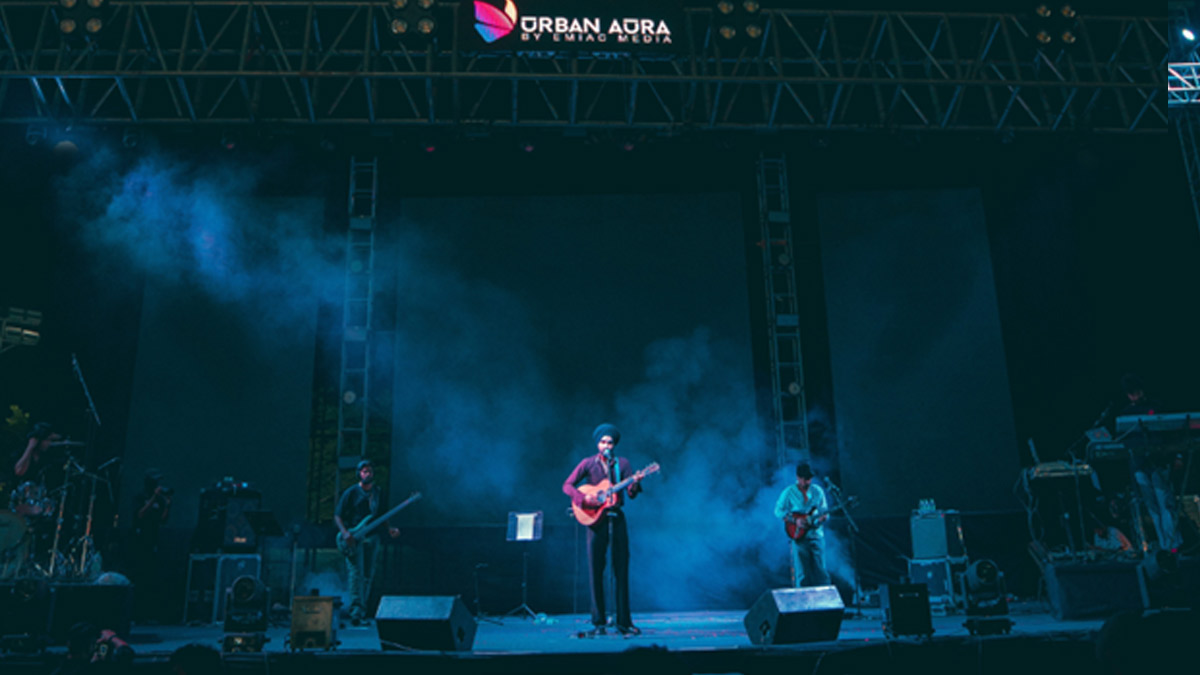
In a music industry that often rewards speed, spectacle, and instant recall, Navjot Ahuja’s journey feels refreshingly different. His story is not built on noise. It is built on patience, discipline, emotional honesty, and a quiet commitment to becoming better with every passing year. After 14 years of struggle, learning, performing, and writing, Navjot stands today as an artist whose success has not changed his centre. If anything, it has only made his purpose clearer.
For Navjot, music has never been about chasing fame alone. It has always been about expression. It is about writing more truthfully, singing more skillfully, understanding himself more deeply, and becoming a kinder human being in the process. That rare clarity is what gives his journey its beauty.
Where It All Began: A Writer Before a Singer
Indian singer and songwriter Navjot Ahuja’s musical journey began in the most familiar of places: school assemblies. But even then, what was growing inside him was not only the desire to sing. It was the need to write.
Long before he saw himself as a performer, he had already discovered the emotional release that writing offered him. For Navjot, words became the first true channel for feeling. Songwriting came before singing because writing was the only way he could let emotions flow through him fully. That inner pull shaped his artistic identity early on.
Like many young musicians, he sharpened his craft by creating renditions of popular songs.
Those experiments became his training ground. But the turning point came in 2012, when he wrote his first original song. That moment did not just mark the beginning of songwriting. It marked the beginning of self-definition.
A Calling He Did Not Chase, But Accepted
What makes the latest Indian singer-songwriter Navjot’s story especially compelling is the way he describes his relationship with music. He does not frame it as a career he aggressively pursued. In his own understanding, music was not something he chose. It was something that chose him.
There was a time when he imagined a very different future for himself. He wanted to become a successful engineer, like many young people shaped by ambition and conventional expectations. But life had a different script waiting for him. During his college years, around 2021, music entered his life professionally and began taking a firmer shape.
That shift was not driven by image-building or industry ambition. It came from acceptance. Navjot embraced the fact that music had claimed him in a way no other path could. That sense of surrender continues to define the artist he is today.
An Artist Guided by Instinct, Not Influence
Unlike many singers who speak openly about idols, icons, and musical role models, Navjot’s creative world is built differently. He does not believe his music comes from imitation or inherited influence. He listens inward.
He has never considered himself shaped by ideals in the traditional sense. In fact, he admits that he does not particularly enjoy listening to songs, especially his own. His decisions as a songwriter and singer come from instinct. He writes what feels right. He trusts what his inner voice tells him. He positions his music according to what he honestly believes in, not what trends demand.
That creative independence gives his work a distinct emotional sincerity. His songs do not feel calculated. They feel alive.
The Long Years of Invisible Struggle
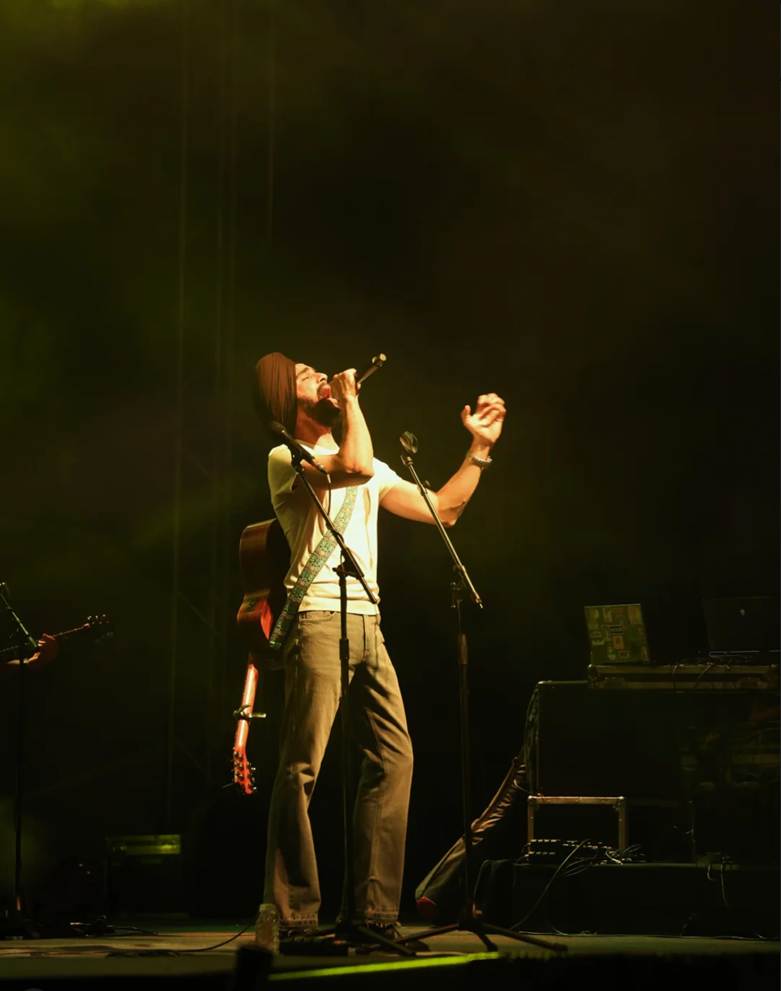
Every artist carries a chapter of struggle, and Navjot’s was long, demanding, and deeply formative. One of the biggest challenges he faced was building continuity as the best new indian singer songwriter in an era where musical collaboration is increasingly fluid.
For emerging singers, especially those trying to build with a band, consistency can be difficult. Instrumentalists today have more opportunities than ever to freelance and perform with multiple artists. While that growth is positive and well deserved, it can make things harder for singers who are still trying to establish a steady team and sound around their work.
For Navjot, one of the most difficult phases came during 2021 and 2022, when he was doing club shows almost every day. It was a period of relentless performance, but not always personal fulfillment. He was largely singing covers because clubs were not open to original songs that audiences did not yet know.
For a new Indian singer and songwriter, that can be a painful compromise. To perform constantly and still not have the freedom to share your own voice requires not just resilience, but restraint.
“Khat” and the Grace of Staying Unchanged
After 14 years of effort, Navjot’s new love song Khat became a defining milestone. Professionally, he acknowledges that the song changed how society viewed him as a musician. It strengthened his place in the public eye and altered his standing in meaningful ways.
Yet personally, he remains unchanged.
That is perhaps the most striking part of his story. Navjot says his routine is still the same. His calm is still the same. His writing process is still the same. He does not want success or failure to interfere with the purity of his art. For him, emotional detachment from public outcomes is essential because the moment an artist becomes too attached to validation, the writing begins to shift.
His joy comes not from numbers, but from the attempt. If he has tried to improve his skill today, if he has written his heart out more honestly than before, then he is at peace.
Growth, Not Glory, Remains the Real Goal
Even now, Navjot is not consumed by labels such as singles artist, performer, or digital success story. His focus remains deeply personal. He wants to sing better. He wants to play instruments better. He wants to understand himself more. And he wants to become a kinder person.
That is what makes Navjot Ahuja’s journey so moving. It is not simply the story of a musician finding recognition. It is the story of an artist who continues to grow inward, even as the world begins to look outward at him. In an age obsessed with applause, Navjot reminds us that the most meaningful success often begins in silence, honesty, and the courage to remain true to oneself.






