News Broadcasting
Isro renews MOU with Andhra Pradesh on Sat-Com applications

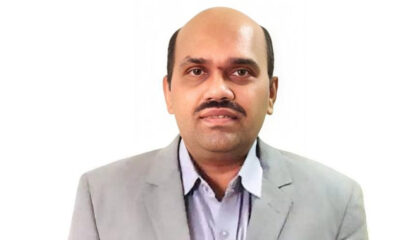
BANGALORE: Indian Space Research Organisation (Isro) and the Government of Andhra Pradesh have renewed their July-2000 Memorandum of Understanding (MOU) on the application of satellite based communication. A Bhaskaranarayana, director, Satellite Communication Programme of Isro and T V Parthasarathi, director, IT and Communication Department, Government of Andhra Pradesh, signed the renewal of MOU in Hyderabad.
Chief Minister of Andhra Pradesh, Dr Y S Rajashekara Reddy and chairman, Isro Dr G Madhavan Nair were present during the signing ceremony.
Under the renewed MOU, which also includes new applications, Andhra Pradesh will use Insat capacity for satellite based communication in the areas of distance education, telemedicine, agricultural extension, self-help groups, etc. While Isro provides the transponder capacity on board its Insat and the technical support, Andhra Pradesh Government operates the satellite communication network for these applications, states an official release.

Soon after the signing of the original MOU in July 2000, experimental transmissions had started in November 2000 from Isro’s Master Control Facility at Hassan and subsequently, in April 2002, a satellite Hub station was established at Dr B R Ambedkar Open University, Hyderabad. Following this, a satellite based “Andhra Pradesh Net” was set up in March 2003. At present, a full-fledged Mana-TV is operational with a state-of-the-art studio. Mana-TV has over 2,000 terminals and has 5 television channels and one data channel catering to the requirements of educational institutions like schools and colleges (including engineering colleges). It is used for both formal and non-formal educational training.
Mana TV is now being upgraded to include more interactive terminals as part of Edusat. In the recent years, under the Edusat programme, an exclusive network has been established connecting top fifty technical institutions/engineering colleges in India under Indo-US cooperation for transmitting lectures by invited US experts delivered from Amrita Viswa Vidyapeetam, Coimbatore. Four of these colleges are located in Andhra Pradesh, the release adds.
In the field of telemedicine, the first pilot project was started in Andhra Pradesh in 2000 connecting Apollo Hospitals at Chennai and Aragonda village and Isro’s hospital at Satish Dhawan Space Centre, SHAR, Sriharikota, in Nellore District. The telemedicine network will now be extended to eight more hospitals.
Andhra Pradesh is also one of the foremost in the utilisation of remote sensing technology for management of land and water resources and disaster management. For example, remote sensing technology is used for watershed management in drought prone districts of Adilabad, Ananthapur, Kurnool, Mahaboobnagar, Nizamabad and Ranga Reddy. Management plans for major irrigation projects like Srirama Sagara and Nagarjuna Sagara have been planned using remote sensing data. More than 35,000 bore wells have been drilled using remote sensing data with better than 90 percent success rate.
As part of M S Swaminathan Research Foundation Network, a Village Resource Centre (VRC) has been set up at Adakkal, Moosapet with an Expert Centre located at International Crops Research Institute for the Semi-Arid Tropics (ICRISAT). Another 16 locations have been identified for setting up of VRCs to connect the Expert Centre through Byraju Foundation.
Thus, Andhra Pradesh has been extensively using Isro satellites for societal applications and today’s renewal of MOU reiterates its commitment to extend these applications with Isro’s help.






News Broadcasting
CNN-News18 to host Fury in the Gulf conclave on West Asia crisis
Three-hour summit to unpack geopolitical fallout and impact on India
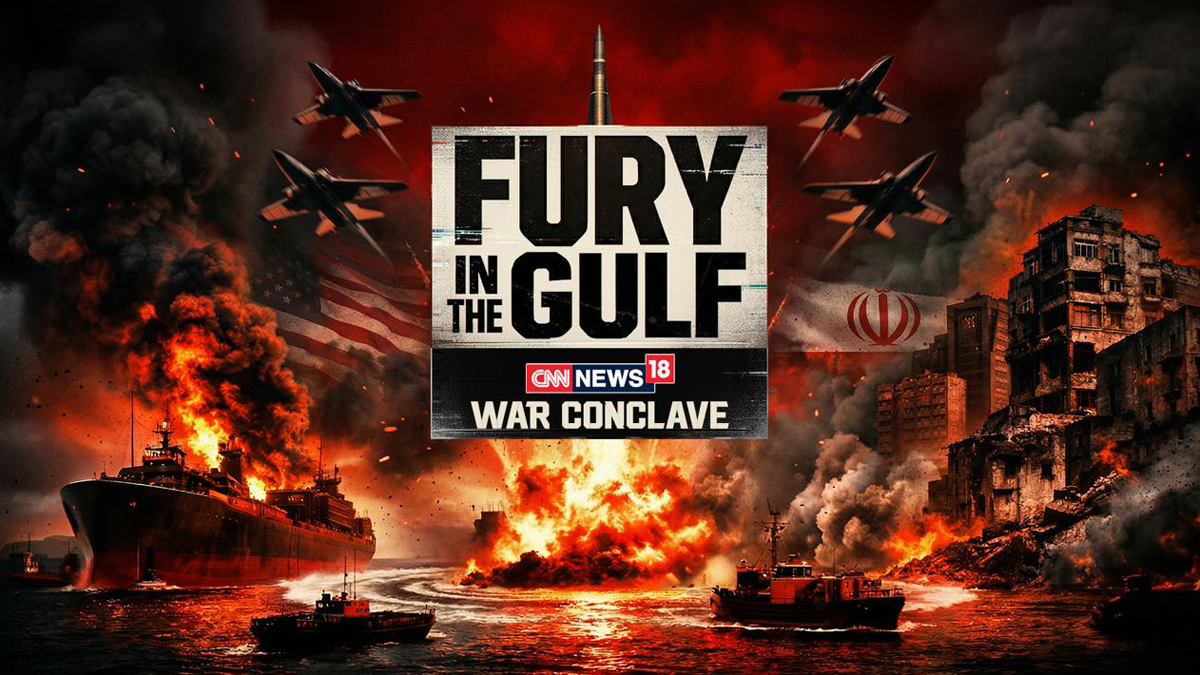
MUMBAI: CNN-News18 is set to host a special three-hour broadcast, Fury in the Gulf – War Conclave, on April 7, aiming to decode the escalating West Asia crisis and its far-reaching implications for India.
Scheduled from 4:00 PM to 7:00 PM, the conclave comes at a time when tensions between Iran and the United States are reshaping global geopolitics and triggering economic uncertainty. With India’s deep energy ties, trade links and large diaspora in the Gulf, the developments carry significant domestic relevance.
Built around the theme ‘Conflict, Consequences, and The Future,’ the programme will feature six curated sessions combining one-on-one interviews and panel discussions. The focus is to cut through the clutter and offer viewers a clearer understanding of the fast-evolving situation.
Key sessions include ‘Diplomacy in Times of War’ featuring Shashi Tharoor, and ‘World After the Iran Conflict’ with voices such as Ram Madhav, Reuven Azar, representatives from the European Union and the Iranian Deputy Envoy. Another session titled ‘Another Dunkirk?’ will bring together K. J. S. Dhillon and Jitin Prasada among others.
CNN-News18 editorial affairs director Rahul Shivshankar said, “In times of war, clarity becomes the most powerful tool. Fury in the Gulf – War Conclave brings together credible voices to address the questions and confusion that arise amid an overwhelming influx of information.”
He added that the initiative is aimed at delivering “facts, perspective, and insight” at a time when misinformation can easily cloud public understanding.
Echoing the sentiment, CNN-News18 CEO– English and business news Smriti Mehra said the conflict marks a defining global moment, with consequences that extend well beyond the region. She noted that the conclave seeks to present the crisis with “depth, nuance and responsibility” so audiences can better grasp its real-world impact.
As geopolitical tensions continue to dominate headlines, the conclave positions itself as an attempt to bring order to the noise, offering viewers a structured, insight-led look at a complex and rapidly shifting global situation.






