News Broadcasting
Is Sushant Singh Rajput case a blanket on bigger issues; Arnab Goswami answers

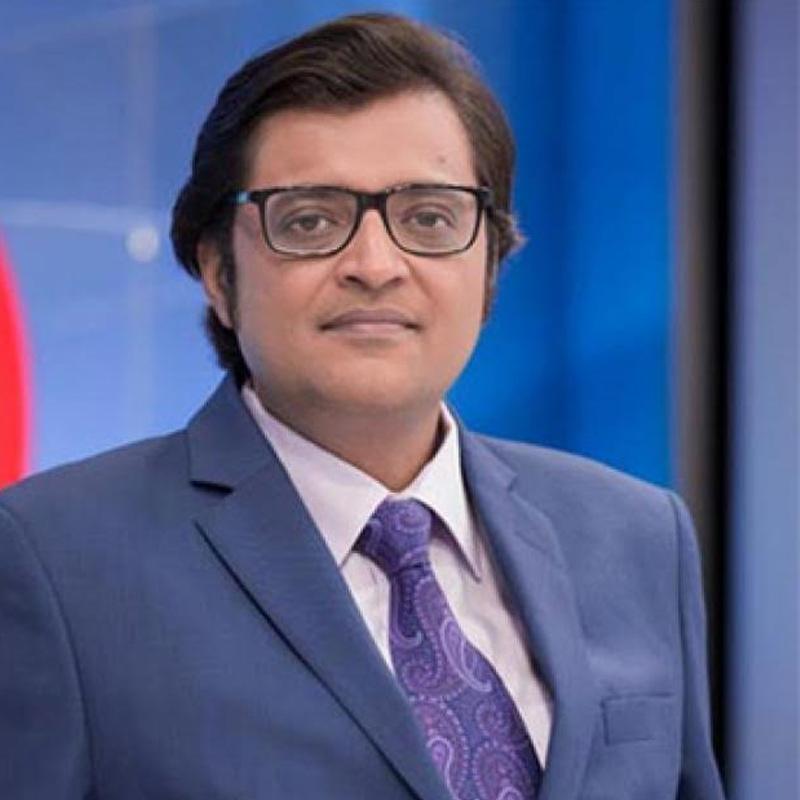
NEW DELHI: A celebrated and in equal amounts criticised journalist, Arnab Goswami has found himself embroiled in controversies quite many times. His distinct style of reporting, his presence on the camera, and the way he pursues his subjects, everything has been a matter of public scrutiny, meme fests on social media, and dinner table discussions.
In most recent times, his extensive reportage on the Sushant Singh Rajput case, which he has been following extensively with a number of on-ground reporters, has gained for him immense praises from the later actor’s fans. At the same time, he is being questioned if with such reporting he is taking the attention away from the centre’s handling of the pandemic and the economic slowdown. In a virtual fireside chat with Indiantelevision.com founder CEO and editor-in-chief Anil Wanvari. Goswami presents his case.
Edited excerpts follow:

How has the Covid2019 lockdown been for you?
Everything has been good. My family and team are safe and we are working very hard. It did impact the business for us. I think, we were in denial till the middle of March but by April, we realised that it was a triple whammy for us; as journalists, we couldn’t operate in the field, with the sort of restrictions around, then our distributors couldn’t connect with our partners because of the travel restrictions. Our revenues got hit in a big way. It was not as much as others in the market, but yes, advertising revenues took a big hit too.
But we turned this adversity into opportunity. When the pandemic had started, we had around 38 per cent of the market share, it is now at 53 per cent. Our prime time now has 76 per cent of the market share.
We also pushed our digital strategies massively. So, we actually hired about 150 people during the Covid period. We redesigned our product centre and backend. We started making our own technology with Luca live streaming with multiple distribution platforms, and we increased the amount of publishing. Today Republic English alone publishes about 1100 stories every day. If you take that as an 18-hour cycle you can imagine that we are putting out a story of the three or four minutes.
It's a large publishing house and we are publishing about a hundred videos. This is taken our monthly uniques over 50 million uniques in Republic English. We will reach a hundred million-plus monthly average uniques by Feb making us perhaps among the top two or three digital news Publishers in the third thing was for us in the market.
Congratulations on that. But I also wanted to know, how has the time been for you personally as well? I see you have lost some weight too.
Well, personally, I think there are a few things that all of us are missing, like a walk in the park or exercising in the gym. But the blessing has been that we get to spend a lot more time with our family.
And yes, I have lost some weight (chuckles). I have been doing yoga regularly now. I had always been in some or other forms of exercise but I guess this period has given me more time to focus on myself, which I had didn't have earlier. So the last year particularly, you know, I've had much more time. I think this is the result of a good work-life balance.
And have you done a lot of introspection like others, in terms of what you want to achieve or do?
I live in the moment and then I don't look back and forth to watch. I don't set for myself these huge targets. I immerse myself at the moment. I've always been clear of what I do want to do. I'm just doing it until slightly faster pace these days.
And how is the faster pace impacting you? Does it get tiring?
I do what I love; whether it’s editorial or distribution, or sales, Republic for me is a labour of love. There is no work here, I feel.
Also, the good part is that over the last four months, I have spent significantly more time on editorial work. I have strengthened my core team and have given them a free hand to handle the distribution part, the sales part, and everything else so that I can do what I love.
I did not start the Republic network to sit in a room and look at excel sheets and manage sales. I have full faith in my team who are looking at all these aspects, while I manage the editorial.
But there have been complaints about your editorial style too. A certain section would come up and say that you are deep diving into the Sushant Singh Rajput case to take the focus away from the economy and how the government is managing the Covid situation.
I think the government is doing a great job of managing the pandemic. There are some people who will say that the lockdown is impacting the economy, and when you open up, then the same people will come and say that the numbers are going up. I think, eventually, only the vaccine is the solution now.
As far as the government is concerned, neither you nor I, or Michaelangelo could come and do it better. They have pushed the curve as far as possible. So all the critics should ask themselves if they were prime minister what would they do? Do they have a ready-made solution?
Also, I'm a believer that the economy is opening too. People come with fake arguments, pointing out that the economy is down by 23 per cent. But have you looked at the relative numbers? Canada is down by 38 per cent. Singapore, while they tried their best to contain the virus, their economy went down by 43 per cent.
But Germany’s numbers are not that bad, right?
Yes, it is because Germany is moving three months ahead of us. Their peak came three months before us. I believe even our numbers will be better by the end of this year.
There is no reason to be pessimistic right now. GST collection has been good, all the macroeconomic numbers are picking up, and these are the early positive signs.
But shouldn’t there be more coverage around it?
We have done the highest numbers of shows on Covid2019 in the past few months. We have hosted more than 500 health experts on our channels and done live calling programmes. We have strived to spread as much awareness as possible. But this is not all that we can do. When there is a breaking story, we have to report it.
I want to ask people that when other channels were showing what Amitabh Bachchan ate in the hospital when he was tested positive for Covid, where are they trying to take the attention away from the economy and the pandemic? So many of them have flown to Mumbai to do PR interviews with Aditya Thackeray, are they trying to take the attention away?
When did your interest in Sushant Singh Rajput’s case pique? What made you pursue it the way you are doing it right now?
So, initially, I was not much into the story, but it started with Kangana’s interview. She called me and we scheduled an interview because there was a lot of talk around nepotism. We ran the interview and it got an amazing response. Also, I began to study more and look back at what had happened. That's when I realized that the Mumbai police were trying to conceal things and put everything under the garb of an encore which is not a recognizable offence called nepotism. And then I thought that why would the Mumbai police do that? And that's how I began to look at it because of the suspicious behaviour of the Mumbai police. And then after that, it's like peels of an onion.
How big a team is following the story for you now?
I had to fly in about 30 people from Delhi, Including 15 anchors. A total of 50 reporters are reporting there are 15-20 camera units. So that's the largest manpower we have invested in for any story and that too for such a long time.
And by when are you expecting a logical end to this case?
See, I am not an expert or with CBI or ED, but I see it going on for some more time and I will pursue it till it reaches there. I want to continue to explore a story as long as I feel that justice has not been served so I think that's the right. I feel answerable to the audiences which expect us to pursue until the truth comes out.



News Broadcasting
CNN-News18 to host Fury in the Gulf conclave on West Asia crisis
Three-hour summit to unpack geopolitical fallout and impact on India

MUMBAI: CNN-News18 is set to host a special three-hour broadcast, Fury in the Gulf – War Conclave, on April 7, aiming to decode the escalating West Asia crisis and its far-reaching implications for India.
Scheduled from 4:00 PM to 7:00 PM, the conclave comes at a time when tensions between Iran and the United States are reshaping global geopolitics and triggering economic uncertainty. With India’s deep energy ties, trade links and large diaspora in the Gulf, the developments carry significant domestic relevance.
Built around the theme ‘Conflict, Consequences, and The Future,’ the programme will feature six curated sessions combining one-on-one interviews and panel discussions. The focus is to cut through the clutter and offer viewers a clearer understanding of the fast-evolving situation.
Key sessions include ‘Diplomacy in Times of War’ featuring Shashi Tharoor, and ‘World After the Iran Conflict’ with voices such as Ram Madhav, Reuven Azar, representatives from the European Union and the Iranian Deputy Envoy. Another session titled ‘Another Dunkirk?’ will bring together K. J. S. Dhillon and Jitin Prasada among others.
CNN-News18 editorial affairs director Rahul Shivshankar said, “In times of war, clarity becomes the most powerful tool. Fury in the Gulf – War Conclave brings together credible voices to address the questions and confusion that arise amid an overwhelming influx of information.”
He added that the initiative is aimed at delivering “facts, perspective, and insight” at a time when misinformation can easily cloud public understanding.
Echoing the sentiment, CNN-News18 CEO– English and business news Smriti Mehra said the conflict marks a defining global moment, with consequences that extend well beyond the region. She noted that the conclave seeks to present the crisis with “depth, nuance and responsibility” so audiences can better grasp its real-world impact.
As geopolitical tensions continue to dominate headlines, the conclave positions itself as an attempt to bring order to the noise, offering viewers a structured, insight-led look at a complex and rapidly shifting global situation.






