News Broadcasting
IRS 2002 confirms dominance of C&S over terrestrial in urban areas


MUMBAI: The Indian Readership Survey (IRS) 2002 was released Tuesday at a formal launch function in Mumbai. Among the highlights of IRS 2002 as far as the television Industry is concerned is that though terrestrial transmission has an overall nationwide lead over cable and satellite, in the urban areas it is C&S that rules.
In urban centres, while national broadcaster Doordarshan’s channels had a penetration of 49 per cent reaching a population of 100.9 million, C&S penetration was 50.5 per cent reaching 104.5 million. In the rural areas however, DD reaches 158.3 million people or 31.7 per cent while C&S penetration was only 12.2 per cent.
As far as all-India statistics are concerned, DD reaches 259.3 million (36.7 per cent) while C&S covers 165.8 million (23.4 per cent).

The BIG news in the television space genrewise has really been the phenomenal growth of the news channels. In penetration terms this has translated into a more than three-fold growth witnessed – from 4.4 per cent in the last IRS to 13.6 per cent for IRS 2002.
Still comparisons of this type are really not proper. That’s because this year the IRS has a major distinction – it starts as a baseline rather than as a comparative progression from previous years. This being because the data bases its calculations and conclusions on the 2001 National Census and therefore assumptions based on extrapolations on Census 1991 stand as being outdated.
Roda Mehta, chairperson, technical committee, Media Research Users Council (MRUC), which brought out the findings in a joint effort with NFO MBL, dropped a number of “bombshells” in the course of her keynote address – the principal one being that in the newspaper wars in New Delhi between Hindustan Times and The Times of India had gone in favour of the Bennet Coleman and Company’s flagship newspaper.
Mehta also said that socio economic class (SEC), on which basis projections of income levels are made among planners today, needed a radical rethink. “We need to redefine SEC if we want to get an accurate understanding of ‘chief wage earner’ in a household,” Mehta said.
Among the five media platforms – print, television (both terrestrial and C&S), radio, cinema and the Internet – it was the Internet and FM radio that were seen as very high growth potential media vehicles.
Among the five media platforms – print, television (both terrestrial and C&S), radio, cinema and the Internet – it was the Internet and FM radio that were seen as very high growth potential media vehicles.
* There are seven cities with 2-5 million population that will emerge as new metros in the coming decade. There are now 35 markets with over 1 million population. In 1991 there were 23.
* Mumbai has not significantly added any new areas in its urban agglomerations, while Delhi has added 35 new areas, Kolkata 16, Chennai 13, Bangalore 17 and Hyderabad 15.
* The total number of towns have grown to 4,173 in 2001 from 3,593 in 1991.
* The urban population has swelled by 70 million.
* The sex ratio has changed from a national average of 927 to 933 females per 1,000 males.
IRS 2002 was conducted with 227,045 respondents, the largest sample in urban and rural India. It covers 100 television channels, 337 publications, radio, including FM, Vividh Bharati & primary channels and 32 Internet service providers.





News Broadcasting
CNN-News18 to host Fury in the Gulf conclave on West Asia crisis
Three-hour summit to unpack geopolitical fallout and impact on India
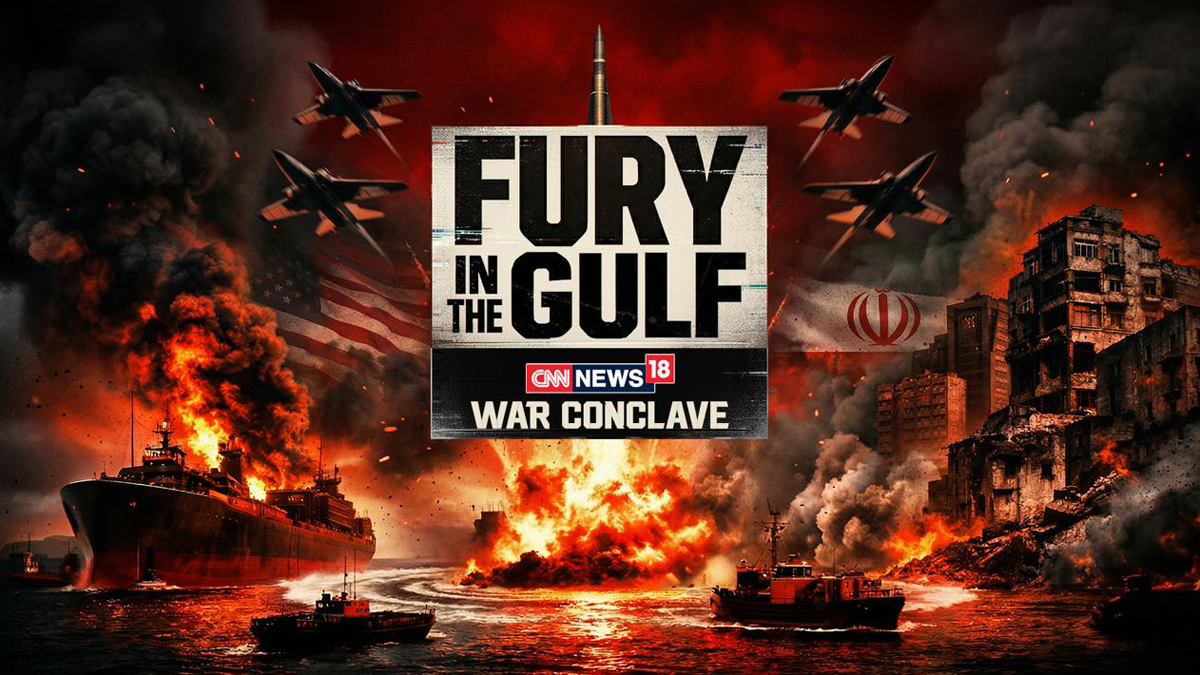
MUMBAI: CNN-News18 is set to host a special three-hour broadcast, Fury in the Gulf – War Conclave, on April 7, aiming to decode the escalating West Asia crisis and its far-reaching implications for India.
Scheduled from 4:00 PM to 7:00 PM, the conclave comes at a time when tensions between Iran and the United States are reshaping global geopolitics and triggering economic uncertainty. With India’s deep energy ties, trade links and large diaspora in the Gulf, the developments carry significant domestic relevance.
Built around the theme ‘Conflict, Consequences, and The Future,’ the programme will feature six curated sessions combining one-on-one interviews and panel discussions. The focus is to cut through the clutter and offer viewers a clearer understanding of the fast-evolving situation.
Key sessions include ‘Diplomacy in Times of War’ featuring Shashi Tharoor, and ‘World After the Iran Conflict’ with voices such as Ram Madhav, Reuven Azar, representatives from the European Union and the Iranian Deputy Envoy. Another session titled ‘Another Dunkirk?’ will bring together K. J. S. Dhillon and Jitin Prasada among others.
CNN-News18 editorial affairs director Rahul Shivshankar said, “In times of war, clarity becomes the most powerful tool. Fury in the Gulf – War Conclave brings together credible voices to address the questions and confusion that arise amid an overwhelming influx of information.”
He added that the initiative is aimed at delivering “facts, perspective, and insight” at a time when misinformation can easily cloud public understanding.
Echoing the sentiment, CNN-News18 CEO– English and business news Smriti Mehra said the conflict marks a defining global moment, with consequences that extend well beyond the region. She noted that the conclave seeks to present the crisis with “depth, nuance and responsibility” so audiences can better grasp its real-world impact.
As geopolitical tensions continue to dominate headlines, the conclave positions itself as an attempt to bring order to the noise, offering viewers a structured, insight-led look at a complex and rapidly shifting global situation.






