iWorld
Internet to be disruptive force in video distribution to rural areas


MUMBAI: Internet has become a new medium for delivering video to consumers. It has been reaching around 400 million consumers with a free to watch option on their mobiles. VBS 2019 organised by Indiantelevision.com created a platform for industry doyens to discuss the changing role of the internet in video distribution.
A panel discussion of Video and Broadband Summit 2019 focused on the Internet's role in video distribution. It was moderated by digital strategy consultant Uday Sodhi with MediaKind APAC marketing head Chiranjeev Singh, Win Broadband Services MD and CEO K V Seshasayee, Jio advertising & strategy VP Mohit Kapoor and Google media and entertainment industry head Sandeep Ramesh as the panellists.
They shared their views on the internet being a new medium of delivering content. They agreed that while the internet will impact video entertainment distribution, there is enough space in the Indian media industry for all stakeholders, from internet providers, OTT players to media networks, to co-exist and complement each other. The panellists also believe the internet has emerged as another prominent distributor in the broadcast industry.

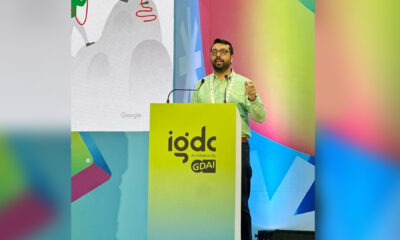
Google’s Ramesh briefed the audiences on how internet disrupts the videos delivered to the consumers today and how things will be going forward. He said, "From the consumer’s point of view, video on demand is a habit. Once the consumers move to video on demand, they will not come back. This will happen as it is a secular change. All entertainment will be available online, sooner or later, and consumers will have a desire to watch the content wherever they want. This change will have implications on the content makers and distributors, but from the advertising stand point, digital advertising will be benefitted."
Jio’s Kapoor highlighted an important fact, which is the innovation of smartphones. He said that Jio introduced Jio phones which have feature phone segments and are smart phones, sold for a price between Rs 700 and Rs 1,500. Around 100 million phones have been sold and consumers are using feature phones, but not using internet for viewing content or videos. About broadband, he informed out of 250 million homes in India, 50 million homes is Jio’s target, which will be achieved. Compared to the US or any other country, India is ahead in content consumption. Currently, average consumption of internet is around 8.5 – 9 GB. Jio is offering more than 11 – 12 GBs monthly.
Win Broadband’s Seshasayee said, “All content providers and aggregators are focusing on tier 1 and 2 cities and few are trying to reach tier 3 cities. As per the statistics, out of more than 400 million Indian viewers who do not have internet access, the ones who have the access are using 2G, which will be obsolete within two months. As per mobile consumption statistics, 60 per cent consumers are consuming videos on mobile. So, if there are places with no internet access, there are opportunities for the country providers to enter that market, make use of the available resources and find an alternate solution to the problem.”
Sodhi said that there is a huge opportunity created by the internet, daily in the dark areas. For around 700-800 million users who do not get cable to DTH in their homes, internet may become a way for them to deliver content.
MediaKind’s Singh said that internet has actually enabled content creators and owners to reach consumers directly, which is happening with OTT platforms. This is a challenge for linear TV. Consumers watch linear TV for live updates like breaking news. The lag between the live TV and the OTT platform for the same content is narrowing down, which is now around maximum five seconds. So, consumers are moving to OTT platforms. We need to make sure that the consumers get enough value for the services they are paying for.
The panelists also agreed that internet is a great opportunity for LCOs as well. They can provide OTT and video service to consumers in rural areas. LCOs can also build a library of YouTube videos, but monetisation or cost should be nominal because ultimately the content is free for the consumers.
Kapoor said that in a few years, all countries will have OTT apps. Countries will spend a huge amount of money on programming. There will be a competition but that will happen when fibre will reach homes and the app or video will show up on the screens.
He further said that the first thing which will happen is that India will get real broadband. The starting speed will be 100 mbps and will go higher in gbps. Once broadband will be available, consumers will realise that what they are paying for. He gave an example by saying that he has not viewed cable in a while, and his TV runs on broadband. As per the statistics, there were 20 – 25 million consumers who were consuming 1 GB internet in a month, but now the number has increased to 400 million consumers using 1 GB internet in a day.






iWorld
Telcos push for unified rules as spam shifts to OTT platforms
Over 80 per cent fraud moves online, operators seek common framework.

MUMBAI: The spam may have left your phone network but it hasn’t left you alone. India’s telecom operators are once again dialling up the pressure for a unified regulatory framework, warning that fraud is rapidly migrating to internet-based platforms where oversight remains far looser. According to industry communication, a leading operator has written to multiple arms of the government including the Department of Telecommunications, the Ministry of Electronics and Information Technology and the Ministry of Finance arguing that tighter controls on traditional telecom networks are inadvertently pushing bad actors towards over-the-top (OTT) communication platforms.
The concern is not new, but the framing has sharpened. What was once an industry grievance is now being positioned as a consumer protection issue. Operators say that tackling spam in silos no longer works, as fraudsters seamlessly shift across platforms, exploiting regulatory gaps. The result: a moving target that traditional safeguards struggle to contain.
Executives point to a clear shift in fraud patterns. OTT platforms are increasingly being used for phishing links, impersonation scams and bulk unsolicited messaging, with industry estimates suggesting that over 80 per cent of spam activity has now migrated online. In this environment, the lines between telecom networks, messaging apps and financial fraud are blurring fast.
At the heart of the industry’s demand is a call for a technology-neutral regulatory framework, one that applies consistently across telecom and internet-based communication services. Operators argue that the absence of uniform safeguards, such as sender verification systems, robust spam filters and clearly defined accountability mechanisms, has created enforcement blind spots that fraudsters are quick to exploit.
The proposal is straightforward but far-reaching. Telcos are pushing for baseline anti-fraud measures across all communication platforms, alongside faster response systems and deeper coordination between ministries. Given the interconnected nature of telecom networks, digital platforms and financial systems, they argue that fragmented oversight only weakens the overall defence.
The broader issue is regulatory arbitrage, the ability of bad actors to hop between platforms based on which is least regulated at any given time. Without harmonised rules, operators say, efforts to curb fraud risk becoming a game of whack-a-mole.
As digital communication continues to expand, the debate is shifting from who regulates what to how consistently it is regulated. For now, telecom operators are making their case clear: in a world where spam travels freely, regulation cannot afford to stay fragmented.