News Broadcasting
Intelsat’s Q3 shows 13 % increase over FY 2003


MUMBAI: Intelsat has reported revenue increases of 13 per cent in the third quarter results over the previous year.
The global satellite communications provider, today, reported results for the three months and nine months ended September 30, 2004.
Intelsat reported revenue of $266.2 million and income from continuing operations of $10.7 million for the quarter ended September 30, 2004, says a company release.

The company also reported EBITDA from continuing operations, or income from continuing operations before interest, taxes and depreciation and amortization, of $180.7 million for the quarter.
For the first nine months of 2004, Intelsat reported revenue of $760.5 million and income from continuing operations of $56.0 million. EBITDA from continuing operations for the nine-month period was $526.7 million.
As previously announced, in September 2004, Intelsat entered into an agreement to dispose of its indirect 51per cent equity interest in Galaxy Satellite broadcasting limited. As a result, Galaxys results are reflected in Intelsats financial statements for the three and nine months ended September 30, 2004 as discontinued operations. In addition, Intelsats financial statements for prior periods have been restated on this basis.
For the three months ended September 30, 2004, Intelsat recorded a loss from discontinued operations of $27.8 million, as compared to a loss from discontinued operations of $0.5 million for the three-month period ended September 30, 2003.
For the first nine months of 2004, Intelsat recorded a loss from discontinued operations of $37.8 million, as compared to a loss from discontinued operations of $0.9 million for the first nine months of 2003.
Speaking about the result Intelsat chief executive officer Conny Kullmanto, “Our third quarter results reflect three important trends in our business. First, we have been increasingly successful in further penetrating the video and corporate data networks markets in North America, with continued revenue improvement on the Intelsat Americas satellites. Revenue from video applications represented 22 per cent of our total revenue for the quarter as compared to 16 per cent in the third quarter of 2003.
Second, we continue to see strong performance from our managed services offerings such as GlobalConnexSM and OVS, with managed services again posting a sequential quarterly growth rate of 20 per cent and more than offsetting the declines in our legacy channel and carrier services that were anticipated. Third, our revenue backlog at September 30 held steady at $4.0 billion. These factors demonstrate the stabilization of our business and relative strength as we look towards 2005,” he added.
“With growing stability in our revenue, and capital expense requirements that we expect will be reduced to maintenance levels in the near to mid term, we believe Intelsat is positioned to generate strong, sustained free cash flow, and we will heighten our focus on this aspect of our financial performance,” concluded Kullman.



News Broadcasting
CNN-News18 to host Fury in the Gulf conclave on West Asia crisis
Three-hour summit to unpack geopolitical fallout and impact on India
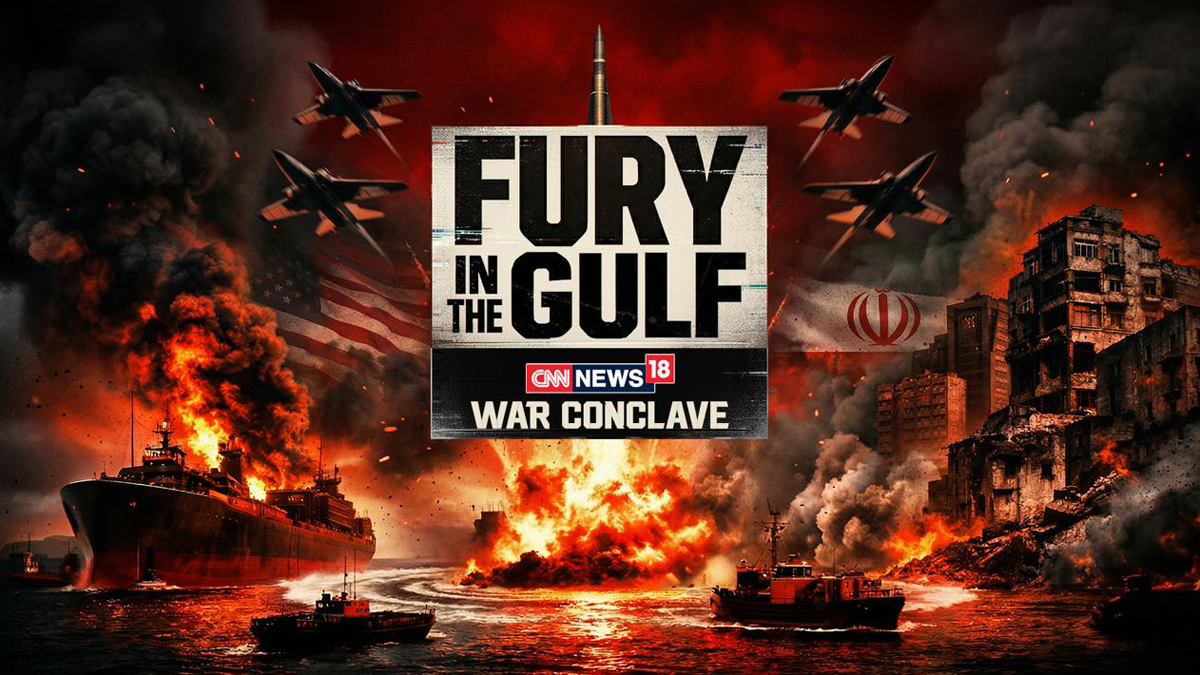
MUMBAI: CNN-News18 is set to host a special three-hour broadcast, Fury in the Gulf – War Conclave, on April 7, aiming to decode the escalating West Asia crisis and its far-reaching implications for India.
Scheduled from 4:00 PM to 7:00 PM, the conclave comes at a time when tensions between Iran and the United States are reshaping global geopolitics and triggering economic uncertainty. With India’s deep energy ties, trade links and large diaspora in the Gulf, the developments carry significant domestic relevance.
Built around the theme ‘Conflict, Consequences, and The Future,’ the programme will feature six curated sessions combining one-on-one interviews and panel discussions. The focus is to cut through the clutter and offer viewers a clearer understanding of the fast-evolving situation.
Key sessions include ‘Diplomacy in Times of War’ featuring Shashi Tharoor, and ‘World After the Iran Conflict’ with voices such as Ram Madhav, Reuven Azar, representatives from the European Union and the Iranian Deputy Envoy. Another session titled ‘Another Dunkirk?’ will bring together K. J. S. Dhillon and Jitin Prasada among others.
CNN-News18 editorial affairs director Rahul Shivshankar said, “In times of war, clarity becomes the most powerful tool. Fury in the Gulf – War Conclave brings together credible voices to address the questions and confusion that arise amid an overwhelming influx of information.”
He added that the initiative is aimed at delivering “facts, perspective, and insight” at a time when misinformation can easily cloud public understanding.
Echoing the sentiment, CNN-News18 CEO– English and business news Smriti Mehra said the conflict marks a defining global moment, with consequences that extend well beyond the region. She noted that the conclave seeks to present the crisis with “depth, nuance and responsibility” so audiences can better grasp its real-world impact.
As geopolitical tensions continue to dominate headlines, the conclave positions itself as an attempt to bring order to the noise, offering viewers a structured, insight-led look at a complex and rapidly shifting global situation.






