News Broadcasting
Intel Media opens offices in LA, New York in TV push

MUMBAI: Setting up shop in Los Angeles’ Santa Monica and New York’s Nolita brings Intel closer to the major TV networks and production studios that the world’s biggest chipmaker must strike deals with to gather content for its live and on-demand service, Intel spokesman Jon Carvill said.
Opening the offices is a sign that Intel is committed to moving ahead with the venture even though progress making deals has been slow. Some industry insiders have expressed doubts about Intel’s ability to successfully create a business to challenge traditional cable operators.

“It suggests that there’s an ongoing level of interest, maybe an incremental positive to their commitment,” said Williams Financial Group analyst Cody Acree. “They have to continue down this path or there’s no hope of being successful.”
Intel plans to introduce the TV service, to be delivered through the internet and a set-top box, this year in a phased rollout in regional markets, Carvill said.
In July, Intel Media hired Moe Khosravy, a cloud-computing expert who previously worked at Microsoft Corp and VMWare Inc, as head of software and user experiences. Intel has about 375 people working on the TV business, most of them based at Intel’s headquarters in Santa Clara, California.
Some content providers have agreed with Intel about how their content would be distributed, but as of June the chipmaker had yet to sign any deals despite offering to pay sizeable premiums over traditional cable rates.
Carvill declined to comment on Intel’s negotiations.
Intel is not the only technology company trying to revolutionise the TV industry, where Comcast Corp, Time Warner Cable Inc and DirecTV are players and have much to lose from potential new entrants. Apple Inc, Google Inc and Amazon.com Inc are believed to be working on their own new TV services and products.
Media companies typically give better prices to operators with more viewers, such as large cable companies, and charge higher prices to smaller or newer entrants. Since Intel’s TV service has yet to start, it can expect to pay a premium.
While Intel has not said how much it plans to charge for its TV service, Intel Media head Erik Huggers has billed it as a premium product, with small bundles of channels and an attractive user interface rather than as a cut-rate option for consumers hoping to save money by canceling their cable subscriptions.



News Broadcasting
CNN-News18 to host Fury in the Gulf conclave on West Asia crisis
Three-hour summit to unpack geopolitical fallout and impact on India
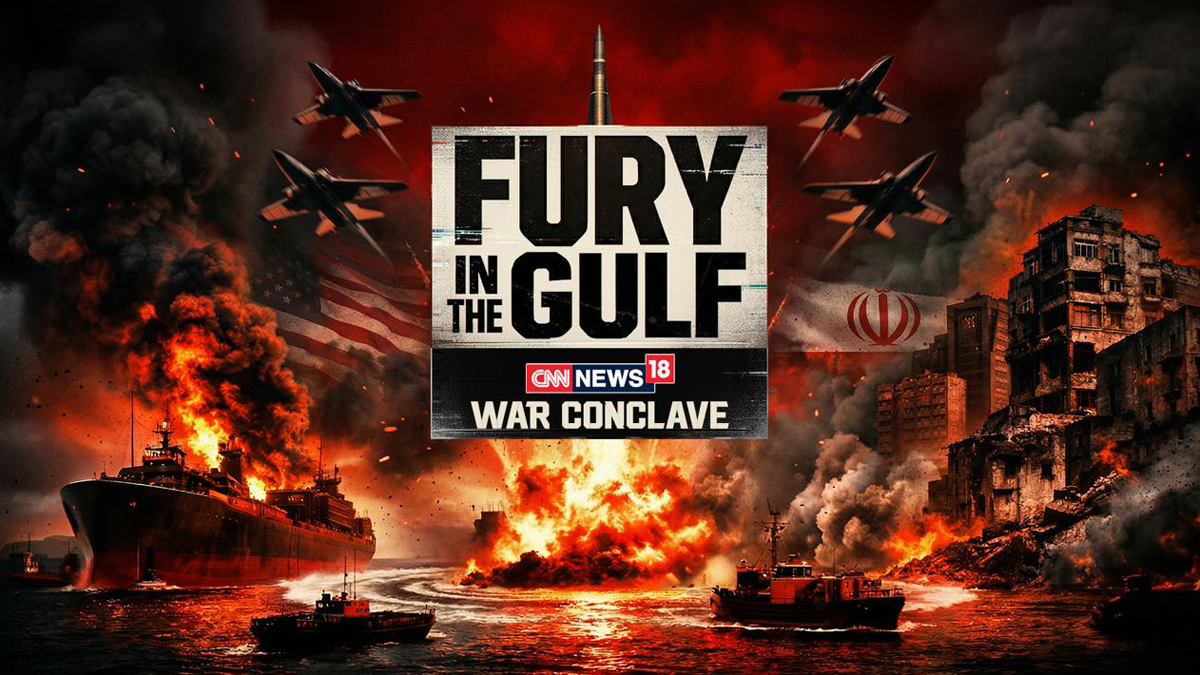
MUMBAI: CNN-News18 is set to host a special three-hour broadcast, Fury in the Gulf – War Conclave, on April 7, aiming to decode the escalating West Asia crisis and its far-reaching implications for India.
Scheduled from 4:00 PM to 7:00 PM, the conclave comes at a time when tensions between Iran and the United States are reshaping global geopolitics and triggering economic uncertainty. With India’s deep energy ties, trade links and large diaspora in the Gulf, the developments carry significant domestic relevance.
Built around the theme ‘Conflict, Consequences, and The Future,’ the programme will feature six curated sessions combining one-on-one interviews and panel discussions. The focus is to cut through the clutter and offer viewers a clearer understanding of the fast-evolving situation.
Key sessions include ‘Diplomacy in Times of War’ featuring Shashi Tharoor, and ‘World After the Iran Conflict’ with voices such as Ram Madhav, Reuven Azar, representatives from the European Union and the Iranian Deputy Envoy. Another session titled ‘Another Dunkirk?’ will bring together K. J. S. Dhillon and Jitin Prasada among others.
CNN-News18 editorial affairs director Rahul Shivshankar said, “In times of war, clarity becomes the most powerful tool. Fury in the Gulf – War Conclave brings together credible voices to address the questions and confusion that arise amid an overwhelming influx of information.”
He added that the initiative is aimed at delivering “facts, perspective, and insight” at a time when misinformation can easily cloud public understanding.
Echoing the sentiment, CNN-News18 CEO– English and business news Smriti Mehra said the conflict marks a defining global moment, with consequences that extend well beyond the region. She noted that the conclave seeks to present the crisis with “depth, nuance and responsibility” so audiences can better grasp its real-world impact.
As geopolitical tensions continue to dominate headlines, the conclave positions itself as an attempt to bring order to the noise, offering viewers a structured, insight-led look at a complex and rapidly shifting global situation.






