Hindi
Insurgency issues, lack of cinemas plague NE India filmmakers


MUMBAI: An interaction with first-time filmmakers from north-east India showed that their primary concern was the lack of exhibition facilities in the seven states where the number of theatres has come down substantially.
The filmmakers, who were part of workshops held by the Films Division, had the satisfaction of showing their films at the ongoing Mumbai International Film Festival of documentary, short and animation here in a separate package – Telling Tales from the Northeast.

The films also showed that they were disturbed by insurgency in their part of the country and were struggling to find peace.
Lallianpuii (Mizoram), Aldrin Zosangliana (Mizoram), Anungla Longkumer (Nagaland), Tiakumzuk Aler (Nagaland), Megotsolie Dolie (Nagaland), and Arup Mazumder (Assam, Director of Photography) had trained with the Division beginning in 2014 and this is the first phase of a continuing programme. States like Manipur and Tripura might be on the Films Division map soon. Of these states, only Assam has an organised film industry but there too, FD deputy director general Joshy Joseph chose to go to Silchar instead of the state capital, Guwahati.
Over a mere nine days, the participants completed a film each: three days to write, three to shoot and three to edit. Since there are virtually no cinemas in Nagaland and Mizoram, the six will never see their films in a local theatre.
Tranquility (Lallianpuii) is about car drivers in Aizawl, a relatively ‘crowded’ capital, who are amazingly patient and tranquil, even when stuck in traffic jams. Sounds of horns are conspicuous by their absence. In a mere three minutes, Lallianpuii provides a capsule of a horn-free city and its polite drivers, with car registration numbers beginning with MZ. The story is in the form of a mother and child going shopping.
Songs of the Marbles (Ao) uses playing marbles as currency among children and a child bully as a symbol of political extortionists. It is made in the organic unity style, cyclically, practically ending where it began. The idea of taking marbles by extortion was a symbolic picture of the true scenario, the filmmaker said.
Birth of a Poem (Mazumder) highlights the plight of a lover waiting to meet his beloved and how his longing gives birth to a romantic poem.
Misty Voyage (Losanghina) focuses on the Mizos who do not venture out after dark because of the two-decade old insurgency, and watch films and, in terms of entertainment, programmes dubbed in Mizo, on TV.
Of the two Nagaland films, one addresses displacement, and unsung heroes. It is called Untitled and uses only one Naga folk song, and no dialogue whatsoever. The other version of the film was called the ‘faculty version’, or ‘Anungla’, because it was ideated by her.
Lack of regular cinemas in the region also means virtually no censorship, and filmmakers can make films of their choice. But they have to depend upon DVD distributors and cable TV operators. The filmmakers from Mizoram said Mizos generally do not speak or understand any language other than Mizo and even Salman Khan’s films are dubbed in the local language. Songs, however, are left intact. In Nagaland, the filmmakers said Nagamese is the link language among many tribes so the dubbing is into Nagamese. Most people in the state love to watch Korean soap operas and identify a lot with Korean culture. Nagas are also very fond of Korean content.
Insurgency has almost ended in Mizoram after 1986, but Nagaland continues to face the problem. There is no state help for filmmakers in either state, films being low on their priority list.
The North East Zone Cultural Centre, set up in the 1980s by the then Prime Minister Rajiv Gandhi, still functions with headquarters in Dimapur (Nagaland). Though it funds cultural activities, and even documentation, cinema is not on their agenda.
Joshy pointed out that the camera, sound and editing were handled by professionals and the equipment was sourced from the nearest big city, Kolkata.
Many more such workshops are needed before the outreach can have full impact, but all six filmmakers were of the unanimous view that this was a breakthrough. As ‘Puii’ summed it up, “I was so touched when, after the screening of my film, some members of the audience expressed their hope that other cities will follow Aizawl in becoming horn free.”

Hindi
Zee5 and Applause Entertainment team up for whodunnit ‘Everybody Loves Sohrab Handa’
Rajat Kapoor directs star-studded murder mystery streaming from 10 April.
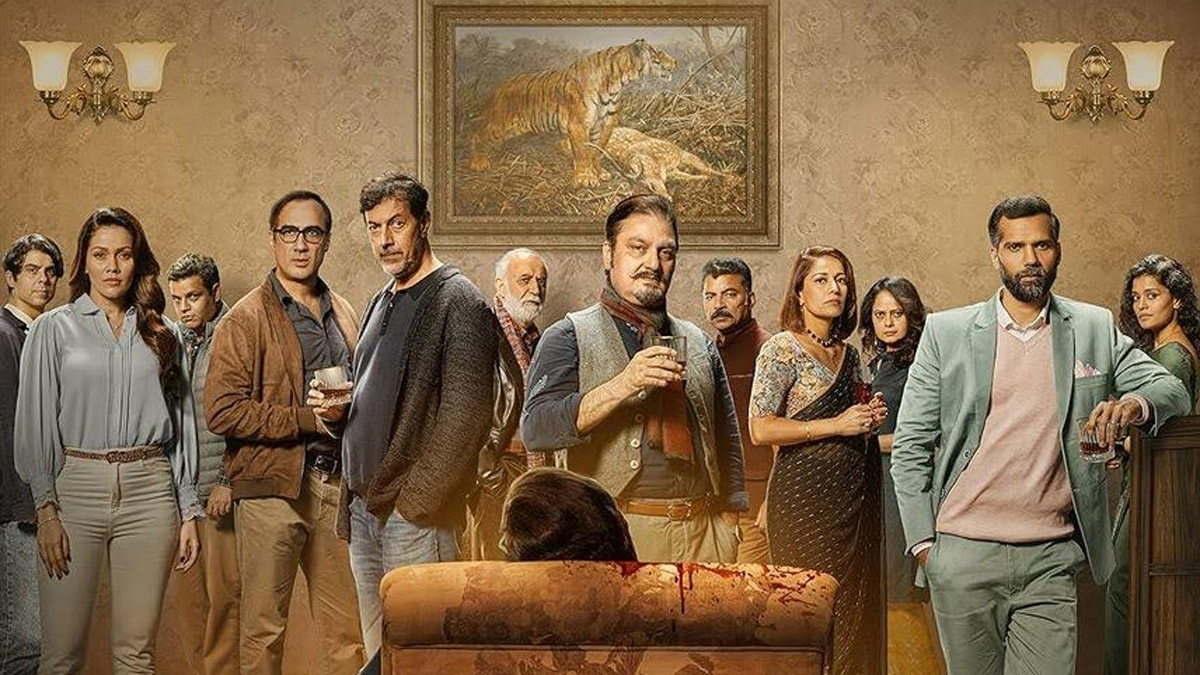
MUMBAI: Zee5 is serving up another killer collaboration and this time, the murder mystery comes with a generous side of dark humour and family dysfunction. The streaming platform has partnered with Applause Entertainment and Mithya Talkies to bring Everybody Loves Sohrab Handa, a fresh, twisted whodunnit written and directed by acclaimed filmmaker and actor Rajat Kapoor. The film will stream exclusively on Hindi Zee5 from 10 April.
The movie reimagines the classic murder mystery genre with a contemporary, darkly comic edge. It revolves around a group of friends and family who smile, drink, and celebrate together until the silence snaps and long-buried secrets spill out. The stellar ensemble cast includes Vinay Pathak, Ranvir Shorey, Waluscha De Sousa, Saurabh Shukla, Chandrachoor Rai, Neil Bhoopalam, Koel Purie, Palomi Ghosh, and Rajat Kapoor himself.
This latest offering continues the successful partnership between Zee5 and Applause Entertainment, which has previously delivered diverse hits such as Mithya, Bloody Brothers, and Jab Khuli Kitaab.
&TV Business Head of hindi Zee5 and chief channel officer Kaveri Das said, “Our collaboration with Applause Entertainment has consistently delivered distinct, high-impact storytelling. Everybody Loves Sohrab Handa is a natural progression, reinforcing our focus on genre-led content with a compelling whodunnit premise and a strong ensemble cast.”
Applause Entertainment business head for movies Sunil Chainani added, “This film adds yet another compelling layer to our slate with Rajat Kapoor’s unmistakable voice.”
Rajat Kapoor shared, “What interested me was not just the mechanics of a whodunnit, but the emotional violence that precedes physical violence. These are people who smile at each other, but there’s so much that is not said.”
The film promises razor-sharp writing, layered performances, and simmering tension, inviting viewers not just to solve the crime but to unravel the complex relationships at its heart.
If you love a good murder mystery served with wit and emotional depth, Everybody Loves Sohrab Handa looks set to be your next addictive watch. Mark your calendars, the whodunnit drops on Hindi Zee5 from 10 April.






