News Headline
Inside India’s dubbing and subtitling industry

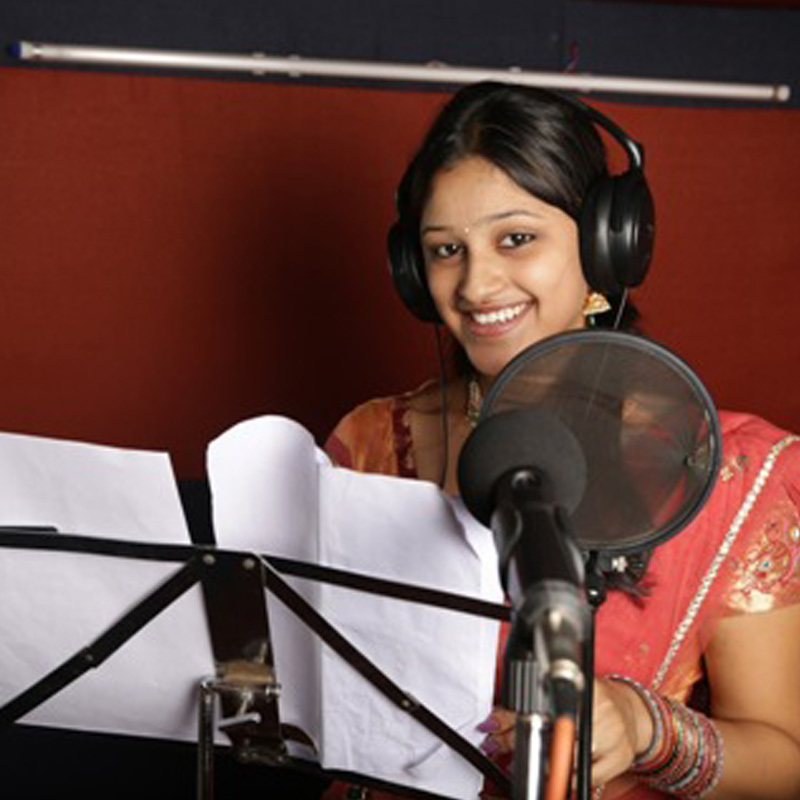
MUMBAI: The dubbing and subtitling industry in India was founded due to the television business’ need to leverage a variety of content from within different markets in the country. Indian viewers first tasted dubbed content thanks to Discovery World. In the early 90’s, dubbing was predominantly restricted to kids’ animation content by Disney. This was then picked up by private broadcasters as a fixed slot for kids that later evolved into a dedicated kids channel available in multiple languages. The first dub theatrical hit was Jurassic Park, which opened the Pandora’s box for cult South Indian films like Roja. Thus, a degree of variety and freshness was injected into Indian programming.
Demand for localised content has grown
Today, dubbing and subtitling is a flourishing business in India with Hollywood films, animation films and regional content at the heart of it. This wasn’t the case few years ago when only international content was dubbed for the Indian market. In India dubbing mostly happens in three Indian languages- Hindi, Tamil and Telugu. Spider-Man 3 was dubbed in Bhojpuri in addition to Hindi, Tamil and Telugu. A Good Day to Die Hard, the most recent instalment in the Die Hard franchise, was the first ever Hollywood film to receive a Punjabi language dub as well.

In 1983, PA Krishnan founded the Dubbing Artistes Union of South India, an association for dubbing artistes. The union, which is now called South Indian Cine and Television Artistes and Dubbing Artistes Union, has over 2,000 artistes and more than 30 voice co-ordinators or dubbing agents (people who choose dubbing artistes) as its members. It is also affiliated to the Film Employees Federation of South India (FEFSI).
The surge and infusion of international content entering India and demand to watch it in native language has witnessed a steady rise. Serials and small-format shows from Tamil and Bengali are now being dubbed and subtitled in many Indian and foreign languages.
Major dubbing companies have now given way to smaller players like BOL Media, Native Ninja, VSI Group, etc. UTV shut down five years back, while Crest Animation pulled the plug on its operations almost 10 years ago. In terms of corporate players only Prime Focus still exists.
Amazon Prime and Netflix are spending big on content localisation. They are also producing original Indian content that is being dubbed for international markets. Among the global OTT players, a major growth driver is Netflix, which launched its global video on demand (SVOD) service in January 2016. It has now 104 million paid subscribers in 190 countries and the service supports 24 languages.
“ZEEL has a Bollywood movie pay television channel in Spanish language called ZEE Mundo. So, a lot of Indian content is travelling overseas now. Recently Aamir Khan’s movie also got dubbed in China and people over there loved it,” says BOL Media Founder and CEO Rahul Bhatia highlighting the evolution of India’s dubbing and subtitling industry.
Economics of dubbing and subtitling industry
The dubbing industry in India is valued anywhere between Rs 100-120 crore. Interestingly, the bigger companies are now giving way to smaller ones. The key reason behind this development has been the exodus of influential executives from major players setting up their own dubbing businesses.
The mushrooming of smaller companies has greatly benefited broadcasters and production houses that now have access to more technical resources at pocket-friendly prices. For instance, it now costs Rs 15,000 to dub a television episode as compared to Rs 80,000 in the past. Today, a three-hour movie costs Rs. three lakh when dubbed for a television audience and around Rs. 15 lakh for the theatres.
In the general entertainment space, dubbing and executing one episode takes four days while subtitling of one hour content takes two days. However, a movie for the television audience is dubbed in approximately 15 day while that for a theatre could need up to 30. While dubbing has become cheaper, content translation charges have witnessed a spike.
Translators charge Rs. 1 per word for an Indian movie and Rs. 10 for a foreign film, while dubbing costs vary between Rs. 80 to Rs. 130 per minute for one movie.
“There are very few corporate structures having an entire team of dubbing directors, sound engineers, quality controllers in house with defined SLA and workflows. Rest of the dubbing companies are owned and operated by studio owners, voice actors or dubbing producers with a niche clientele. Majority of the companies assemble the team and work on a project-to-project basis,” says Native Ninja founder Sanjeev Das.
The road ahead
Dubbing companies acquire customers organically. The major chunk of the business is comes from the television industry. But going forward, OTT platform could be the biggest source of business. Around 60 percent of the business comes from the television industry, 30 per cent from movies and remaining 10 per cent from OTT. In the future, OTT is likely to contribute 60 percent of the dubbing business.
The business will be on a steady growth path due to the increased volume of content being created with a focus on localisation. Dubbing, subtitling, and closed captioning for English and major international languages could be taken over by technology such as artificial Intelligence, machine learning, automated captioning and auto-translation. However, precise and accurate translation, adaptation, interpretation and translation will always require a human touch. That’s where localisation companies need to be at the top of their game. With such advancements, the industry is bound to witness a shake up in the next five years, with only those prepared to adapt to the challenges likely to survive and thrive.






NEW DELHI: Hamdard Laboratories gathered a cross-section of India’s achievers in New Delhi on Friday, handing out the Hakeem Abdul Hameed Excellence Awards to figures who have left their mark across healthcare, education, sport, public service and the arts.
The ceremony, attended by minister of state for defence Sanjay Seth and senior officials from the ministry of Ayush, celebrated individuals whose work blends professional success with a sense of public purpose. It was as much a roll call of achievement as it was a reminder that influence is not measured only in profits or podiums, but in people reached and lives improved.
Among the headline awardees was Alakh Pandey, founder and chief executive of PhysicsWallah, recognised for turning affordable digital learning into a mass movement. On the sporting front, Arjuna Awardee and kabaddi player Sakshi Puniya was honoured for her contribution to the game and for pushing women’s participation onto bigger stages.
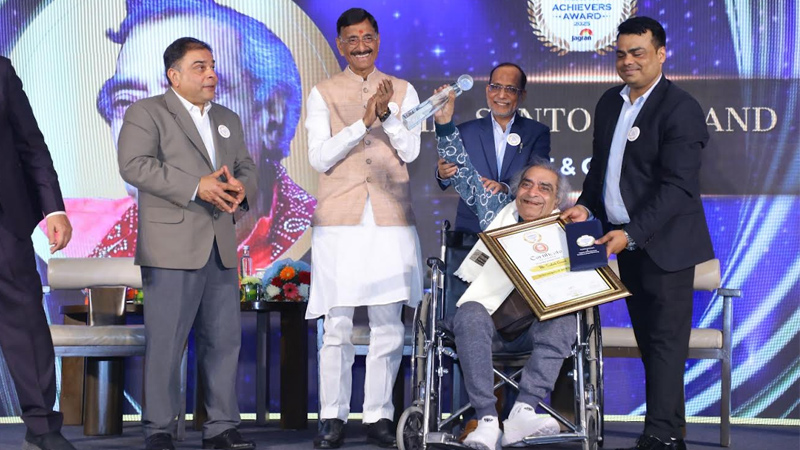
The cultural spotlight fell on veteran lyricist and poet Santosh Anand, whose songs have echoed across generations of Hindi cinema. At 97, Anand accepted the honour with characteristic humility, reflecting on a life shaped by perseverance and hope.
Healthcare honours spanned both modern and traditional systems. Manoj N. Nesari was recognised for strengthening Ayurveda’s place in national and global health frameworks. Padma shri Mohammed Abdul Waheed was honoured for his research-backed work in Unani medicine, while padma shri Mohsin Wali received recognition for his long-standing contribution to patient-centred care.
Education and social development also featured prominently. Padma shri Zahir Ishaq Kazi was honoured for decades of work in education, while former Meghalaya superintendent of Police T. C. Chacko was recognised for public service. Goonj founder Anshu Gupta received an award for his dignity-centred rural development initiatives, and the Hunar Shakti Foundation was honoured for empowering women and young girls through skill development.
The Lifetime Achievement Award went to former IAS officer Shailaja Chandra for her long career in public healthcare and governance, particularly in the traditional systems under Ayush.
Speaking at the event, Hamdard chairman Abdul Majeed said the awards were a tribute to those who combine excellence with empathy. “These awardees reflect Hakeem Sahib’s belief that healthcare, education and public service must ultimately serve humanity,” he said.
Minister Seth struck a forward-looking note, saying India’s young population gives the country a unique opportunity to become a global destination for learning, health and wellness by 2047.
The ceremony also featured the trailer launch of Unani Ki Kahaani, an upcoming documentary starring actor Jim Sarbh, set to premiere on Discovery on 11 February.
Instituted in memory of Unani scholar and educationist Hakeem Abdul Hameed, the awards have grown into a national platform that celebrates those building a more inclusive and resilient India. For one evening at least, the spotlight was not just on success, but on service with substance.







