Movies
Inox Leisure’s QIP raises Rs 250 crore


MUMBAI: Multiplex chain Inox Leisure has raised Rs 250 crore through a qualified institutional placement (QIP) of shares. Under the QIP issue, over-subscribed by 3.5 times, Inox allotted 9,803,921 shares of face value of Rs 10 each at Rs 255 per share to highly reputed and marquee global and Indian institutional investors.
Some of the global investors included Abu Dhabi Investment Authority and Eastspring Investments, while the Indian investors included some of the largest domestic mutual fund houses like ICICI Prudential, Birla Mutual Fund, Nippon India Mutual Fund, DSP Mutual Fund and Sundaram Mutual Fund. The issue allocation is approximately 69 per cent and 31 per cent to Indian and foreign investors respectively.
Inox Group director Siddharth Jain said, “The stupendous response to our QIP endorses the faith our investors have in the future of our business model and the strength of the management team. We are delighted with the participation and support of high quality investors, which will fuel the journey of Inox 2.0 in the future. I extend my deepest gratitude towards our investors for the trust they have bestowed upon us.”

The funds raised through the QIP would be utilised by Inox to meet capital expenditure requirements for ongoing and future projects, to sustain growth in the business, for expansion and to improve the financial leveraging strength of the company.
The funds raised will also be invested towards working capital requirements, towards debt repayments including repayment of any existing or future debt incurred for any purpose including for paying off any liability, for investments in subsidiary companies as well as for general corporate purposes, including but not limited to pursuing new business opportunities, acquisitions, alliances etc. Overall, Inox aims to augment its business growth with the freshly accrued funds.



Hollywood
Paramount eyes $24bn Gulf support to fund Warner Bros Discovery merger: Reports
Sovereign funds line up funding as media giants chase streaming scale
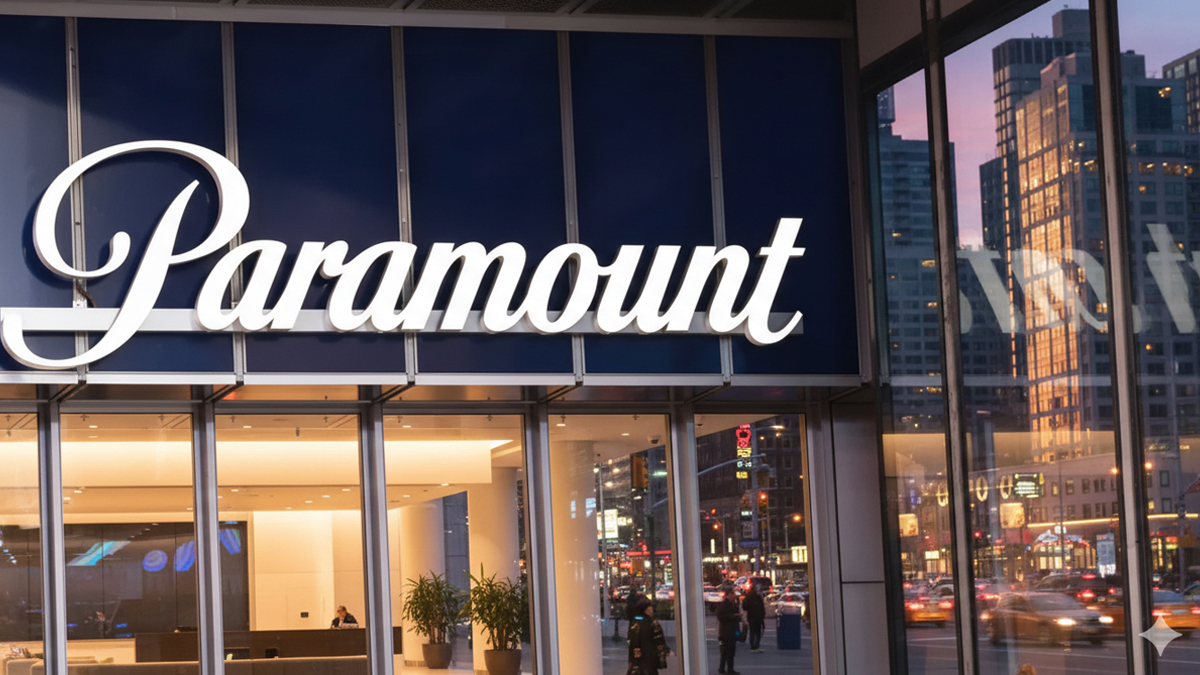
NEW YORK: Paramount Skydance is in talks to secure nearly $24 billion in equity commitments from Gulf sovereign wealth funds to support its planned takeover of Warner Bros. Discovery, according to a WSJ report.
The funding push comes as Paramount Skydance advances its proposed $110 billion deal for Warner Bros. Discovery, which carries an equity valuation of $81 billion and is expected to close in the third quarter of 2026.
At the heart of the financing plan are three major Gulf investors. Saudi Arabia’s Public Investment Fund is expected to contribute roughly $10 billion, while the Qatar Investment Authority and Abu Dhabi-based L’imad Holding are likely to make up the remainder.
Crucially, the proposed investments are structured as non-voting stakes. This means the Gulf backers would not have direct control in the combined entity, a move designed to ease regulatory concerns in the United States. Paramount executives reportedly do not expect the deal to trigger scrutiny from bodies such as the Committee on Foreign Investment in the United States or the Federal Communications Commission.
If completed, the merger would bring together a formidable portfolio of entertainment and news assets, including CNN and CBS. The combined entity aims to better compete in a fast-evolving media landscape where streaming platforms are steadily pulling audiences away from traditional television.
The deal reflects a broader shift in global media, where scale is increasingly seen as essential to survive the streaming wars. By pooling content libraries, technology and distribution, Paramount Skydance and Warner Bros. Discovery are betting on size and synergy to drive future growth.
The involvement of deep-pocketed Gulf investors also underscores the growing role of sovereign wealth in shaping global media consolidation, particularly at a time when high-value deals demand equally large financial backing.
With shareholder votes and regulatory milestones still ahead, the proposed tie-up remains one of the most closely watched media deals of the year. If it clears the final hurdles, it could redraw the competitive map of the global entertainment industry.






