Event Coverage
Industry needs to come together to put all systems in place for Phase 2: Parameswaran


MUMBAI: The multi system operators (MSOs) might have successfully installed set top boxes (STBs) in majority of homes in phase 1 of digitisation but the government feels that is just one aspect of the drive and other aspects like subscriber management system (SMS) and billing system need to be put in place if the real benefits of digitisation have to be realised.
The Telecom Regulatory Authority of India (Trai) wants the industry to set things right for Phase 2 of cable TV digitisation. Trai consultant N Parameswaran said Tuesday that the stakeholders need to work towards having all the systems in place in order to implement digitisation in letter and spirit.
“Digitisation has not happened in a manner that we wanted to. It’s not a regulatory issue. The industry has to come together and ensure that that all the systems are in place from day one for phase 2,” he said.

According to Parameswaran, the real benefits of digitisation have not reached people. "The subscriber management system is not in place. What has happened is only set top boxes have been installed,” Parameswaran said, while taking part in a panel discussion on digitisation at Ficci Frames 2013.
Parameswaran said that the Trai had recently issued notices to MSOs and LCOs (Local Cable Operators) to make their SMS operational in DAS areas to ensure things fall in place.
While commending the industry for achieving digitisation in a short span of time, Den Networks CMD Sameer Manchanda assured that the SMS and billing system will fall in place in 60 days.
“We should have all things in place in 60 days. Putting eight million STBs was a herculean task. Digitisation has taken years in other countries,” Manchanda said.
IndiaCast Group CEO Anuj Gandhi said the ARPUs (Average Revenue Per User) will increase gradually. The key is to segment existing channels and create packages accordingly. A case in point, Gandhi said, was having a South Indian channel package for Mumbai.
Gandhi urged the industry to take one step at a time. The immediate priority, he said, was to get back-end systems in place. “For broadcasters, it’s a scary thought that the customers are getting more channels for the same price,” averred Gandhi.
According to Multi Screen Media (MSM) CEO Man Jit Singh, government should continue to play the facilitators role like it did in the first phase. He also said that STBs have installed, subscribers are getting digital signals but little has changed apart from that.
“What we have shown in first phase is that we came together as an industry to implement digitisation. The government also has a critical role to play. It should continue to play the facilitators role to bring together different stakeholders in the industry,” Singh said.
He added, “Tiering and ARPU is incremental to drive the market together by understanding the consumer needs and expectations. The burden of expansion has to be shared by the Local Cable Operator (LCO), Multi System Operator (MSO), broadcaster and the consumer.”
IBM Global Business Services India/SA Director & Partner, Industry Leader – Media & Entertainment Raman Kalra said that it is important for the industry to keep parallel strategy in place as the business model is evolving continuously.
“Consumer is willing to pay but the industry should know how to extract it. The key is to know your customers to facilitate micro-segmentation and then work on the content strategy accordingly,” Kalra said.
Reliance Broadcast Network Limited (RBNL) CEO Tarun Katial said the advent of digitisation has made things easier for new channels as the carriage and placement is not a big problem anymore.
He also said that the availability of more channels has meant that consumers are sampling more channels which is good for niche channels. He also felt that dynamics will change as advertisers will now have to shell out more for advertising on television as subscription revenues go up and advertising duration is cut down.
Times Television Network (TTN) MD & CEO Sunil Lulla said, “The current economics are not adequate for the success of Phase 2 of digitisation. There is an urgent need for industry transformation and an effective change in consumer experience. We are sitting at the cusp of change where widespread and deep digitisation will happen on the back of consumers, regulators and government working together.”



Event Coverage
Anime India announces Amazon MX Player as co-presenting partner for Anime India Kolkata 2026
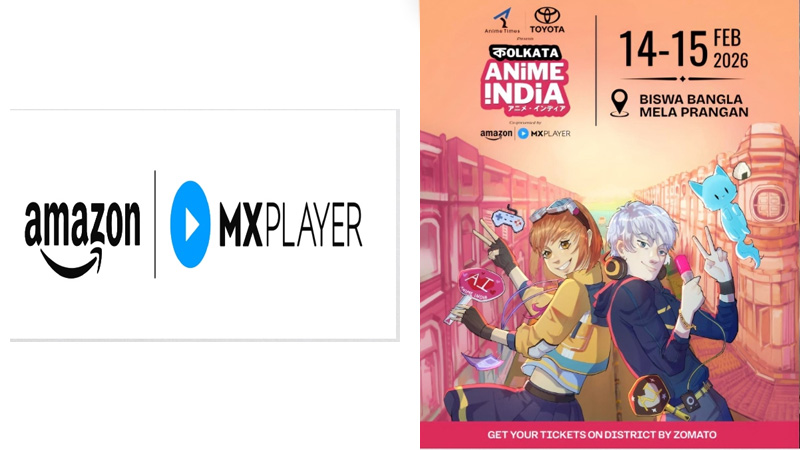
MUMBAI: Riding high on the success of its blockbuster Mumbai debut, Anime India is accelerating its nationwide expansion with the announcement of Amazon MX Player as the co-presenting partner for Anime India Kolkata. The partnership marks a significant step forward in the festival’s mission to deliver large-scale, accessible, and fan-first anime experiences across the country.
Scheduled for 14 and 15 February 2026 at the iconic Biswa Bangla Mela Prangan, Anime India Kolkata will launch the first regional chapter of what is set to be a year-long, multi-city tour. As the curtain-raiser for the 2026 circuit, the Kolkata edition aims to fuse the energy of global Japanese pop culture with India’s fast-growing community of anime, manga, and pop-culture fans.
A household name in digital entertainment, Amazon MX Player brings unmatched reach and cultural relevance to the Anime India platform. With its expanding focus on anime and youth-driven content, Amazon MX Player’s involvement as co-presenting partner reinforces Anime India’s vision of making anime culture more inclusive breaking barriers of language, geography, and accessibility to connect with fans nationwide.
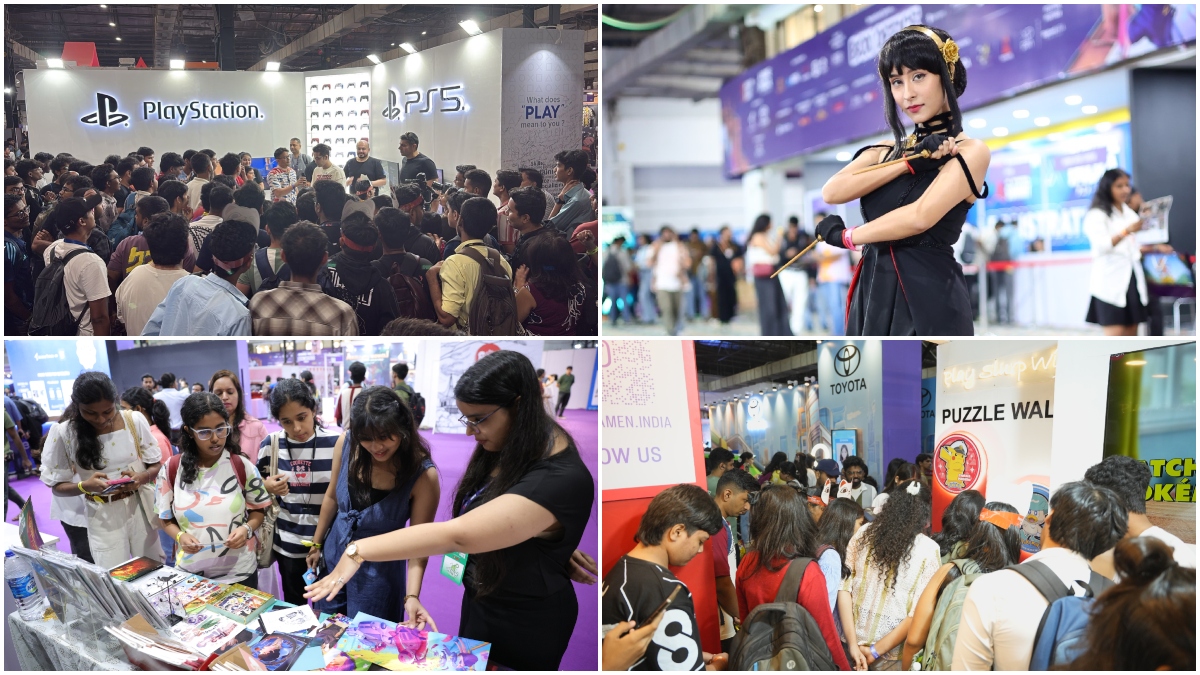
Anime India Kolkata 2026 will showcase cosplay competitions, interactive zones led by the Indian Gunpla Community, India-39 Vocaloid Community, The Japan Curry, and Adda-o-Otaku by The Otaku Guild. Fans can join tournaments across fighting games, Pokémon VGC, and more. Acclaimed Japanese director Susumu Mitsunaka (Haikyu!!) will attend as guest of honour, appearing in panels and live sessions. Positioned as an immersive celebration of fan culture and industry collaboration, the Kolkata edition marks the beginning of Anime India’s nationwide expansion.
Sharing their perspective on the partnership, Amazon MX Player director Aruna Daryanani expressed, “Anime in India has evolved from a niche interest into a mainstream cultural movement, driven by an increasingly engaged and passionate fanbase. At Amazon MX Player, our focus is on expanding access by bringing anime to audiences across the country for free and in multiple local languages. Our association with Anime India reflects our commitment to supporting the growth of anime in India and deepening connections with fans, while continuing to build Amazon MX Player as a trusted destination for free, high-quality entertainment.”
“Anime India Kolkata is a celebration of how anime has grown beyond entertainment into a powerful cultural and creative force. By bringing fans, creators, and industry leaders onto one shared platform, the festival is helping define the future of pop culture in India,” said Anime India co-founder and director Neha Mehta.
The debut edition of Anime India 2025 in Mumbai attracted over 29,000 fans, quickly cementing its status as a landmark celebration of anime and Japanese pop culture. Riding on this overwhelming response, the Kolkata chapter is projected to draw more than 40,000 visitors across two days, positioning it as one of the biggest anime conventions ever held in eastern India.
Anime India is focused on bringing together fans from across the country to create a truly pan-India celebration of anime, manga, cosplay, gaming, and Japanese culture. With plans to expand into four key metropolitan hubs in 2026—east (Kolkata), north (Delhi), west (Mumbai), and south (Hyderabad)—the festival seeks to deliver globally benchmarked experiences while supporting and uplifting creators, artists, and fan communities throughout India.






