News Headline
Industry gives mixed views on BARC India’s decision to separate pay and FTA viewership


MUMBAI: BARC India’s decision to split its reportage of pay and FTA viewership has received mixed reviews from the industry. While some believe that this will be beneficial to both broadcasters and advertisers in channelising their resources, others believe that it has no meaningful objective.
Welcoming the move by BARC India, Times Network president – strategy Vivek Srivastava said, “It aids both broadcaster and advertisers to better channelise their resources. Advertisers need audiences who can spend and there is no point paying for audiences who are on the free platform and don't have the propensity to consume. Advertisers wanting premium audiences, typically news and English, can now better optimise the price they pay to different platforms and not waste marketing monies on non-premium audience from free platforms. Consequently, broadcasters will also stop over-relying on one platform just to get numbers and premium content will get its due.”
From week 27 of 2019, BARC India decided to report viewership from free and pay platform separately. The new variables are offered over and above the current urban and rural cuts that are reported by BARC India. It is made available to all the subscribers for planning and analysis through its proprietary BARC Media Workstation Software and is also published on the website for select genres.

News Nation Network president – sales & marketing Abhay Ojha is of the view that the decision could be of benefit to all stakeholders. He said, “From a broadcaster’s perspective, we can better optimise our organisational resources towards strategising GRP requirements as per the revenue strategy of the network. Alternatively, a planner in an agency can further zero in on the quality of GRP required, depending upon their brand’s core competence and DPOs will get better clarity on ROI of paid and FTA channels. Therefore, holistically it’s a welcome move.”
On the other hand, Ojha noted that for Hindi news channels, it hardly mattered which platform was giving viewership, because national Hindi news channels are most widely distributed and are very dynamic, depending on everyday events. He further pointed out, “Most of the news channels are now being taken for frequency builders rather than reach builders, therefore the pie of revenue is mostly leftover after consumption on GEC, movies, niche, vernacular channels, etc.”
While announcing its move, BARC India CEO Partho Dasgupta had said, “There has been a strong demand from the market for separate reporting of viewership from homes with pay and free connection. We have taken the market feedback in consideration with the changes that have come about in the ecosystem post the implementation of the TRAI tariff order. We believe this move is a step in the right direction to empower the industry in understanding the distinct consumption patterns of this segment and plan more effectively.”
BARC believes that reporting viewership from pay and free platform separately would enable focussed targeting. Advertisers can plan more effectively by placing insertions on the channels available on their platforms in the respective regions. It will also enable the broadcasters to make more informed decisions related to content and distribution.
A broadcaster on the condition of anonymity said, “DD Free Dish has a presence across markets both in urban and rural and across demographics. Segregation of free and pay by a single platform will suit a few networks. It has no meaningful objective that will help the advertiser or broadcaster.”
Dentsu Network, SVP Mayank Bhatnagar said, “From a media planner’s view my audiences are watching a certain set of channels whether they are in pay or FTA platform. This will help us to look at data in a slightly different manner and we will get one more cut now because earlier there was only urban and rural now there are pay and FTA platforms also. It will impact the media planner’s life because they will continue to chase TG which is targeted. From a broadcaster’s point of view, it will give one more dimension in the data cuts to see how they are performing.”
He further said, “Lot of advertisers are looking at FTA channels and they are performing well. So if I have to do a relative comparison only on the pay platform, it will be easier for me to check which are performing well there and I can do a related shift. But otherwise, it’s not going to make any major changes.”
With time, the industry will be able to make better estimations as to the effectiveness of this move.







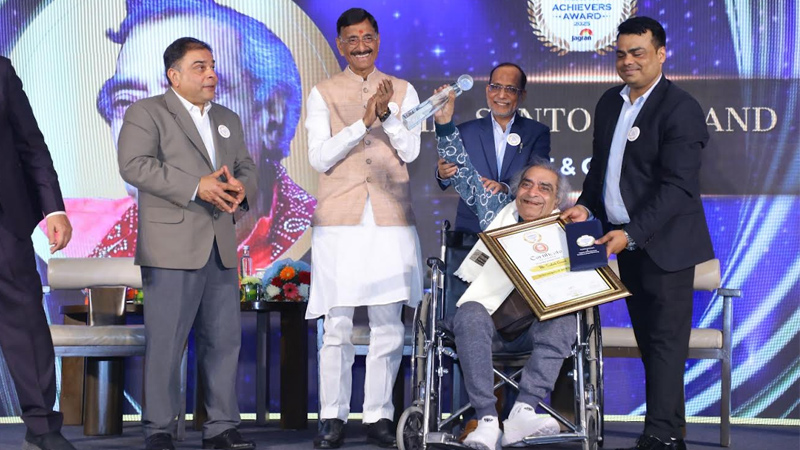
NEW DELHI: Hamdard Laboratories gathered a cross-section of India’s achievers in New Delhi on Friday, handing out the Hakeem Abdul Hameed Excellence Awards to figures who have left their mark across healthcare, education, sport, public service and the arts.
The ceremony, attended by minister of state for defence Sanjay Seth and senior officials from the ministry of Ayush, celebrated individuals whose work blends professional success with a sense of public purpose. It was as much a roll call of achievement as it was a reminder that influence is not measured only in profits or podiums, but in people reached and lives improved.
Among the headline awardees was Alakh Pandey, founder and chief executive of PhysicsWallah, recognised for turning affordable digital learning into a mass movement. On the sporting front, Arjuna Awardee and kabaddi player Sakshi Puniya was honoured for her contribution to the game and for pushing women’s participation onto bigger stages.
The cultural spotlight fell on veteran lyricist and poet Santosh Anand, whose songs have echoed across generations of Hindi cinema. At 97, Anand accepted the honour with characteristic humility, reflecting on a life shaped by perseverance and hope.
Healthcare honours spanned both modern and traditional systems. Manoj N. Nesari was recognised for strengthening Ayurveda’s place in national and global health frameworks. Padma shri Mohammed Abdul Waheed was honoured for his research-backed work in Unani medicine, while padma shri Mohsin Wali received recognition for his long-standing contribution to patient-centred care.
Education and social development also featured prominently. Padma shri Zahir Ishaq Kazi was honoured for decades of work in education, while former Meghalaya superintendent of Police T. C. Chacko was recognised for public service. Goonj founder Anshu Gupta received an award for his dignity-centred rural development initiatives, and the Hunar Shakti Foundation was honoured for empowering women and young girls through skill development.
The Lifetime Achievement Award went to former IAS officer Shailaja Chandra for her long career in public healthcare and governance, particularly in the traditional systems under Ayush.
Speaking at the event, Hamdard chairman Abdul Majeed said the awards were a tribute to those who combine excellence with empathy. “These awardees reflect Hakeem Sahib’s belief that healthcare, education and public service must ultimately serve humanity,” he said.
Minister Seth struck a forward-looking note, saying India’s young population gives the country a unique opportunity to become a global destination for learning, health and wellness by 2047.
The ceremony also featured the trailer launch of Unani Ki Kahaani, an upcoming documentary starring actor Jim Sarbh, set to premiere on Discovery on 11 February.
Instituted in memory of Unani scholar and educationist Hakeem Abdul Hameed, the awards have grown into a national platform that celebrates those building a more inclusive and resilient India. For one evening at least, the spotlight was not just on success, but on service with substance.







