I&B Ministry
Industry given till 5 Nov. for final CAS comments

MUMBAI: The information & broadcasting ministry is laying the final groundwork for the tabling of the Cable Television Networks (Regulation) Amendment Bill, 2002, that will bring about the introduction of conditional access systems (CAS) in the country.
I&B Ministry joint secretary Rakesh Mohan, who is heading the government task force on the introduction of CAS, has given interested parties (broadcasters and the cable industry) till 5 November for any last representations they may wish to make. After this the task force will prepare the final draft of the CAS Bill for tabling when Parliament convenes for the Winter Session by mid-November.
A meeting convened today in Mumbai by the Confederation of Indian Industries (CII) on the CAS issue saw good representation from both the broadcasters as well the cable industry for an intense debate on the proposed legislation. Mohan, while making it clear that the government had more or less made up its mind on the matter, said his task force was open to discussions on any further points the industry had to make.

Mohan stated that the government saw CAS as an enabling legislation that would be rolled out in the four metros in the first phase
According to sources who were present at the meeting, the gist of what Mohan had to say as regards the key issues, was as follows:
What is the basic cost per subscriber that an operator incurs for providing cable service? The costing estimate should include both investment as well as operational expenditure, Mohan said. He added that while the task force had its own estimates worked out, it was open to further clarifications as long as inflated costings were avoided.
The ministry had yet to take a final call on whether the basic tier (CAS provides for a two-tier system: basic and premium) should have a flat service charge or it needs to be based on a per channel costing. For instance, if a Rs 3 tab is put on each channel in the basic tier, then a 30-channel package will cost Rs 90.
Whether the government should decide the strength of the basic tier (as in the minimum number of channels that will be included) or whether it should spell out a minimum number of genres that should be included in the basic tier is still being debated.
On the issue of the government mandating the number of genres to be included, there appears to be a common opposition, not so on strength of the basic tier. Speaking for the cable fraternity were not just the MSOs, but local cable operators as well, who were quite forceful in their demand that the FTA package pricing needed to be determined by the government. The issue was that of their very survival was the point that was made.





I&B Ministry
Doordarshan, ICCR sign MoU to boost global reach of Indian culture
Pact taps TV, radio and digital platforms to take cultural content worldwide
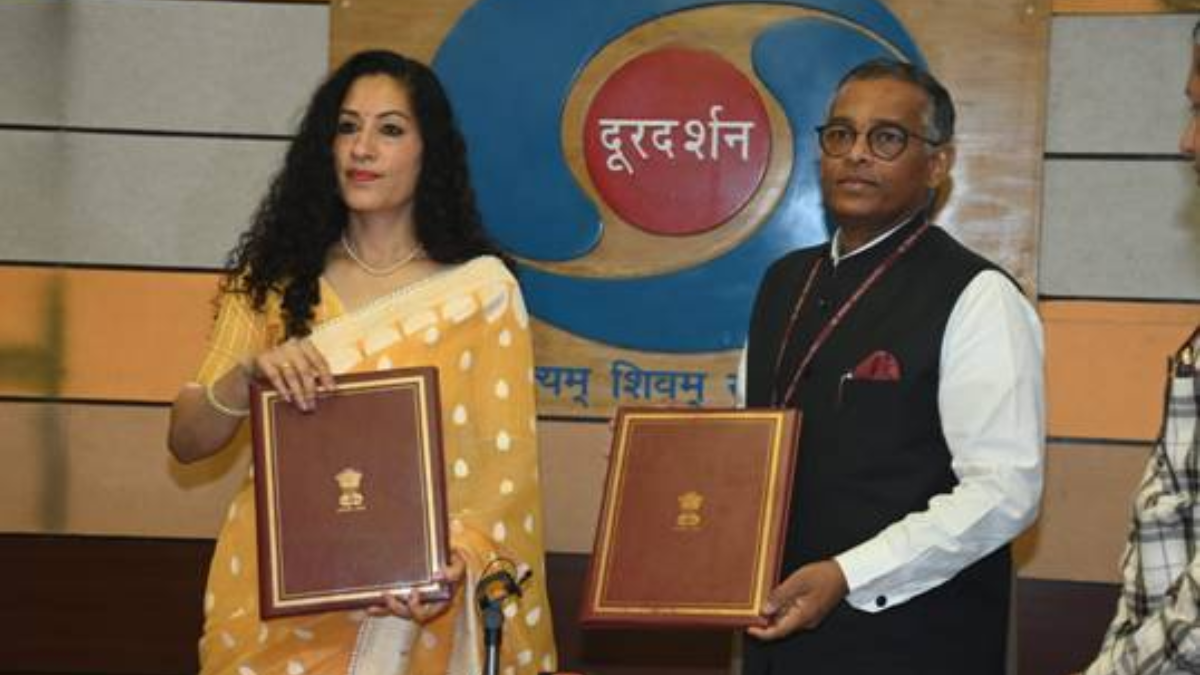
NEW DELHI: In a move aimed at taking India’s cultural story further across borders, Doordarshan under Prasar Bharati has signed a memorandum of understanding with the Indian Council for Cultural Relations to expand the global reach of Indian cultural content.
The agreement, signed on April 7 at Doordarshan Bhawan, brings together the content strength of ICCR and the wide broadcast network of Doordarshan, spanning television, radio and digital platforms.
Under the partnership, ICCR will provide a steady stream of cultural programming, including performances and events organised by Indian missions abroad such as embassies, consulates and cultural centres. Doordarshan will handle production, coverage and distribution, ensuring that these programmes find audiences not just in India but across the world.
The collaboration also opens the door for recorded cultural content from overseas missions to be aired across multiple platforms, including OTT and social media, making Indian art, music and heritage more accessible to global viewers.
A notable feature of the MoU is joint ownership of content rights in perpetuity, including digital rights. This allows both organisations to archive and reuse material over time, building a long-term cultural repository while maximising reach. Doordarshan will also support pre-event promotion and cross-platform visibility to drive engagement.
Speaking at the signing, Doordarshan director general K. Satish Nambudiripad and Indian Council for Cultural Relations director general K. Nandini Singla highlighted the potential of the partnership to strengthen India’s cultural diplomacy through modern media channels.
The agreement, initially valid for three years, also allows Doordarshan to explore monetisation opportunities from the content generated, adding a commercial layer to cultural broadcasting.
As India looks to blend tradition with technology, this partnership signals a clear intent to make its cultural voice not just heard, but seen and streamed across the globe.







