News Broadcasting
Industry cream turns up in strength for Tellys ’02


MUMBAI: It was a fitting tribute to the best of the small screen talents in the country.
In a dazzling function at the Tulip Star (formerly Juhu Centaur) Poolside in Mumbai on Friday evening, the best of channels, actors and TV shows along with television personalities who left a lasting impression on TV this year were feted with the best awards in the television industry – The Indian Telly Awards 2002.
In the presence of media luminaries like Dr Prannoy Roy, Peter Mukerjea and Yash Chopra, the awards, in their second year, felicitated the popular awards categories on Friday evening. It was perhaps appropriate that the hugely popular TV personalities Aman Verma and Nausheen (Kkusum) kicked off the proceedings with the announcement of the posthumous awards. Priya ‘Rajani’ Tendulkar and Dina Pathak, both stage and TV veterans in their own right passed away recently, were remembered fondly through audio visual clips and awards presented in their memory.

Meghna Naidu, who had enthralled audiences the earlier evening at the Indian Telly Trade and Technical Awards 2002 with her rendition of Kaliyon ka Chaman, regaled spectators with another scintillating performance before the next set of awards. The best sitcom of the year award was bagged by Office Office for Sabe TV.
The award for best comic shorts went to MTV’s Fully Faltoo. NDTV’s Reality Bites : LOC /DODA on Star News was adjudged the best current affairs programme, while the business show of the year award went to TV18’s India Business Hour on CNBC India.
The best music show of the year award was bestowed on B.A.G. Films’ Chalti ka Naam Antakshari on Star Plus. The best game show of the award was bagged by Synergy Productions’ Kaun Banega Crorepati on Star Plus.
After a whacky break with the Band of Boys with their medley of Meri Keened, You drive me crazy and Tirchee, anchors Verma and Nausheen presented the third set of awards including the best sports programme which went to Super Selector on ESPN / Star Sports. Derek O Brien’s Bournvita Quiz Contest on Zee TV bagged the best kids’ show of the year award. The best non fiction show of the year award was bagged by Kuch Yaadein Kuch Baatein, produced by Miditech for Star Gold.
The best thriller/horror show of the year award was won by Tijori Films’ Dial 100 on Sabe TV, while the best continuing TV show award was bagged by the popular Kyunki Saas Bhi Kabhi Bahu Thi on Star Plus. Balaji Telefilms’ Kahaani Ghar Ghar Ki bagged the best drama series award.
Aaj Tak won the best news channel award, while MTV won the best music channel award. Star Plus bagged the entertainment channel of the year award.
The TV actor in a comic role was bagged by Pankaj Kapur for Office Office, while the award for TV actress in a comic role was won by Reema for Tu Tu Main Main. Govind Namdeo won the award for TV actor in a negative role, while Shweta Kawatra bagged the TV actress in negative role.
Rajdeep Sardesai won the award for TV news anchor of the year award while Amitabh Bachchan, winner of last year’s personality of the year award, won the TV anchor of the year this year for KBC.
Aman Verma, the evening co-host, was also the winner of the TV personality of the year award, while Star Plus’ Tarun Katial bagged the TV programming executive of the year award. The TV CEO award was shared by Aaj Tak’s G Krishnan and Star India’s Peter Mukerjea.
Balaji Telefilms, makers of the most popular serials on TV today, walked away with the production house of the year award, while Umesh Padalkar got the award for the TV director of the year award.
TV show of the year was bagged by Kyunki Saas Bhi Kabhi Bahu Thi. Smriti Malhotra Irani was adjudged the TV actress of the year, while the TV actor award was shared by Shivaji Satam for CID and Kiran Karmarkar for Kahaani….
Among the highlights of the evening came when Ashutosh Lagaan Gowariker presented the Lifetime Achievement Award to NDTV’s Dr Roy. While accepting the award, Dr Roy, whose public appearances are extremely rare, said he felt truly privileged to be receiving it from someone who had bequeathed to the country a great work of cinema in Lagaan. Dr Roy also emphasised how invaluable to NDTV was the role of his wife Radhika Roy, who he referred to as a real source of strength and an “organisation builder.”




News Broadcasting
CNN-News18 to host Fury in the Gulf conclave on West Asia crisis
Three-hour summit to unpack geopolitical fallout and impact on India
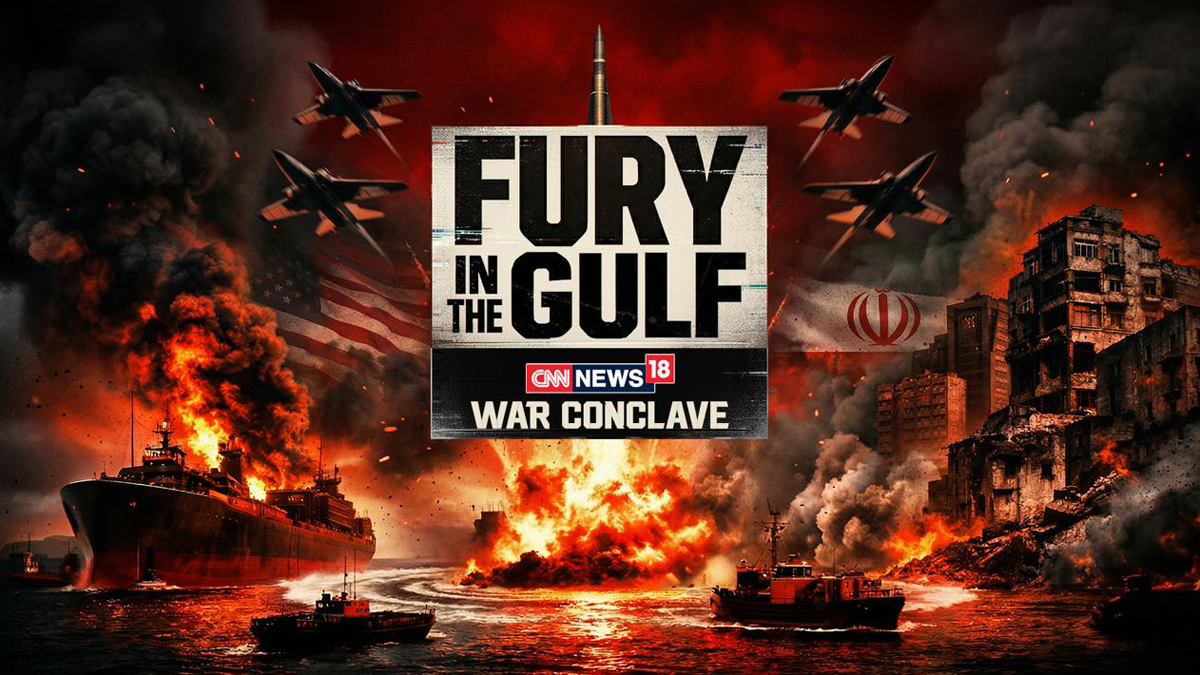
MUMBAI: CNN-News18 is set to host a special three-hour broadcast, Fury in the Gulf – War Conclave, on April 7, aiming to decode the escalating West Asia crisis and its far-reaching implications for India.
Scheduled from 4:00 PM to 7:00 PM, the conclave comes at a time when tensions between Iran and the United States are reshaping global geopolitics and triggering economic uncertainty. With India’s deep energy ties, trade links and large diaspora in the Gulf, the developments carry significant domestic relevance.
Built around the theme ‘Conflict, Consequences, and The Future,’ the programme will feature six curated sessions combining one-on-one interviews and panel discussions. The focus is to cut through the clutter and offer viewers a clearer understanding of the fast-evolving situation.
Key sessions include ‘Diplomacy in Times of War’ featuring Shashi Tharoor, and ‘World After the Iran Conflict’ with voices such as Ram Madhav, Reuven Azar, representatives from the European Union and the Iranian Deputy Envoy. Another session titled ‘Another Dunkirk?’ will bring together K. J. S. Dhillon and Jitin Prasada among others.
CNN-News18 editorial affairs director Rahul Shivshankar said, “In times of war, clarity becomes the most powerful tool. Fury in the Gulf – War Conclave brings together credible voices to address the questions and confusion that arise amid an overwhelming influx of information.”
He added that the initiative is aimed at delivering “facts, perspective, and insight” at a time when misinformation can easily cloud public understanding.
Echoing the sentiment, CNN-News18 CEO– English and business news Smriti Mehra said the conflict marks a defining global moment, with consequences that extend well beyond the region. She noted that the conclave seeks to present the crisis with “depth, nuance and responsibility” so audiences can better grasp its real-world impact.
As geopolitical tensions continue to dominate headlines, the conclave positions itself as an attempt to bring order to the noise, offering viewers a structured, insight-led look at a complex and rapidly shifting global situation.






