Gaming
Industry bodies raises concern over revised GST rates in online gaming

Mumbai: The three largest online skill gaming associations in the country, E-Gaming Federation (EGF), All India Gaming Federation (AIGF) and Federation of Indian Fantasy Sports (FIFS), expressed concern at the recent media reports, which suggest that the GST rate on online skill games may be increased from existing 18 per cent to 28 per cent.
In an official statement released, the three industry bodies said that what is more worrying is some media reports suggesting that the tax may be levied on total pool (prize money pooled plus the platform commission) and not on gross gaming revenue (GGR). The latter, if implemented, they said, will mean the demise of the online skill gaming industry in India.
EGF CEO Sameer Barde said, “Such a step is not only in dissonance with international best practices but is also violative of the principles of GST. Essentially, the online skill gaming operators are platforms, which bring players from various geographies together. The money pooled is eventually distributed to the winning player. The platform charges a predetermined fee, known as GGR, and pays tax on that. If you were to charge an increased tax rate on the entire quantum (pooled money plus commission), it is not only principally incorrect but will also annihilate this sunrise sector.”

Highlighting that the sector has immense economic benefits, the industry associations appealed to the GST Council to understand the salience of games of skill and take a decision considering international taxation best practices.
“Global studies have shown that incidence of taxation, on prize money instead of gaming revenue, leads to reduced tax collections for the exchequer and ends up giving a fillip to the black-market operators at the expense of legitimate tax paying players,” said FIFS CEO Anwar Shirpurwala. He further added that any regulations or taxation related to skill gaming should not be treated at par with games of chance, as these are very divergent activities both in terms of law and in practice.
With a combined membership of around 100 operators, between them, EGF, AIGF and FIFS, represent more than 90 per cent of the online skill gaming market in India. In the last few years, the online skill gaming sector has emerged as a growth engine for the Indian economy with direct benefits to a lot of sectors such as fintech, sports, animation & graphics, semiconductor, edtech and software development. The sector has also witnessed investments from marquee global venture capital and private equity firms. In the last six years, the online skill gaming sector has received foreign investment of over two billion dollars. The sector already employs around 50,000 people.
AIGF CEO Roland Landers said, “At one level the sector is very upbeat at the prospect of contributing towards growth of the Indian economy. We are very encouraged by the encouragement shown by the government, through formation of AVGC task force, constitution of inter-ministerial task force and the recent initiatives by MeITY to engage with the industry. But all this will amount to nothing, if it is not supported by a progressive taxation regime. An increased tax rate, and then levying the tax on the entire contest entry amount (instead of GGR), will be catastrophic for the industry, even nipping its potential in the bud.”






Gaming
Konami concludes successful eFootball India campaign
Campaign featuring Rinku Singh, Varun Chakravarthy and other stars boosts engagement ahead of FIFA World Cup 2026.
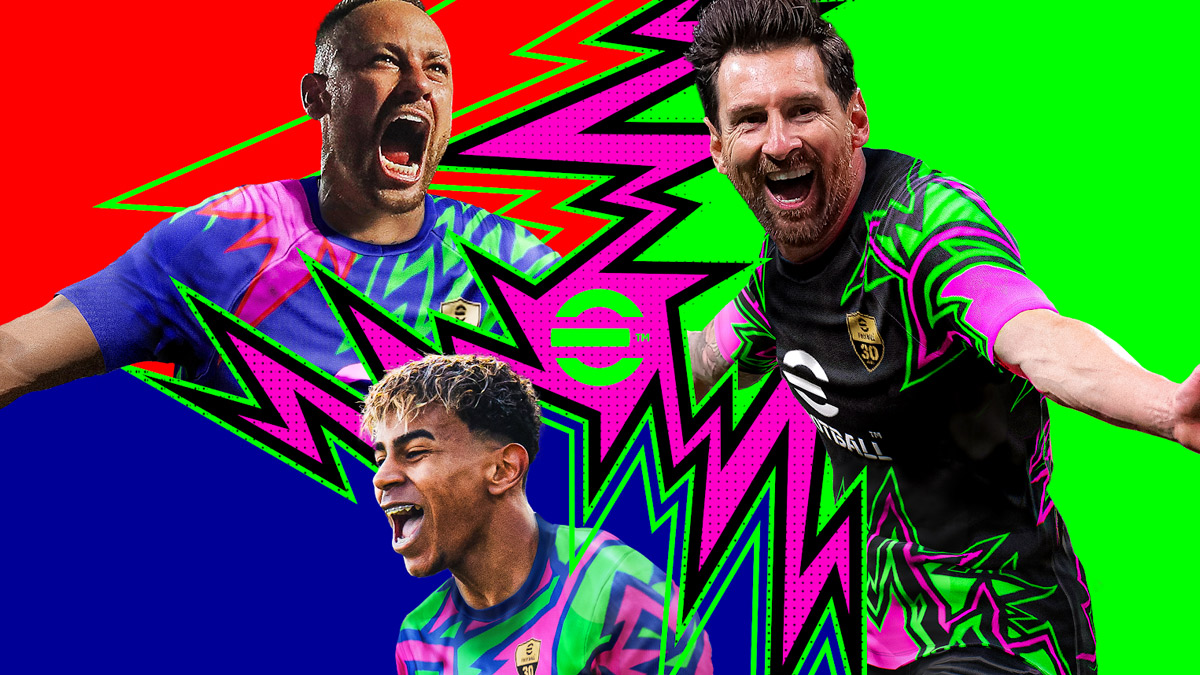
MUMBAI: When cricket meets football in the virtual world, even the biggest fans can’t help but score and Konami’s latest eFootball campaign in India has clearly hit the back of the net. Konami Digital Entertainment has successfully wrapped up its India campaign for eFootball, which brought together cricketers Rinku Singh and Varun Chakravarthy, actors Naslen Gafoor and Chandu Salim Kumar, and footballers Sahal Abdul Samad and Shubhasish Bose. The multi-star campaign generated strong excitement across gaming, football, and creator communities through social content, fan participation, and in-game engagement.
Building on the initial launch that featured a limited-time Lionel Messi card, the campaign united fan communities, lifestyle creators, football creators, and competitive eFootball influencers. It significantly expanded the game’s visibility and deepened engagement with fans across the country.
The campaign also saw thousands of entries submitted as part of its social media engagement challenge, reflecting high levels of community enthusiasm and active creator involvement.
Looking ahead, Konami plans to build on this momentum with more eFootball experiences for Indian fans as the FIFA World Cup 2026 approaches. With global attention on the tournament set to rise, India will remain a key market for deepening community engagement and bringing fans closer to the action.
In a country that lives and breathes sport, Konami has shown that mixing real-world stars with virtual thrills is a winning formula leaving fans eagerly waiting for the next goal.






