Cable TV
IndusInd Media undergoing complete top management overhaul


MUMBAI: Hinduja Ventures Limited-owned IndusInd Media & Communications Ltd is going in for a complete overhaul of its top management.
After having appointed Tony D’silva as the MD and CEO of IndusInd Media and also as Hinduja Venture’s Group CEO – media, the company is also looking at bringing in fresh faces in other key positions, sources said.

D’silva’s appointment has combined the positions of the managing director and chief executive officer at IndusInd Media, which were earlier held by two persons – Ravi Mansukhani as the MD and Nagesh Chabria as the CEO.
Ravi Mansukhani’s resignation has already been accepted by the company’s board of directors. Chabria’s position as CEO has become untenable with D’silva’s appointment.
According to sources in the company, Chabria has resigned and is currently serving a notice period. Indiantelevision.com could not reach Chabria for a comment.
The company sources also said IndusInd Media’s chief financial officer Dilip Panjwani and chief technology officer Vivek Garg too could be replaced soon.
When contacted, Panjwani denied rumours that he has resigned. “This isn’t true. I haven’t resigned and neither am I serving my notice period,” he said.
Hinduja Ventures reported that for the nine months ended 31 December, 2013, IndusInd Media and Communications had revenues of Rs 21.86 million, down 50 per cent from Rs 43.73 million a year ago.
Surprisingly, IndusInd Media and Communications’ revenue for the quarter ended December 31, 2013 has been shown as nil.
For the nine months ended 31 December, 2013, IndusInd Media Communications had a loss of Rs 84.47 million against profit before tax of Rs 16.72 million a year ago.
The poor operational performance and the appointment of D’silva comes in the midst of IndusInd Media’s plans to launch new digital cable services like HD services, hybrid set-top boxes for cable TV and internet and other value-added services.
IndusInd Media has an estimated 8.5 million subscribers across 36 cities and offers over 350 channels in digital mode. It has a backbone of 10,000 kms of hybrid fibre optic network through which it also offers broadband services.



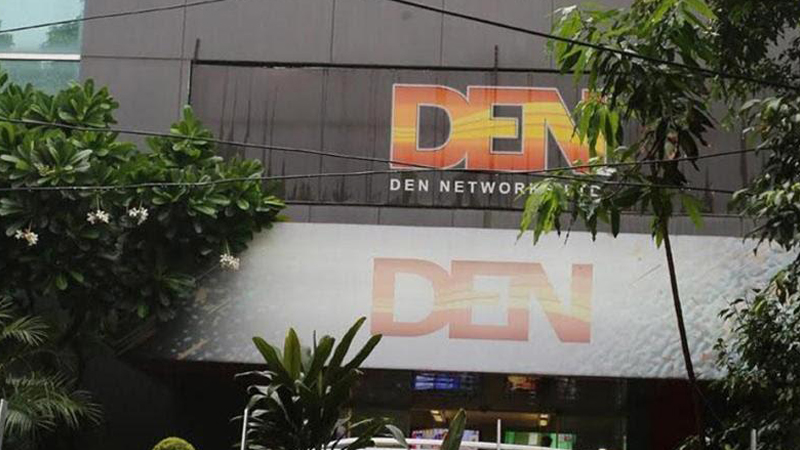
MUMBAI: When margins wobble, liquidity talks and in Q3 FY25-26, cash did most of the talking. Den Networks Limited closed the December quarter with consolidated revenue of Rs.251 crore, marginally higher than the previous quarter but down 4 per cent year-on-year, even as profitability stayed resilient on the back of strong cash reserves and disciplined cost control.
Subscription income softened to Rs.98 crore, slipping 3 per cent sequentially and 14 per cent from last year, while placement and marketing income offered some cheer, rising 15 per cent quarter-on-quarter to Rs.148 crore. Total costs climbed faster than revenue, up 7 per cent QoQ to Rs.238 crore, driven largely by higher content costs and operating expenses. As a result, EBITDA dropped sharply to Rs.13 crore from Rs.19 crore in Q2 and Rs.28 crore a year ago, pulling margins down to 5 per cent.
Yet, the bottom line refused to blink. Profit after tax stood at Rs.40 crore, up 15 per cent sequentially and only marginally lower than last year’s Rs.42 crore. A healthy Rs.57 crore in other income helped cushion operating pressure, keeping profit before tax at Rs.48 crore, broadly stable quarter-on-quarter despite the tougher cost environment.
The real headline-grabber, however, sits on the balance sheet. The company remains debt-free, with cash and cash equivalents swelling to Rs.3,279 crore as of December 31, 2025. Net worth rose to Rs.3,748 crore, while online collections accounted for 97 per cent of total receipts, underscoring strong cash discipline across operations, including subsidiaries.
In short, while Q3 showed signs of operating strain, the financial backbone remains solid. With zero gross debt, steady profits and a formidable cash war chest, the company enters the next quarter with flexibility firmly on its side proving that in uncertain markets, balance sheet strength can be the best growth strategy.








