News Broadcasting
Indo-Pak series ODI opener gets Ten Sports the ratings

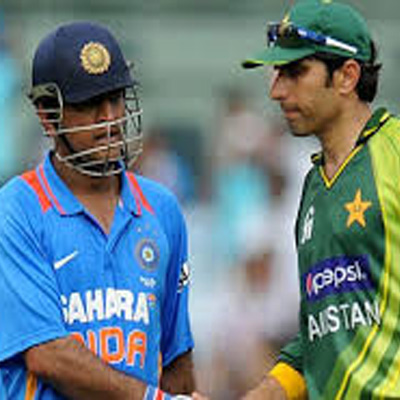
MUMBAI: The first ratings numbers for the ongoing Indo-Pakistan cricket carnival are in, and maybe not so surprisingly, they are certainly not looking bad for broadcast rights holder Ten Sports.
The latest Tam ratings show that the Bukhatir broadcaster’s coverage of the first one day international between India and Pakistan on 13 March got it higher ratings than DD among cable and satellite homes.
That would in itself be hardly surprising in normal circumstances but in the light of the cable blackout that the channel is confronting in certain parts of the country (Mumbai in particular), the strong ratings showing points to one thing.

Sure, Ten was hit in Mumbai thanks to Coda (Cable Operators and Distributors Association), Pune, parts of Delhi, etc and in areas where the Star-India backed Hathway Cable and Datacom has a strong presence. However the rest of the country got the channel which ensured that distribution was not impacted as severely as has has been perceived by the media. Even RPG in Kolkata which distributes Star and Sony signed a carriage agreement with Ten.
In fact, among the big MSOs, it is only Hathway that has not reached agreement with Ten Sports. Even Hinduja Group cable arm InCableNet has reached an understanding with Ten Sports, RK Singh, advisor to Ten Sports distributor Modi Entertainment Network, told indiantelevision.com.
A look at the ratings data is revealing. For C&S, 4+, all homes, Ten’s broadcast of the evening session of the day/night game from 2:10 pm – 6:23 pm got a TVR of 8.5 putting it in the 14th position. The morning broadcast too did well at number 17 with a TVR of 7.8. This is staggering when you consider that the broadcast is for a ten hour period. The data is for the week 7-13 March.
And what of national broadcaster Doordarshan, which was using Ten’s feed? DD comes in at number 24 with a TVR of 6.4 for the evening telecast. The morning broadcast got it a TVR of 6.3.
Meanwhile, even Ten’s post-match studio show Straight Drive was did well coming in at number 39 with a TVR of 4.5. The pre-match episode of Straight Drive had a 2.8 TVR putting it at Number 73. DD’s post match show Fourth Umpire was at 92 with 2.6 TVRs.
In the end it looks like all the talk about Ten Sports being blacked out throughout the country due to the failure to successfully negotiate with the cable operators was a tad exaggerated. The immediate question of course is what spot on the ratings chart would Ten have got if there had not been a blackout, Number 1?





News Broadcasting
Network18 channels lead YouTube news viewership in March 2026
CNN-News18, News18 India and CNBC channels top categories with record views
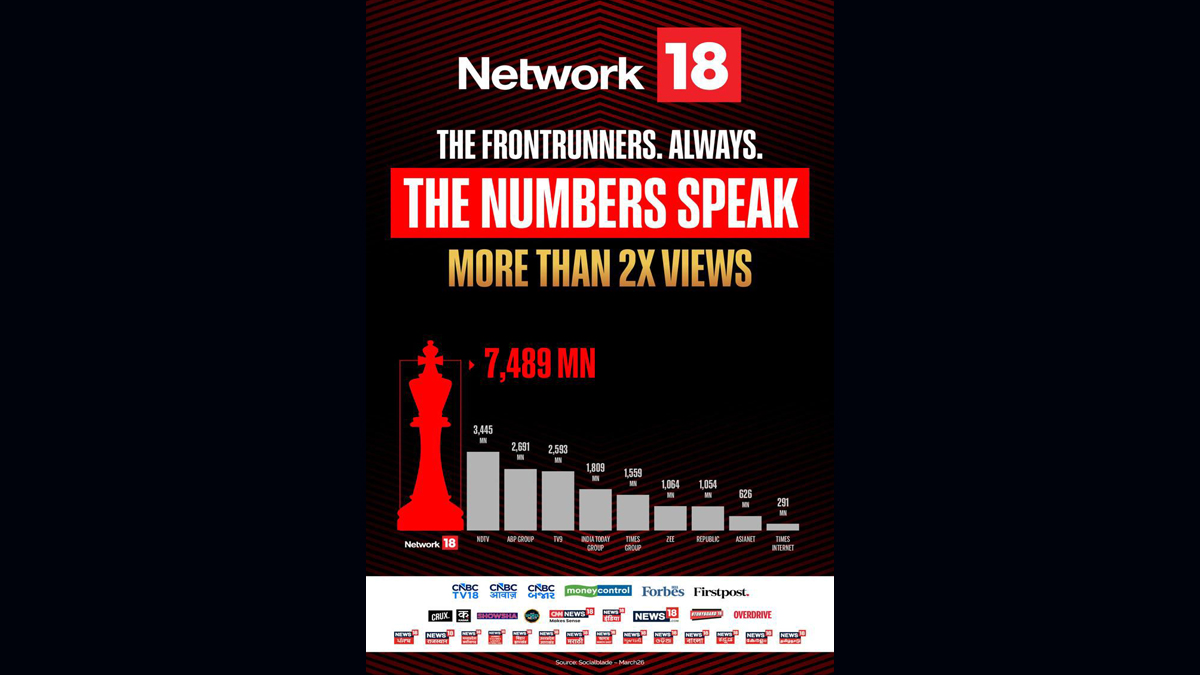
MUMBAI: When the world hit refresh on breaking news, Network18’s channels were already streaming ahead. As geopolitical tensions and war-driven headlines fuelled a surge in global news consumption, the network’s digital playbook delivered big clocking record Youtube viewership across English, Hindi and business news categories in March 2026.
At the forefront was CNN-News18, which emerged as the clear leader in the English news segment with 130 million live and video-on-demand views. The channel edged past competitors such as Times of India (126.5 million), Times Now (101.1 million), India Today (88.2 million) and NDTV (77.5 million), according to Databeings data for March.
In the Hindi news arena, News18 India delivered a commanding performance, racking up a staggering 3,297 million views on YouTube. The channel comfortably outpaced NDTV India, which recorded 3,119 million views, underlining its deep reach and consistent engagement with mass audiences, as per Playboard data.
The network’s dominance wasn’t confined to general news. In the Hindi business segment, CNBC Awaaz topped the charts with 92 million views, narrowly ahead of Zee Business (90 million) and well ahead of ET Now Swadesh (57 million). Meanwhile, its English counterpart CNBC-TV18 posted a strong 58 million views, reinforcing the network’s cross-category strength.
The spike in viewership reflects a broader shift in audience behaviour, with viewers increasingly turning to digital platforms particularly Youtube for real-time updates and in-depth coverage during high-intensity news cycles. For Network18, the numbers signal more than just scale; they underline the effectiveness of a multi-platform strategy that blends speed, credibility and continuous coverage.
In a month where the news never paused, it seems viewers chose to stay tuned where the stream never stopped.






