Gaming
India’s gaming sector poised for explosive growth: Winzo report at GDC, 2025

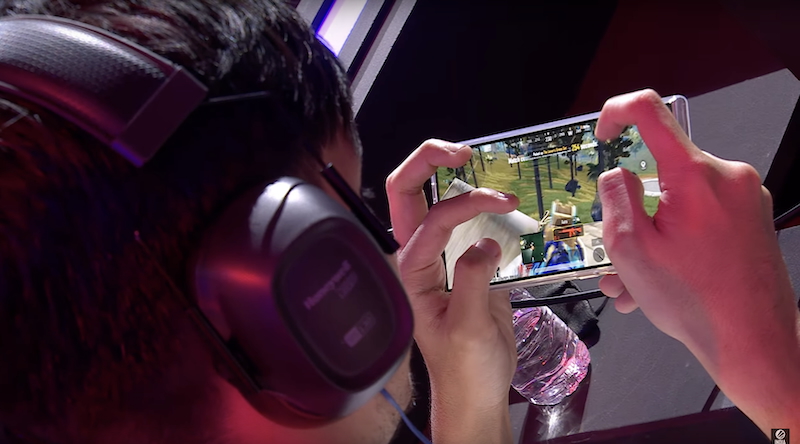
MUMBAI: India’s online gaming companies are gearing up for a blockbuster debut on public markets that could unlock a whopping $26bn in investor value, according to a report unveiled yesterday at the Game Developers Conference (GDC) in San Francisco.
The India Gaming Market Report launched by WinZO Games and the Interactive Entertainment and Innovation Council (IEIC) at the India Pavilion, offers a tantalising glimpse into the sector’s meteoric rise. Currently worth $3.7bn, the industry is expected to surge at a 19.6 per cent compound annual growth rate to reach $9.1bn by 2029—and a staggering $60bn by 2034.
“India stands at the cusp of a remarkable transformation in the global gaming ecosystem,” declared San Francisco consul general of India Srikar Reddy at the launch. The report suggests the sector’s public market potential could balloon to $63bn by 2029 if projections hold true.

The document paints a picture of a market primed for explosive growth. With 591 million gamers—roughly 20 per cent of the global total—and approximately 11.2 billion mobile game downloads, India’s digital playground is expanding rapidly. The country now boasts around 1,900 gaming companies employing 130,000 skilled professionals.

Foreign investors are certainly not playing around, having poured $3 billion into the sector. A hefty 85 per cent of this foreign direct investment has flowed into the pay-to-play segment, which has cracked the once-vexing challenge of monetising Indian gaming assets.
Nazara Technologies, India’s lone publicly listed gaming company, currently commands the highest premium among global gaming stocks. Apply similar multiples to the broader sector, and you get the eye-watering $26bn valuation potential cited in the report.
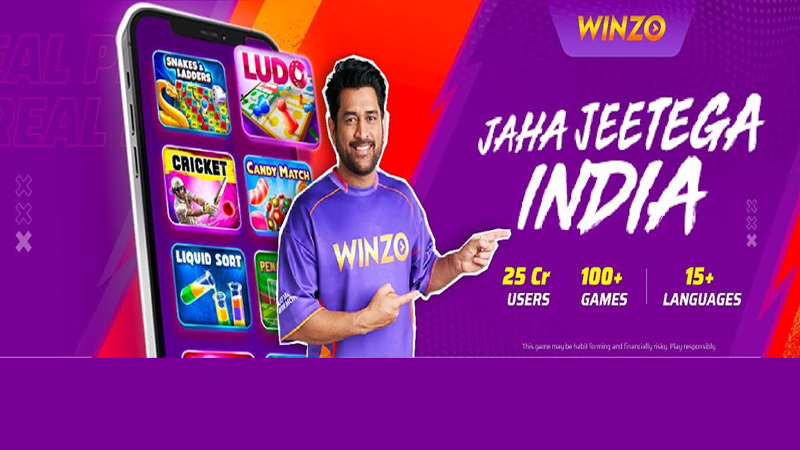
“The online gaming industry in India is on an unprecedented growth path,” said WinZO co-founder Paavan Nanda, who launched the report alongside co-founder Saumya Singh Rathore. The duo’s company is no small player itself, boasting over 250 million registered users across India and Brazil.
The report also highlights how Indian gamers overwhelmingly favour casual and hyper-casual games developed in regional languages, heralding what it calls “the renaissance of Indic content ‘Made in India, for the World’.”
Despite its impressive growth, India’s gaming market currently represents just 1.1 per cent of the $300bn global market—suggesting plenty of room to level up. If projections hold, the user base could swell to 952 million by 2029, creating over two million jobs along the way.
The report’s launch coincided with the second edition of the India Pavilion at GDC, showcasing games from major players and indie developers alike. The pavilion was a joint effort by WinZO, the Ministry of Information & Broadcasting, the Game Developer’s Association of India, and Nazara Technologies.
In the game of global tech dominance, India’s gaming industry is clearly playing to win.



Gaming
India’s broadcasters say no to Fifa World Cup 2026
Fifa has slashed its asking price by 65 per cent but India’s broadcasters are still not buying

MUMBAI: The world’s biggest sporting event cannot find a single taker in the world’s most sports-mad nation. Fifa’s television rights for the 2026 World Cup remain unsold in India, and the clock is ticking loudly.
To shift the property, world football’s governing body has already swallowed hard and cut its asking price from $100m to $35m, bundling in the 2030 edition as a sweetener. It has not worked. Indian broadcasters have looked at the offer, done the sums and quietly walked away.
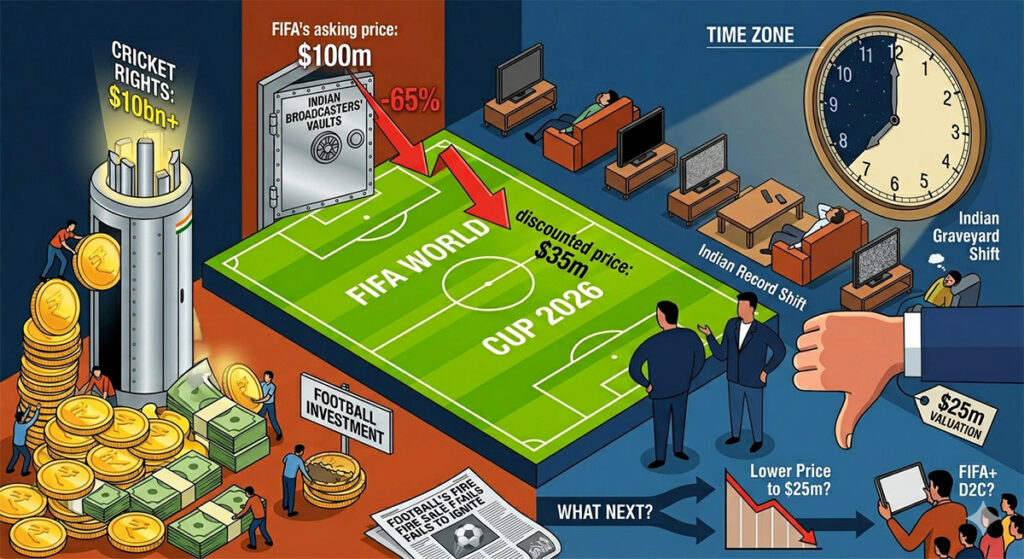
The reasons are brutally simple. The 2026 tournament, co-hosted by the United States, Canada and Mexico, kicks off in a time zone that turns India’s primetime into a graveyard shift. Most matches will air between midnight and 7am IST, a scheduling catastrophe for advertisers chasing mass reach. The 2022 Qatar edition was a gift by comparison, with matches dropping neatly into Indian evenings. North America offers no such luxury.
The market itself has also changed beyond recognition. The merger of Star India and Viacom18 into JioStar has gutted the competitive tension that once sent sports rights prices soaring. Where rival bidders once slugged it out, there is now a single dominant buyer, and it is in no hurry. JioStar has valued the rights at roughly $25m, a full $10m below Fifa’s already-discounted floor price. That gap has so far proved unbridgeable.
Broadcasters are also nursing a ferocious cricket hangover. Between 2022 and 2023, Indian media houses committed well over $10bn to cricket rights alone, covering IPL, ICC events and BCCI domestic fixtures combined. After a binge of that scale, appetite for a football package that delivers a fraction of the ratings, in the dead of night, is close to zero.
The economics of football broadcasting make the maths even harder. Cricket, with its natural breaks every few overs, is an advertiser’s paradise. Football offers a 15-minute halftime and precious little else. Recovering a nine-figure rights fee from a single half-hour ad window is a stretch at the best of times. These are not the best of times: the Indian government’s tightening grip on real-money gaming and gambling advertising has vaporised a category that once underwrote the economics of big sporting events.
Nor is the World Cup an anomaly. Indian Super League valuations have cratered. English Premier League rights have softened across successive cycles. The cooling of football as a broadcast commodity in India is structural, not cyclical.
With the tournament opening on 11th June, Fifa is running out of road. It may yet blink and meet JioStar at $25m. Or it may go direct, streaming the entire tournament on its own platform, Fifa+, or cutting a digital deal with YouTube, and hoping that a generation of Indian football fans finds its way there without a broadcaster to guide them.
Either way, the beautiful game’s Indian chapter is looking decidedly ugly.







