iWorld
Indians consume 76% mobile content on Android device: Outbrain

MUMBAI: As new technology and platforms come in, digital content consumption witnesses a wave of change. In a scenario like this, highlighting the key digital content consumption trend in India, an Outbrain research titled ‘Content Consumption Trends’ shows that the Indian mobile market is clearly dominated by the Android user, where a staggering 76 per cent of the overall content consumed on smart phones is consumed on an Android device – second only to Malaysia.
According to the report, in Southeast Asia, Android is now in a truly dominant and almost unchallengeable position, probably due to its more affordable price-point and its availability on a much wider range of models. On the other hand, in a number of key markets such as Australia, Japan, the UK and the US, Apple’s iPhone still enjoys its best engagement rates, according to the report.
Additionally, the report also shows that India is the most engaged market when it comes to consumption through mobile devices like tablets and smart phones and is overtaking the US market.

The report is the first in its kind in the region and compares India to other mature markets: Singapore, Philippines, Malaysia, Australia, UK and the US.
Data reveals a powerful connection between the growth in mobile technology and the increase in content consumption on smart phones and tablets. For example, in Singapore, Japan and the UK, people consume more than half of their content on a smart phone or tablet.
On the other hand, when it comes to content preferences, factors like cultural differences and seasonality play an important role. For example, for the period analysed (October to 31 December, 2014), of the overall health-related content consumed in Australia, a stunning 39 per cent was about nutrition. That could be due to the upcoming summer season in the Southern Hemisphere, when people try to get in shape and lose some extra pounds.
As per Outbrain’s study, effectively measured content marketing is not easy, but those who measure and optimise the right metrics will be the ones who ultimately see the greatest return on investment.
In the next chart, the company has measured engagement on PC, smart phone and tablet by looking at a combination of Page views per Session and Minutes per Session.

Outbrain GM India and SEA Gulshan Verma said, “The Content Consumption Trends report aims to highlight some of the key facts, figures and trends on how people are reading and watching online content. It’s fascinating to see both the similarities and differences in terms of how and when content is consumed in India compared to other major markets globally. The report not only delivers analyses of consumption trends, but also helps to provide marketers with insights to help them better understand how to develop and place their content.”



iWorld
Hari Om OTT premieres Bhagwan Jhulelal Sai series
First devotional show on Jhulelal Sai streams in Sindhi and Hindi.
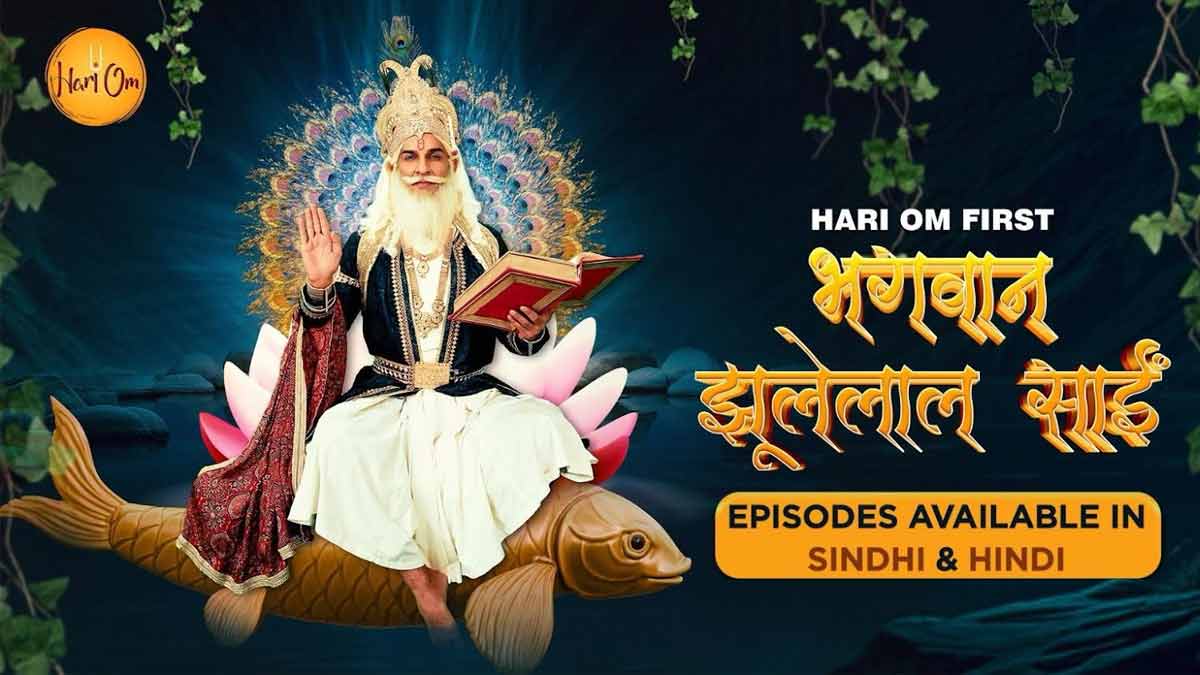
MUMBAI: Hari Om OTT just turned the tide for devotional dramas because when Jhulelal Sai steps onto the small screen, even the waves start streaming in two languages. Hari Om OTT, India’s leading devotional streaming platform launched in June 2024, has premiered Bhagwan Jhulelal Sai, a milestone series that marks the first-ever show dedicated to the revered deity of the Sindhi community. The show, starring Manish Raisinghani as Jhulelal Sai / Varun Dev and Parag Tyagi as Mirkh Shah, launched on Jhulelal Jayanti and is available in both Sindhi and Hindi.
The series chronicles the life, journey and teachings of Bhagwan Jhulelal Sai, blending mythology with historical elements to deliver an authentic and inspiring narrative for global audiences.
Manish Raisinghani said, “Portraying Jhulelal Sai and Varun Dev was not just a role, it was a spiritual journey and a moment of immense pride for my family and community. This one holds a special place in my heart, especially since the show is coming in our very own Sindhi language as well.”
Parag Tyagi added, “Jhulelal Sai is the first-ever show that beautifully blends mythology with history. Hari Om has achieved something truly special by bringing the stories of our gods and goddesses to audiences in their authentic language.”
Hari Om OTT CEO Avinash Dugar said, “With Bhagwan Jhulelal Sai, we’re excited to share this inspiring story with the Sindhi community and beyond. We will continue to showcase the stories of Indian culture and Sanatan Dharma to the world, presented in their own language.”
The premiere builds on Hari Om OTT’s track record of acclaimed devotional titles including Mata Lakshmi, Jai Jagannath, Shri Tirupati Balaji, Mata Saraswati and Chandra Dev, all focused on celebrating India’s cultural and spiritual legacy through high-quality storytelling.
In a streaming landscape crowded with fiction, Hari Om OTT is quietly proving that the most powerful stories aren’t made up, they’re the ones that have already inspired generations, now delivered straight to your screen in the language of devotion. Bhagwan Jhulelal Sai is now streaming on Hari Om OTT.