Movies
Indian startup claims to solve Bollywood’s dubbing dilemma with AI lip-syncing

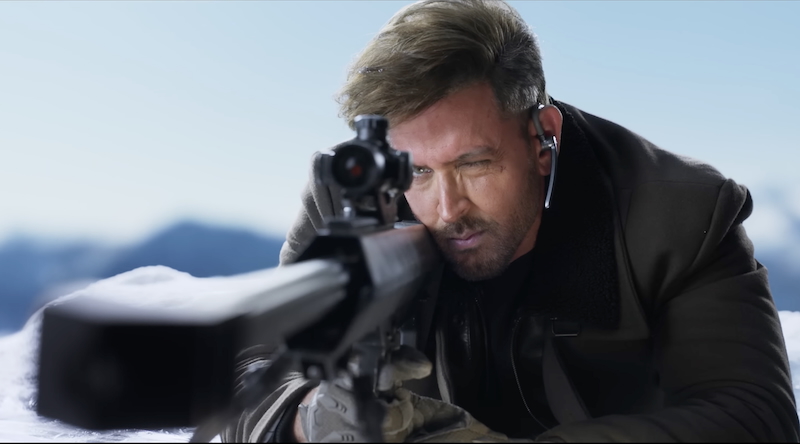
MUMBAI: An Indian artificial intelligence startup reckons it has cracked one of cinema’s most vexing problems: making dubbed films look authentic. NeuralGarage’s VisualDub technology has been deployed on War 2, releasing on 14 August, to create what the company claims is the world’s first film visually transformed from one language to another whilst maintaining the illusion of native production.
The Bollywood sequel, originally shot in Hindi, has secured a straight film certificate for Telugu distribution—not as a dubbed version but as an ostensibly original Telugu production. Neural Garage co-founder & chief executive Mandar Natekar describes this as a “fundamental shift” in content production and distribution.
The technology addresses a chronic irritant in global film distribution: poorly synchronised dubbing that breaks audience immersion. Traditional dubbing overlays foreign-language audio whilst retaining the original actor’s mouth movements, creating a jarring disconnect that many viewers find off-putting.

VisualDub purports to solve this by digitally altering actors’ facial movements to match the target language’s phonetic patterns, creating the visual impression that performers originally spoke in the dubbed tongue. The result, Natekar claims, allows producers to sell multilingual versions as distinct original films rather than mere translations.
The commercial implications could be substantial. Indian cinema’s linguistic fragmentation has long constrained box office potential, with Hindi films struggling in southern states where Telugu, Tamil and other regional languages dominate. Conversely, southern blockbusters rarely achieve pan-Indian success without extensive dubbing campaigns.
If VisualDub delivers on its promises, producers could command premium pricing for what appears to be multiple “native” productions whilst incurring costs for just one shoot. Natekar suggests this could double or treble pre-release distribution revenues.
The startup, which has garnered backing from Google’s GenAI Accelerator and AWS’s Global GenAI programme, also won TechCrunch’s Battlefield competition in 2024 and this year’s SXSW innovation award. Such endorsements suggest the technology has impressed seasoned investors and technologists.
Yet scepticism is warranted. Previous attempts to digitally manipulate actor performances—from CGI de-aging to deepfake technology—have often fallen into the “uncanny valley”, where near-human animations feel disturbingly artificial. Moreover, the cultural nuances embedded in regional cinema extend far beyond language, encompassing gestures, expressions and performance styles that may prove difficult to algorithmically adjust.
The broader implications stretch beyond Bollywood. Hollywood studios spend millions dubbing blockbusters for international markets, whilst streaming platforms like Netflix invest heavily in local-language content production. A reliable visual dubbing solution could dramatically reduce these costs whilst expanding addressable audiences.
Natekar envisions actors transcending linguistic boundaries entirely: “Hrithik Roshan can now be a Telugu, Tamil, or even a Spanish actor. Tom Cruise in Bhojpuri? Now possible.”
Such grandiose claims invite scrutiny. The proof will lie not in technical demonstrations but in audience acceptance. If War 2 performs strongly in Telugu markets without viewers detecting artificial manipulation, VisualDub may indeed herald a new era in global content distribution.
For now, the technology represents another front in artificial intelligence’s assault on creative industries. Whether it liberates content from linguistic constraints or merely creates more sophisticated fakery remains to be seen. What’s certain is that traditional dubbing studios should be paying attention.







Hindi
Zee5 and Applause Entertainment team up for whodunnit ‘Everybody Loves Sohrab Handa’
Rajat Kapoor directs star-studded murder mystery streaming from 10 April.
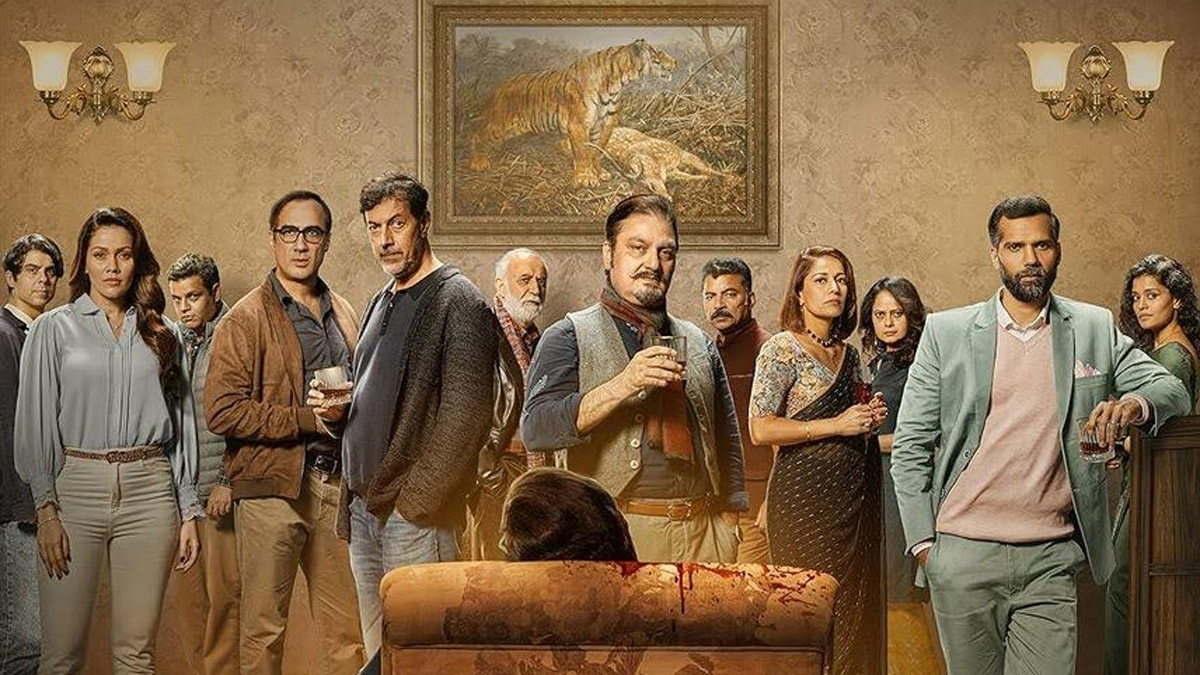
MUMBAI: Zee5 is serving up another killer collaboration and this time, the murder mystery comes with a generous side of dark humour and family dysfunction. The streaming platform has partnered with Applause Entertainment and Mithya Talkies to bring Everybody Loves Sohrab Handa, a fresh, twisted whodunnit written and directed by acclaimed filmmaker and actor Rajat Kapoor. The film will stream exclusively on Hindi Zee5 from 10 April.
The movie reimagines the classic murder mystery genre with a contemporary, darkly comic edge. It revolves around a group of friends and family who smile, drink, and celebrate together until the silence snaps and long-buried secrets spill out. The stellar ensemble cast includes Vinay Pathak, Ranvir Shorey, Waluscha De Sousa, Saurabh Shukla, Chandrachoor Rai, Neil Bhoopalam, Koel Purie, Palomi Ghosh, and Rajat Kapoor himself.
This latest offering continues the successful partnership between Zee5 and Applause Entertainment, which has previously delivered diverse hits such as Mithya, Bloody Brothers, and Jab Khuli Kitaab.
&TV Business Head of hindi Zee5 and chief channel officer Kaveri Das said, “Our collaboration with Applause Entertainment has consistently delivered distinct, high-impact storytelling. Everybody Loves Sohrab Handa is a natural progression, reinforcing our focus on genre-led content with a compelling whodunnit premise and a strong ensemble cast.”
Applause Entertainment business head for movies Sunil Chainani added, “This film adds yet another compelling layer to our slate with Rajat Kapoor’s unmistakable voice.”
Rajat Kapoor shared, “What interested me was not just the mechanics of a whodunnit, but the emotional violence that precedes physical violence. These are people who smile at each other, but there’s so much that is not said.”
The film promises razor-sharp writing, layered performances, and simmering tension, inviting viewers not just to solve the crime but to unravel the complex relationships at its heart.
If you love a good murder mystery served with wit and emotional depth, Everybody Loves Sohrab Handa looks set to be your next addictive watch. Mark your calendars, the whodunnit drops on Hindi Zee5 from 10 April.






