Hardware
Indian Media Group welcomes new uplinking & downlinking guidelines

MUMBAI: The Indian Media Group (IMG) has welcomed the decision of Union Cabinet to approve new uplinking & downlinking guidelines for satellite television channels.
The new downlinking guidelines will create much-needed level playing field for the Indian licensed channels on regulatory, taxation and legal front and would enable the Govt. to regulate content of all the satellite TV channels, including those channels which are also being uplinked from foreign soil, IMG said in a statement issued today.
Prior to these downlinking guidelines, no effective regulatory framework was available for content regulation of foreign broadcasters as they were beaming their programmes in India by uplinking these programmes from uplinking facilities situated outside India, IMG pointed out. These Downlinking guidelines when notified would bring foreign broadcasters also within the purview of Indian laws & regulations.

The organisation has also welcomed the proposed policy whereby the feeds of sports events of national importance would be required to be shared with Prasar Bharti. The same will enable Prasar Bharti and the Govt. to show matches of National importance to the vast majority of non-cable homes. The Doordarshan being a public broadcaster has vast reach and the people residing even in the far flung & remote areas who do not have access to cable, would be able to view these events through terrestrial and DTH Network of Doordarshan. The move to permit television channels to uplink in Ku-band through Indian satellite is also praiseworthy, as it would lead to reduction in technical cost, IMG said.
IMG asks government to sort out carriage problem faced by Indian channels
IMG also expressed its concern about the still pending issue of the carriage of licensed Indian satellite channels on cable distribution platform. An analogue cable network can carry at the most 60-65 channels because of capacity constraints whereas at present there are about 175-200 channels out of which about 95-100 channels over Indian sky are of Indian origin, which includes various regional channels also, it said.
IMG has suggests that in order to address the carriage problem faced by Indian channels, all foreign channels after a notified date should be mandatorily delivered digitally through an addressable system (STB). This would create much needed capacity in the cable networks for carriage of Indian licensed channels. The organisation urged the government to take immediate steps on the issue to address the long standing grievance of licensed Indian Broadcasters.
Indian Media Group (IMG) comprises of the Indian media companies, which are in television broadcasting, radio and the print media. IMG has been formed primarily with a view to serve the interest of Indian Media companies and to act collectively on their behalf in dealing with various stakeholders in the sector including government and regulatory authorities.
The present members of IMG include Zee Telefilms CMD Subhash Chandra (president), India Today editor-in-chief Arun Purie (vice president), Times Group MD Vineet Jain, Sab TV director & vice chairman Markand Adhikari, TV Today Network Limited CEO & ED Gopalan Krishnan, The Times of India Group president Arun Arora, Eenadu TV director I Venkalat, Dainik Bhaskar director Girish Agarwal, Ganashakti editor Avik Dutta and Dainik Jagran director Shailesh Gupta.


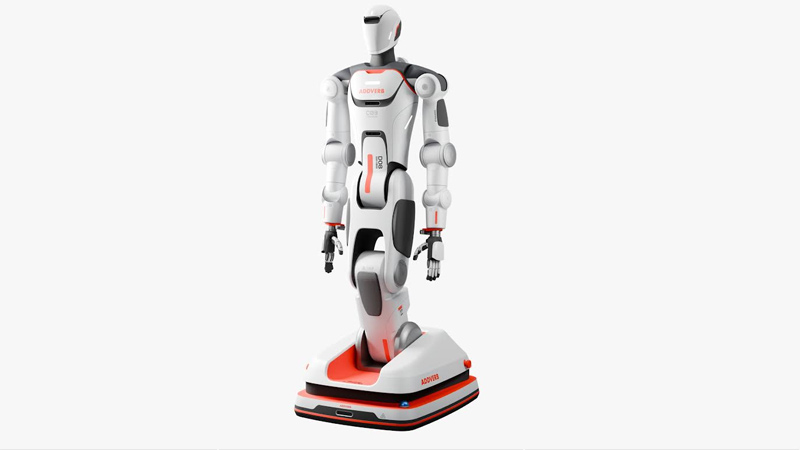
MUMBAI: Addverb has taken a decisive turn on the road to humanoid automation, unveiling its first wheeled humanoid robot, Elixis-W, at LogiMAT India 2026 in Mumbai. Built and manufactured in India, the robot signals the company’s push to make so-called physical AI a practical presence on the factory floor rather than a futuristic concept.
Unlike traditional fixed automation, Elixis-W is designed to move, think and work alongside people in dynamic industrial settings. The robot combines adaptive wheeled mobility with dual arms, each fitted with five-fingered dexterous hands, allowing it to handle tasks that demand precision as well as flexibility.
At its core sits a Physical AI-ready architecture, supported by dual Nvidia Jetson Orin and Thor computing units. This setup is intended to give the robot the ability to perceive, plan and adapt to changing environments, rather than simply follow pre-programmed routines.
According to Addverb CEO and co-founder Sangeet Kumar, the humanoid reflects the company’s long-standing belief in human-robot collaboration. He said the robot is designed to take on repetitive, risky or physically demanding tasks, freeing human workers to focus on higher-value decision-making roles.
Alongside the humanoid, Addverb also showcased two new intralogistics solutions. The Cruiser 360, a four-way pallet shuttle, is aimed at high-density storage environments where space and speed matter. The FlowT, an autonomous forklift, is designed to move materials safely in busy warehouses and factory spaces.
Visitors also saw Trakr, the company’s quadruped robot, navigating the exhibition floor, offering a glimpse of how legged machines could assist in future warehouse and industrial operations.
Addverb, which began as a warehouse automation specialist, has steadily expanded its global footprint across the United States, Europe, Australia and Asia. Its client list includes Reliance, HUL, PepsiCo, Maersk, Mondial Relay and DHL.
With the launch of Elixis-W, the company is steering towards a future where robots are not just bolted to the floor, but rolling, reasoning and working shoulder to shoulder with people on the shopfloor.