eNews
Indian govt approves accession to WIPO treaties relating to copyright


NEW DELHI: The Indian government on Wednesday approved accession to two important international treaties aimed at coverage and protection of copyright to the internet and digital environment.
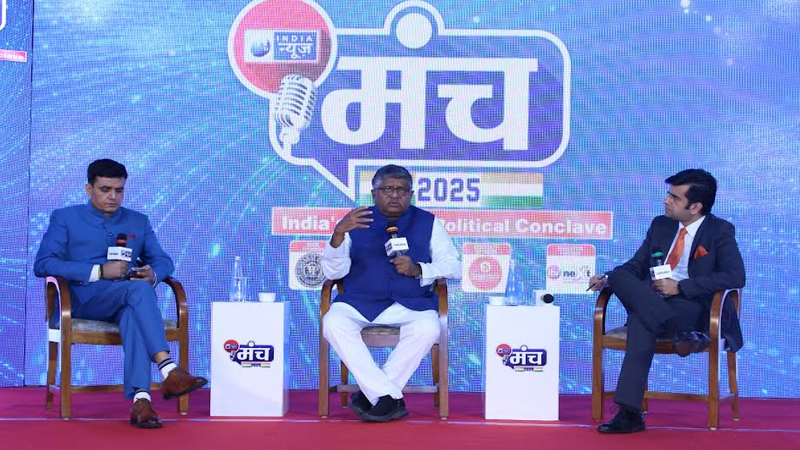
Addressing the media here, Minister for Information Technology and Electronics and Law Ravi Shankar Prasad said the cabinet took this decision along with a slew of other policy initiatives.
The proposal had been mooted by the Department of Industrial Policy and Promotion under Ministry of Commerce and Industry and involved the WIPO Copyright Treaty and WIPO Performers and Phonograms Treaty.

Commenting on this momentous occasion, Mr. Rajat Kakar President &CEO of PPL said “We are committed to professional collective management of rights for our Member Record Labels and this progressive decision by the Indian Government under the stewardship of the Department of Industrial Policy & Promotion (DIPP) is a welcome move and enhances the economic value of the members copyrights in Sound Recording”
The government said that the approval was a step towards the objective laid in the National Intellectual Property Rights (IPR) Policy, adopted 12 May 2016 and which aims to get value for IPRs through commercialisation by providing guidance and support to content owners about commercial opportunities of e-commerce through internet and mobile platforms.
The government listed the following benefits of the WIPO treaties:
# Enable creative right-holders enjoy the fruit of their labour through international copyright system that can be used to secure a return on the investment made in producing and distributing creative works.
# Facilitate international protection of domestic rights holder by providing them level-playing field in other countries as India already extends protection to foreign works through the international copyright order and these treaties will enable Indian right holders to get reciprocal protection abroad.
#Instill confidence to distribute creative works in digital environment with return on investment.
# Spur business growth and contribute to the development of a vibrant creative economy and cultural landscape.
WIPO Copyright Treaty came in force on 6 March 2002 and has been adopted by 96 contracting parties till date and is a special agreement under Berne Convention (for protection of literary and artistic works). It has provisions to extend the protection of copyrights contained therein to the digital environment. It recognises the rights specific to digital environment, of making work available, to address “on-demand” and other interactive modes of access.
WIPO Performances and Phonograms Treaty (WPPT) came in force on 20 May 2002 and has 96 contracting parties as its members. WPPT deals with rights of two kinds of beneficiaries, particularly in digital environment: (i) performers (actors, singers, musicians, etc.) and (ii) producers of phonograms (sound recordings). The treaty empowers right owners to negotiate with new digital platforms and distributors. It recognises moral rights of the performers for the first time and provides exclusive economic rights to them.
Both the treaties provide framework for creators and right owners to use technical tools to protect their works and safeguard information about their use, meaning protection of technological protection measures (TPMs) and rights management information (RMI).


eNews
Piyush Thakur steps down as Inshorts’ chief revenue officer
Former vice president and cro says exit marks a new chapter after close to a decade of building revenue and partnerships at Inshorts Group.

NOIDA: Piyush Thakur has stepped away from Inshorts Group after nearly 10 years with the company, marking the end of a long tenure that culminated in his role as chief revenue officer.
In a farewell note, Thakur said he was “turning a new page” after almost a decade at Inshorts, calling it one of the hardest professional decisions he has made. He added that his exit was not driven by uncertainty about the future, but by reflection on a long association with the company.
Thakur joined Inshorts in October 2016 as vice president and spent around seven years in the role before being elevated to chief revenue officer in April 2024, a position he held until April 2026.
He said his tenure was defined by “thousands of mornings, late nights, product debates and breakthrough moments”, as the company evolved into a large-scale digital news platform used by millions.
In his note, Thakur emphasised that Inshorts’ growth was a collective effort across teams, adding that engineers, designers, sales teams and customer support staff all contributed to building the platform. He said the company’s success was not the result of individuals but of “everyone who stayed, passed through, and left their mark”.
Before Inshorts, Thakur worked across several digital media and business development roles. At ESPN, he served as senior regional manager from October 2015 to October 2016, focusing on growth initiatives, strategic opportunities and video distribution.
At Times Internet, he worked for nearly three years, including as head of business development from April 2015 to September 2015 and chief manager from January 2013 to March 2015. His responsibilities included monetisation of mobile platforms, managing media and developer partnerships, and driving revenue across digital properties such as The Times of India and The Economic Times.
Earlier, he worked at Brandmovers as head of business development from June 2012 to June 2013, handling digital, mobile and social media marketing solutions, client development and strategic consulting. During this period, he also worked on advertising revenue, brand strategy and CRM-based solutions.
At Inshorts, Thakur’s role focused on revenue strategy, mobile and media partnerships, and growth initiatives across platforms. His profile highlights experience in mobile product management, digital business models, partner ecosystems and revenue expansion in high-growth environments.







