Hindi
Indian film industry bats for simplified tax structure

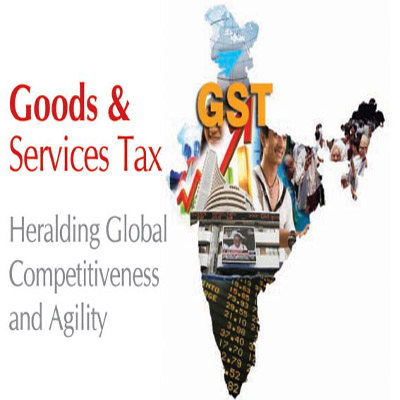
NEW DELHI: The Indian film industry is up in arms against the Goods and Services Tax Bill proposed by the government, as far as entertainment levies go.
It has been voicing its concerns on the forthcoming GST bill as the proposed bill does not subsume all the taxes levied on the film sector.

The film industry strongly feels that entertainment taxes levied by local bodies must be subsumed in the proposed GST regime. To this effect, the Film and Television Producers Guild urged the Government that all entertainment taxes, whether levied by the States or local bodies, be subsumed in the GST.
The Government can implement this proposal by making amendment to the Constitution (122nd Amendment) Bill 2014 by deleting entry 62 to the List II (State List) to the Seventh Schedule to the Constitution of India.
In a statement, the Guild said that the Constitution (100th Amendment) Bill 2014 passed earlier this month by the Lok Sabha gives effect to change in taxing powers of the State and Central Governments and making suitable changes to introduce Goods and Services Tax in India. The Bill has now gone to the RajyaSabha.
The Bill seeks to subsume almost all indirect taxes charged by Central and State Governments.
However, the Guild noted that most of the taxes would be subsumed in GST with one notable exception of the entertainment tax levied and collected by local bodies. The Bill allows the entertainment tax to be levied and collected by local bodies (that is, panchayats and municipalities). The tax would be over and above the State and Centre GST on entertainment.
The local body entry tax (such as Octroi) estimated at Rs 14,000 crore per annum for Maharashtra alone, has been fully subsumed in GST. However, local body entertainment tax estimated at Rs 25 -Rs 30 crore across India is kept out of GST allowing such local bodies to charge an incremental entertainment tax over and above GST.
The Bill has deleted exclusive power of the Central government to tax all services and manufacture of goods (except for excise duty on tobacco products, petroleum and alcohol for human consumption). Similarly, exclusive power to tax on sale and purchase of goods, all types of entry of goods, luxury, betting and gambling and entertainment tax (unless levied and collected by local bodies) except for tax on purchase and sale of alcohol for human consumption has been taken away.
Film and Television Producers Guildpresident Mukesh Bhatt said, “Internationally, films are considered as arts and cultural ambassadors and offered many incentives and financial support governments around the world. Indian films have contributed significantly in uniting the nation and taken Indian culture to international audience. Films should be treated at par with other services and not be singled out for the additional entertainment tax. In fact, the Government implies to treat entertainment at par with sin goods such as alcohol and tobacco, which are also kept out of GST.”
An Ernst and Young report titled “Subsume entertainment tax in GST” states that supplementary levies in addition to GST are warranted only for products that are harmful to health such as tobacco and alcohol or those that are detrimental for the environment (petroleum). There are no negative externalities associated with entertainment. It must be considered at par with other goods and services and should be given a fair tax treatment.
Producer and Excel Entertainment co-founder Ritesh Sidhwani added, “Besides, levy of this tax at the local body level will neither be simple nor yield much revenue. India has a total of 640 districts, even if a small percentage of the local bodies seek to impose the tax, compliance and enforcement will be a nightmare.”
The EY report states that for local governments, the most suitable tax base is considered to be real property, which is immobile and can readily be identified within the boundaries of a given jurisdiction. Entertainment, being mobile and available in diverse forms, is not a suitable base for municipal/local taxation. The situs of entertainment is important for municipal/local bodies that collect tax if the source of entertainment is within the boundaries of their jurisdiction. With the advent of modern technology, movies and films can be watched not just in cinema halls or through cable or DTH connections, but also on computers, laptops and media players.
Entertainment signals could be beamed from a satellite and receivedanywhere within the footprint of the signals, which could be the whole of the country or the continent.
At any given time, it would be difficult to determine whether the film is being watched within the limits of the municipal or local body.
Dharma Productions’ Karan Johar said, “It will be almost impossible for the film producers to estimate the tax revenues with any precision. This appears to be against the government policy of facilitating ‘ease of doing business and ‘tax certainty’ in India.”
It is believed that even though the tax would be charged and collected from the theaters, film producers are impacted by it since the producers generally enter into revenue sharing arrangements with the theaters, which are based on revenues net of any taxes applied on the admissions. They would need to know the taxes applied by each of the local bodies to determine their share in the revenue pool.
Film and Television Producers Guild CEO Kulmeet Makkar added, “The Film Guild has on numerous occasions reached out to the Central Government, Empowered committee of State Finance Minister, Parliamentary Standing Committee. However, this has not been addressed in the bill.”







Hindi
Zee5 and Applause Entertainment team up for whodunnit ‘Everybody Loves Sohrab Handa’
Rajat Kapoor directs star-studded murder mystery streaming from 10 April.

MUMBAI: Zee5 is serving up another killer collaboration and this time, the murder mystery comes with a generous side of dark humour and family dysfunction. The streaming platform has partnered with Applause Entertainment and Mithya Talkies to bring Everybody Loves Sohrab Handa, a fresh, twisted whodunnit written and directed by acclaimed filmmaker and actor Rajat Kapoor. The film will stream exclusively on Hindi Zee5 from 10 April.
The movie reimagines the classic murder mystery genre with a contemporary, darkly comic edge. It revolves around a group of friends and family who smile, drink, and celebrate together until the silence snaps and long-buried secrets spill out. The stellar ensemble cast includes Vinay Pathak, Ranvir Shorey, Waluscha De Sousa, Saurabh Shukla, Chandrachoor Rai, Neil Bhoopalam, Koel Purie, Palomi Ghosh, and Rajat Kapoor himself.
This latest offering continues the successful partnership between Zee5 and Applause Entertainment, which has previously delivered diverse hits such as Mithya, Bloody Brothers, and Jab Khuli Kitaab.
&TV Business Head of hindi Zee5 and chief channel officer Kaveri Das said, “Our collaboration with Applause Entertainment has consistently delivered distinct, high-impact storytelling. Everybody Loves Sohrab Handa is a natural progression, reinforcing our focus on genre-led content with a compelling whodunnit premise and a strong ensemble cast.”
Applause Entertainment business head for movies Sunil Chainani added, “This film adds yet another compelling layer to our slate with Rajat Kapoor’s unmistakable voice.”
Rajat Kapoor shared, “What interested me was not just the mechanics of a whodunnit, but the emotional violence that precedes physical violence. These are people who smile at each other, but there’s so much that is not said.”
The film promises razor-sharp writing, layered performances, and simmering tension, inviting viewers not just to solve the crime but to unravel the complex relationships at its heart.
If you love a good murder mystery served with wit and emotional depth, Everybody Loves Sohrab Handa looks set to be your next addictive watch. Mark your calendars, the whodunnit drops on Hindi Zee5 from 10 April.






