Cable TV
Indian broadcasting & cable TV market to surpass $19 billion by 2026, says report


NEW DELHI: 2020 was packed with unforeseen highs and lows for the Indian broadcasting and cable TV sector. From record viewership, to plummeting ad revenues, to the NTO 2.0 wrangle, the industry is still in a rather precarious position. Despite these challenges, the broadcast and cable TV market, currently valued at $11.61 billion, is expected to reach $19.06 billion by FY2026, states a report by TechSci Research.
The India Broadcasting and Cable TV Market report holds favourable regulations, technological advancements and growing investment opportunities as key factors driving this growth. The increasing demand for TV sets, especially in rural India, is also further boosting the market. Moreover, the expansion of the entertainment industry with greater demand for international TV channels and shows will propel the growth of this sector through FY2026.
In recent times, India has witnessed a surge in active subscriber base with entry of various multi system operators (MSOs). The digitisation of cable TV in the country is at an advanced stage with markets driven by content innovation and product offerings. Direct-to-home (DTH) subscriptions are growing rapidly with increasing per capita disposable income. The increased usage of 3G and 4G services along with an influx of new content creation methods are some other contributors expected to drive the growth of the Indian broadcasting and cable TV market.

Increasing disposable income coupled with rising urbanisation has changed the preferences of Indian consumers towards enhanced experience of television viewing. The concept of home theatre has been gaining traction among the new generation, with people always looking for advanced viewing options and latest technologies to better their experience. These factors are expected to fuel growth in the country’s TV and broadcasting market over the next five years.
Also, there is a rising trend for personalised experience and premium television cable and DTH offerings in India, wherein customers demand personalised channels, picture quality, multiple functionalities in set top boxes, such as a different screen for children, etc. This would likely continue in the coming years as one of major trends for TV and broadcasting industry during the forecast period.
“Southern region accounts for more than 31 per cent of the demand in India’s broadcasting and cable TV market and the region is expected to continue its dominance in the country during the forecast period as well. Major demand in the southern region is coming from Bengaluru, Kerala, and Karnataka. The area has seen significant developments since the recent years regarding broadcasting and cable technology,” said TechSci research director Karan Chechi.
India’s broadcasting and cable TV market can be segmented based on type, revenue generation, and region. Based on type, cable TV and satellite accounted for the dominant share as an increasing number of users are shifting towards DTH services from the traditional cable operators, due to high picture quality and affordable prices.
Some of the major players operating in this segment include Siti Networks, DEN Networks, Tata Sky, GTPL Hathway, Sun Direct TV, Dish TV India, Bharti Telemedia, NXTDIGITAL, Fastway Transmission, and Asianet Satellite Communications, among others.






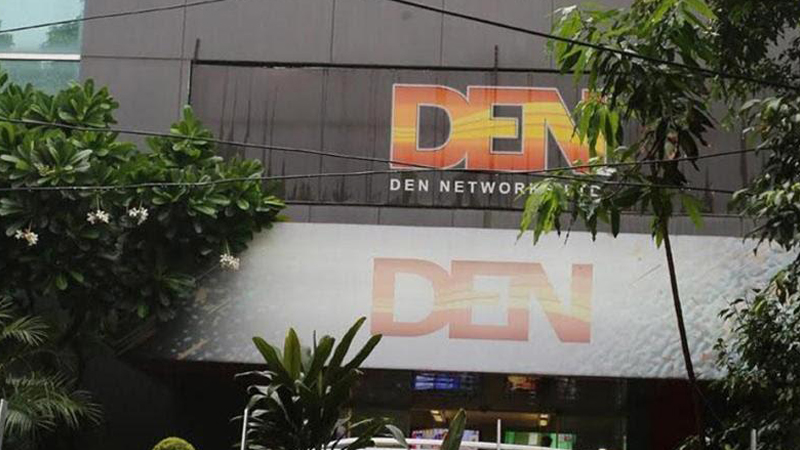
MUMBAI: When margins wobble, liquidity talks and in Q3 FY25-26, cash did most of the talking. Den Networks Limited closed the December quarter with consolidated revenue of Rs.251 crore, marginally higher than the previous quarter but down 4 per cent year-on-year, even as profitability stayed resilient on the back of strong cash reserves and disciplined cost control.
Subscription income softened to Rs.98 crore, slipping 3 per cent sequentially and 14 per cent from last year, while placement and marketing income offered some cheer, rising 15 per cent quarter-on-quarter to Rs.148 crore. Total costs climbed faster than revenue, up 7 per cent QoQ to Rs.238 crore, driven largely by higher content costs and operating expenses. As a result, EBITDA dropped sharply to Rs.13 crore from Rs.19 crore in Q2 and Rs.28 crore a year ago, pulling margins down to 5 per cent.
Yet, the bottom line refused to blink. Profit after tax stood at Rs.40 crore, up 15 per cent sequentially and only marginally lower than last year’s Rs.42 crore. A healthy Rs.57 crore in other income helped cushion operating pressure, keeping profit before tax at Rs.48 crore, broadly stable quarter-on-quarter despite the tougher cost environment.
The real headline-grabber, however, sits on the balance sheet. The company remains debt-free, with cash and cash equivalents swelling to Rs.3,279 crore as of December 31, 2025. Net worth rose to Rs.3,748 crore, while online collections accounted for 97 per cent of total receipts, underscoring strong cash discipline across operations, including subsidiaries.
In short, while Q3 showed signs of operating strain, the financial backbone remains solid. With zero gross debt, steady profits and a formidable cash war chest, the company enters the next quarter with flexibility firmly on its side proving that in uncertain markets, balance sheet strength can be the best growth strategy.






