GECs
Indian animation needs a global outlook

MUMBAI: Among the key issues addressed by the recently concluded FICCI MEBC (Media and Entertainment Business Conclave) (South) in Bengaluru on 29 and 30 October was the state of the animation industry in India and what can be done to improve its lot.
The second day of the conclave saw a dedicated session titled ‘Emerging trends of Indian IP in animation and their exploitation’ with Turner International India senior director and network head for kids in south Asia Krishna Desai, Graphic India co-founder and CEO Sharad Devarajan, Shemaroo Entertainment director Jai Maroo, Krayon Pictures co-founder Nisith Takia and Greengold Animation founder and MD Rajiv Chilaka and Reliance Animation CEO Ashish Kulkarni as moderator.
Devarajan began by highlighting the need for a cohesive ecosystem favouring the country’s animation industry.

“Indian consumers today are used to seeing the best of the world and so, we need to transcend the national market and go to the international market,” he said, stressing the need to create content like that made by Stan Lee or Steven Spielberg. “Multi platform and global is how you have to think of stories today,” he said, pointing out how a version of Mahabharat was launched as 18 days, a re-imaging of the original by Graphic India at the San Diego Comic Con and went straight to Youtube.
Chilaka made a special reference to Chhota Bheem as a kids’ icon while speaking of Greengold’s huge success in the field of animation. “We have grown from just four to over 300 in 12 years. No one knows which show will work, so we have to just give it a shot. Chhota Bheem started off as just 10 products and now it is available in more than 3000 across 30 country stores. We didn’t realize that it would be a phenomenon but now we are confident about making a movie every year,” he said, pointing out that while IP monetisation was happening, it was equally important to build good infrastructure around it to help harness IP better.
Maroo said Shemaroo would help in distribution and marketing even though it wasn’t actively involved in the creation of animation. “There are people with great production and artistic capacity for whom we can work on aspects like music, distribution and marketing. The reason why characters like Bal Ganesh and Chhota Bheem work well is because of their sheer stickiness. We should have IP with an Indian soul but an international story. What the west has is sharp screenplay that translates across boundaries. That is what we lack,” he said.
Desai opined there wasn’t enough investment in animation and pointed out the difficulties in creating animated content. “There is less advertising revenue for a kids channel (Turner), so we also have less money to invest in new content,” he said.
Kulkarni said, “In India, animation is positioned as a kids’ genre,” to which, Devarajan gave an example of the Japanese, who have moved Anime from kids to a sophisticated audience. “Their characters have elasticity and a soul that appeals to various demographics. Why aren’t we creating any Clash of the Titans or Lord of the Rings?” asked Devarajan.
Chilaka said they needed to come up with interesting ways of promotion to grab eyeballs, citing the example of Raju. “We timed Raju to release three weeks before the football world cup and on TV, we did a premiere during the semi-final,” he said.
Maroo pointed out that very few screens were available across the country for animated movies, thereby restricting viewership. “This industry is the best when commerce meets creativity,” he said. Takia felt not many people understood the business even if they were superlative on the creative front. “We can call ourselves successful only when we galvanise the creative population,” added Devarajan. Maroo rounded off saying: “The future will be about how many different revenue platforms you build.”





GECs
Samsung TV Plus launches Kings of Comedy channel
New free FAST channel brings iconic Hindi comedy shows to millions of Samsung Smart TV owners.
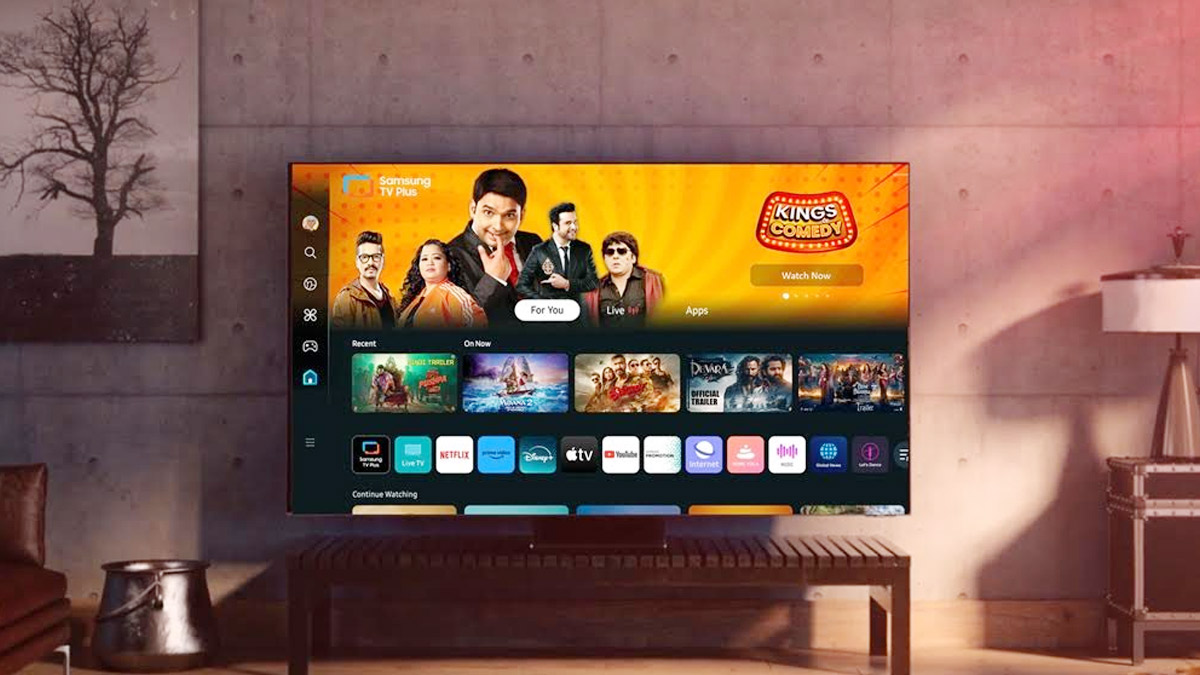
MUMBAI: Samsung TV Plus has just turned up the laughter volume and it’s completely free. The leading free ad-supported streaming television (FAST) service in India has launched Kings of Comedy, a premium comedy channel featuring some of the country’s most beloved primetime shows. Available exclusively on Samsung TV Plus, the channel delivers back-to-back hits including Comedy Nights with Kapil, Khatra Khatra Khatra, and Comedy Nights Bachao, with no login or subscription required.
The launch marks a milestone for free streaming in India, offering audiences a dedicated comedy destination directly from their Samsung TV home screen. It arrives as Samsung TV Plus India celebrates its 5th anniversary, during which the service has grown its monthly active users by 42 per cent and more than doubled its total viewing hours. The platform now offers over 180 free channels across 14 languages.
Samsung TV Plus India general manager and head of business development Kunal Mehta said, “Comedy is the heartbeat of Hindi entertainment, and Kings of Comedy brings together the shows Indians already love, completely free on their Samsung TV. Our focus remains the same take the content people know and make it effortless to access.”
Globally, Samsung TV Plus has surpassed 100 million monthly active users across more than 4,500 channels, solidifying its position as one of the world’s leading free streaming services.
Kings of Comedy is now available on all compatible Samsung Smart TVs. For viewers seeking non-stop laughter without any cost, this new channel delivers a royal treat proving that sometimes the best entertainment really does come with no strings (or subscriptions) attached.







