Hindi
India to sign film co-production pacts with BRICS members

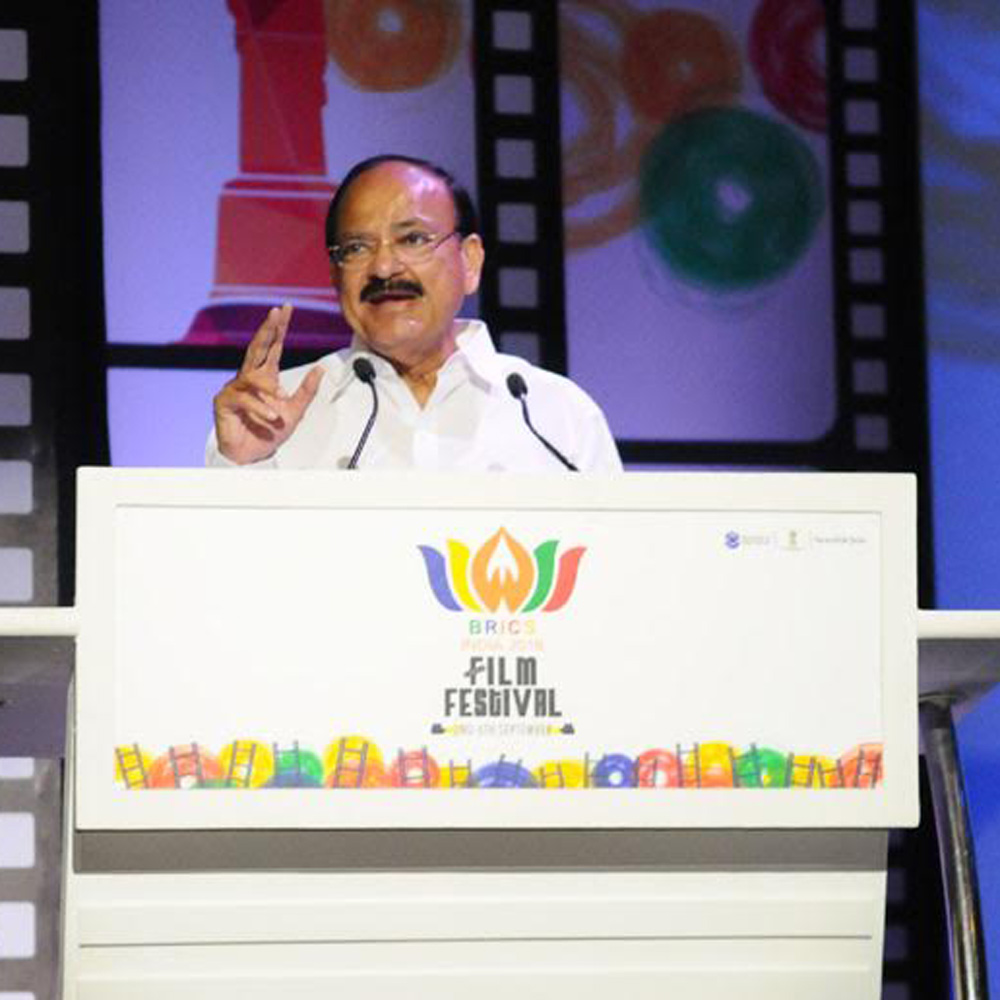
NEW DELHI: A specially-curated BRICS section would form a part of the International Film Festival of India from this year. It would become a regular feature in the future editions. The BRICS Film Festival was held in the capital from 2 to 6 September 2016.
Information and Broadcasting Minister M Venkaiaih Naidu said the government was actively considering signing co-production agreements with Russia and South Africa to promote India as a filming destination, taking the process forward after having signed similar agreements with Brazil and China.
At the festival, 20 films were screened in the competition section, four from each country. The opening film at the festival saw the World Premiere of the Malayalam movie “Veeram” by Jayaraj Rajasekharan Nair starring Kunal Kapoor. The closing film was the Chinese “Skiptrace” starring Jackie Chan directed by Renny Harlin. It is an action-comedy, which revolves round a Chinese detective who teams up with an American Gambler to catch a Chinese criminal.

Speaking at the closing of the first BRICS Film Festival, the minister also proposed setting up of institutional mechanisms for regular collaboration between film archives of the member-countries as it would ensure exchange of information on preservation of film heritage. He said that BRICS countries could explore the possibility of having a formal mechanism for student exchange programmes among the leading film institutes.
Naidu said the new-age cinema from the BRICS nations spoke to a wider audience with socially relevant themes, and filmmakers were not afraid of communicating in the way they desired. This inspired young film makers to make films that were not only entertaining but also enlightening. As a powerful medium, it sent across the right message that could counter the negativity emerging from acts of terrorism worldwide. Films awakened national consciousness and helped in channelizing energies of the youth in social reconstruction and nation-building.
Minister of State for Information and Broadcasting Rajyavardhan Rathore was also present at the event where awards were given away to award-winning films.
Naidu said the diverse topography of India offers a variety of locales for shooting of films round the year. In addition to this, India is home to one of the most vibrant and highly-skilled film professionals.
BRICS film directors should take this opportunity to explore possibilities for shooting their films in India. The government has taken several steps to create a conducive environment for shooting. One such step is setting up of a Film Facilitation Office under the National Film Development Corporation.
Kannada movie “Thithi” was awarded the Best Film, while the Special Jury prize was awarded to “Between Valleys” from Brazil. Huo Jianqi from China was adjudged the Best Director for “Xuan Chang”. Thabo Rametsi from South Africa was awarded the Best Actor (Male) award for “Kalushi (The story of Solomon Mahlangu)” and Yulia Peresild from Russia was awarded the Best Actor (Female) award for “Battle for Sevastopol”. The jury also recommended Special Mention awards to the films “Songs of the Phoenix” from China and “14+” from Russia.
The festival showcased an amalgamation of culture, films, song and dance, and food of the member-countries, Brazil, Russia, India, China and South Africa. Exclusive cuisine from all the nations was also available at the Food Court at the venue. A Craft Fair was also organized at the Siri Fort auditorium complex with all member-countries putting up stalls with souvenirs and other properties for sale.
Beyond films, the festival also had spectacular performances by the Chengdu Performing Arts Theatre (China), Theatre Leningrad Centre Dreams (Russia) and MBZ Music Production (South Africa). The closing ceremony also saw the release of the first BRICS Film Festival Scroll, which was presented to representatives from China. It was announced that China will host the next version of the BRICS Film Festival in Chengdu.
Meanwhile, the Deputy Director General of Film Bureau of China Zhou Jiandong said that China produces almost 650 to 700 feature films annually. The box office collection was $ 6.8 billion last year and the urban accumulative attendance was 1.26 billion. The Chinese delegation comprised 40 members. The cast and crew from the competing movies of China shared their stories, ideas and experiences in a press gathering.
Members included Huo Jianqi, Director of ‘Xuan Zang’, China Film Cooperation Limited Vice President Zhou Baolin who is the co-producer of ‘Xuan Zang’, Wu Yuan Yuan who is the scriptwriter of ‘Go Away Mr. Tumor’, and Wu Yan Yan who produced, ‘Songs of the Phoenix’.
‘Xuan Zang’ was co-produced by China and EROS Entertainment, India. “We hope that after the success of this movie, more Chinese filmmakers will be interested in working with their Indian counterparts. With such collaborations, we will be able to bring more Indian movies to China,” Baolin said. Jianqui said the story was common to both, India and China, as it deals with the topic of Buddhism.
The story of ‘Go Away Mr. Tumor’ is not only limited to China, but depicts universal optimistic spirit, said Yuan. Last year, this movie was showcased in film festivals of North America and Australia owing of its universal subject. She added that Indian movies inspire her a lot. She watched ‘3 idiots’ and learned that a film can be entertaining as well as educating.
Yan Yan was happy that a non-commercial movie also received a huge audience applause. Her movie ‘Song of Phoenix’ was running successfully in theatres for two months, and it gave her a lot of hope that such cinema was appreciated by the young audience.
In a separate exchange, delegates from South Africa expressed hope that very soon member-countries will co-produce films on various interesting topics and enhance bilateral relations. The delegation said talks at the highest level of governments are progressing well and will soon give a final shape to joint cooperation in the field of cinema.
The cast and crew from the competing films of South Africa shared their stories, ideas and experiences. Present at the conference were Sallas de Jager, Director of ‘Free State’; Director Mandla Dube along with Associate producer Lerato Louise Montoedi of ‘Kalushi: The Story of Soloman Mahlangu’; Thapelo Mokoena, Actor of ‘Mrs. Right Guy’ and Paul Egan, Producer of ‘Tess’.
Jager said ‘Free State’ was shot two years ago and involved people from South Africa and India. It was a privilege for him to write the story, portraying the essence of a forbidden love story. The film represents the relation between parents and children. He noted that working with the Indian crew was a great learning experience.
‘Free State’ showcases the story of Jeanette, who is a beautiful open-minded law student. During her summer holiday with her father in the Free State, a random act of kindness by an attractive Indian sprouts an unexpected love affair. Secret meetings follow, since it was against the law at the time to have an inter-racial relationship. As the film progresses, their secret comes out and hell breaks loose.
Dube said ‘Kalushi’ was shot eight years ago and had been screened at various film festivals including Cannes, and loved by the people of Edinburgh, South Africa, Zanzibar and London.
Lerato Louise added that the idea of making this movie came from a stage play. The movie portrays the story of a young liberator who fought for the country. The story of Solomon relates to the connection of South Africa and India, as the lawyer of Kalushi was an Indian.
Thapelo Mokoena said ‘Mrs. Right Guy’ revolved round a woman and is one of the three romantic comedy movies produced by the black community. He added that the film is more than just a struggle story of the past.
‘Mrs. Right Guy’ is the story of Gugu, a woman who rejects love before it can get too close to rock her from a self-imposed exile from love. But, to find bliss with the right guy she must first realize that no man is created equal.
Paul Egan said the shooting of ‘Tess’ was completed in June 2016 and the audience outside South Africa witnessed it for the first time at this festival. The quality and precision of movies from the other countries screened at BRICS were extremely inspiring and that they were learning quite a lot from them, he added.





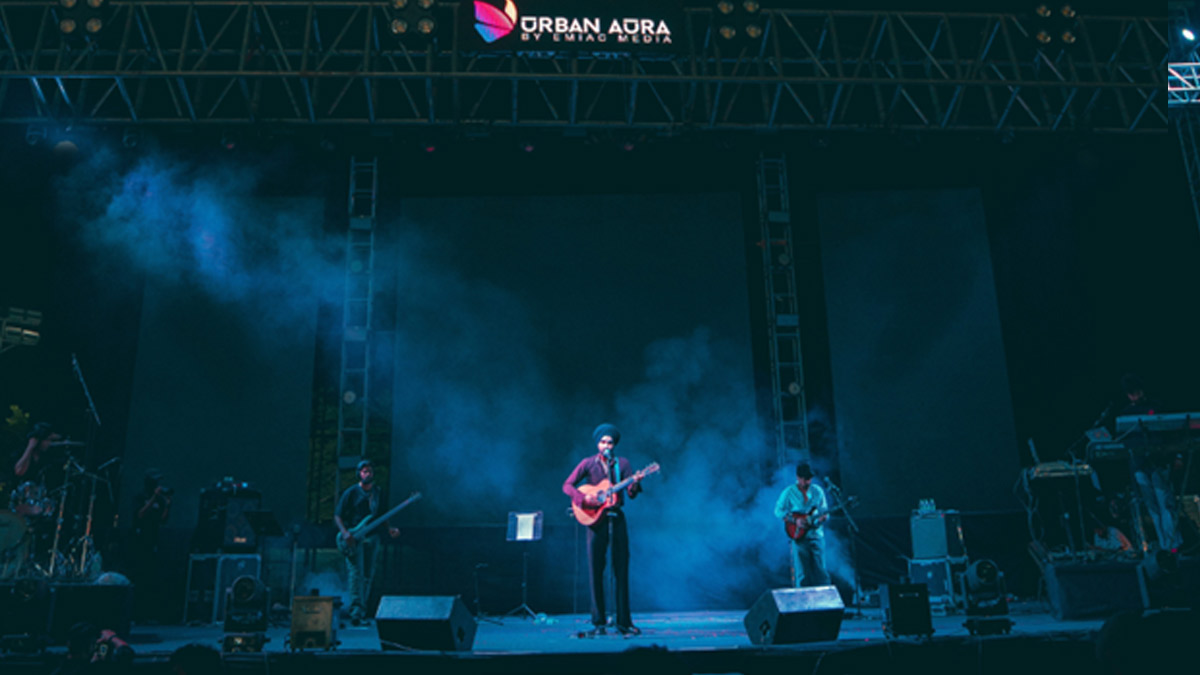
In a music industry that often rewards speed, spectacle, and instant recall, Navjot Ahuja’s journey feels refreshingly different. His story is not built on noise. It is built on patience, discipline, emotional honesty, and a quiet commitment to becoming better with every passing year. After 14 years of struggle, learning, performing, and writing, Navjot stands today as an artist whose success has not changed his centre. If anything, it has only made his purpose clearer.
For Navjot, music has never been about chasing fame alone. It has always been about expression. It is about writing more truthfully, singing more skillfully, understanding himself more deeply, and becoming a kinder human being in the process. That rare clarity is what gives his journey its beauty.
Where It All Began: A Writer Before a Singer
Indian singer and songwriter Navjot Ahuja’s musical journey began in the most familiar of places: school assemblies. But even then, what was growing inside him was not only the desire to sing. It was the need to write.
Long before he saw himself as a performer, he had already discovered the emotional release that writing offered him. For Navjot, words became the first true channel for feeling. Songwriting came before singing because writing was the only way he could let emotions flow through him fully. That inner pull shaped his artistic identity early on.
Like many young musicians, he sharpened his craft by creating renditions of popular songs.
Those experiments became his training ground. But the turning point came in 2012, when he wrote his first original song. That moment did not just mark the beginning of songwriting. It marked the beginning of self-definition.
A Calling He Did Not Chase, But Accepted
What makes the latest Indian singer-songwriter Navjot’s story especially compelling is the way he describes his relationship with music. He does not frame it as a career he aggressively pursued. In his own understanding, music was not something he chose. It was something that chose him.
There was a time when he imagined a very different future for himself. He wanted to become a successful engineer, like many young people shaped by ambition and conventional expectations. But life had a different script waiting for him. During his college years, around 2021, music entered his life professionally and began taking a firmer shape.
That shift was not driven by image-building or industry ambition. It came from acceptance. Navjot embraced the fact that music had claimed him in a way no other path could. That sense of surrender continues to define the artist he is today.
An Artist Guided by Instinct, Not Influence
Unlike many singers who speak openly about idols, icons, and musical role models, Navjot’s creative world is built differently. He does not believe his music comes from imitation or inherited influence. He listens inward.
He has never considered himself shaped by ideals in the traditional sense. In fact, he admits that he does not particularly enjoy listening to songs, especially his own. His decisions as a songwriter and singer come from instinct. He writes what feels right. He trusts what his inner voice tells him. He positions his music according to what he honestly believes in, not what trends demand.
That creative independence gives his work a distinct emotional sincerity. His songs do not feel calculated. They feel alive.
The Long Years of Invisible Struggle

Every artist carries a chapter of struggle, and Navjot’s was long, demanding, and deeply formative. One of the biggest challenges he faced was building continuity as the best new indian singer songwriter in an era where musical collaboration is increasingly fluid.
For emerging singers, especially those trying to build with a band, consistency can be difficult. Instrumentalists today have more opportunities than ever to freelance and perform with multiple artists. While that growth is positive and well deserved, it can make things harder for singers who are still trying to establish a steady team and sound around their work.
For Navjot, one of the most difficult phases came during 2021 and 2022, when he was doing club shows almost every day. It was a period of relentless performance, but not always personal fulfillment. He was largely singing covers because clubs were not open to original songs that audiences did not yet know.
For a new Indian singer and songwriter, that can be a painful compromise. To perform constantly and still not have the freedom to share your own voice requires not just resilience, but restraint.
“Khat” and the Grace of Staying Unchanged
After 14 years of effort, Navjot’s new love song Khat became a defining milestone. Professionally, he acknowledges that the song changed how society viewed him as a musician. It strengthened his place in the public eye and altered his standing in meaningful ways.
Yet personally, he remains unchanged.
That is perhaps the most striking part of his story. Navjot says his routine is still the same. His calm is still the same. His writing process is still the same. He does not want success or failure to interfere with the purity of his art. For him, emotional detachment from public outcomes is essential because the moment an artist becomes too attached to validation, the writing begins to shift.
His joy comes not from numbers, but from the attempt. If he has tried to improve his skill today, if he has written his heart out more honestly than before, then he is at peace.
Growth, Not Glory, Remains the Real Goal
Even now, Navjot is not consumed by labels such as singles artist, performer, or digital success story. His focus remains deeply personal. He wants to sing better. He wants to play instruments better. He wants to understand himself more. And he wants to become a kinder person.
That is what makes Navjot Ahuja’s journey so moving. It is not simply the story of a musician finding recognition. It is the story of an artist who continues to grow inward, even as the world begins to look outward at him. In an age obsessed with applause, Navjot reminds us that the most meaningful success often begins in silence, honesty, and the courage to remain true to oneself.






