eNews
‘India needs 80 lakh hotspots; metros’ spectrum 1/10th of U.S’


MUMBAI: India needs over 80 lakhs hotspots as against the availability of about 31,000 hotspots with a view to reach the global level of one Wi-Fi hotspot penetration for every 150 people, according to ASSOCHAM-Deloitte joint study.
There are currently over 31,000 public Wi-Fi hotspots installed in India. However, for India to match the current global average of one public Wi-Fi hotspot per 150 people, an additional 80 lakhs hotspots need to be deployed, noted the study titled ‘Digital India: Unlocking the Trillion Dollar opportunity,’ jointly conducted by ASSOCHAM and research firm Deloitte.
The biggest challenge faced by the Digital India programme is the slow/delayed infrastructure development. Spectrum availability in Indian metros is about a tenth of the same in cities in developed countries (such as the U.S, U.K, Russia, etc). This has put a major roadblock in providing high speed data services (such as OTT and VOD).

For Digital India to have a large scale impact on citizens across the nation, the digital divide needs to be addressed through last mile connectivity in remote rural areas. Currently, over 55,000 villages remain deprived of mobile connectivity. This is largely due to the fact that providing mobile connectivity in such locations is not commercially viable for service providers, adds the joint study.
“For digital technology to be accessible to every citizen significant efforts are needed to customise apps and services to cater to local needs. Finding vendors who can provide such applications has become a challenge”.
Policy framework for Digital India: Challenges in policy, such as taxation, right of way, restrictive regulations etc. are major roadblocks in realizing the vision of Digital India.
Some of the common policy hurdles includes lack of clarity in FDI policies, for instance, have impacted the growth of e-commerce. Transport services like Uber have had frequent run-ins with the local government due to legacy policy frameworks which have not become attuned to the changing business landscape.
Implementation of the Digital India programme has been hampered by contracting challenges such as several projects assigned to PSUs are delayed given challenges related to skills, experience and technical capabilities. Several RFPs issued by the government are not picked up by competent private sector organizations since they are not commercially feasible.
The reports suggest that, as recently as 2014, nearly 70 per cent of Indian consumers indicated that lack of awareness was the main reason for not using internet services. Non-availability of digital services in local languages is also a major concern, noted the study.
With the proliferation of cloud-based services like DigiLocker, data security has emerged as a major challenge. The recent data breach in August 2016, in which debit card data for more than 3.2 million subscribers was stolen highlights the importance of implementing foolproof security systems, adds the study.
Development of digital infrastructure is a critical component of Digital India. To further enable development of digital infrastructure, the following measures should be considered as uniform policies for deploying telecom and optic fibre infrastructure.
A uniform RoW policy across all states with a reasonable cost structure is required along with a single window mechanism for granting RoW permissions. PPP models need to be explored for sustainable development of digital infrastructure, as has been the case for civic infrastructure projects like roads and metro project. In addition, the government should make efforts to make additional spectrum available to telecom service providers for deployment of high speed data networks.
Encourage collaboration with the private sector; Effective collaboration with the private sector is critical to the development of the digital infrastructure. Innovative engagement models that ensure commercial viability needs to developed jointly through consultation with industry bodies. This will encourage private sector participation and ensure a better response to infrastructure RFPs. In addition, startups need to be incentivised for the development of the last mile infrastructure and localized services and applications.
Existing government infrastructure assets (e.g., post offices, government buildings, CSCs) should be further leveraged for provision of digital services. In rural and remote areas, private sector players should be incentivised to provide last mile connectivity. USOF can be effectively used to incentivise and create a viable business model. The deployment of funds so far has been erratic and not been used to effectively to fund the cost of infrastructure creation in rural areas. Currently, the fund has over Rs 451 billion in reserves which can be used to finance rural digital infrastructure growth in India through direct investment or subsidies.
Satellite communication solutions could be used to speed up broadband access in rural and remote areas. For instance, banks can use VSAT technology to connect remote ATMs, remote branches that need instant access to customer data. It could be used as a last mile connectivity solution in rural areas which lack telecom networks. Another example could be of the navigational system NAVIC (Navigation with Indian Constellation), which can have applications in terrestrial, aerial and marine navigation, disaster management, vehicle tracking and fleet management, integration with mobile phones, precise timing, mapping and geodetic data capture, terrestrial navigation aid for hikers and travellers and visual/ voice navigation for drivers.






eNews
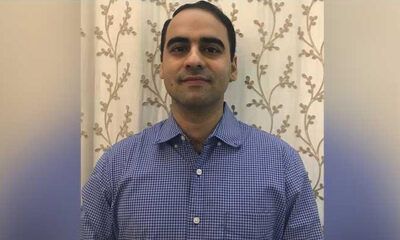
Piyush Thakur steps down as Inshorts’ chief revenue officer
Former vice president and cro says exit marks a new chapter after close to a decade of building revenue and partnerships at Inshorts Group.

NOIDA: Piyush Thakur has stepped away from Inshorts Group after nearly 10 years with the company, marking the end of a long tenure that culminated in his role as chief revenue officer.
In a farewell note, Thakur said he was “turning a new page” after almost a decade at Inshorts, calling it one of the hardest professional decisions he has made. He added that his exit was not driven by uncertainty about the future, but by reflection on a long association with the company.
Thakur joined Inshorts in October 2016 as vice president and spent around seven years in the role before being elevated to chief revenue officer in April 2024, a position he held until April 2026.
He said his tenure was defined by “thousands of mornings, late nights, product debates and breakthrough moments”, as the company evolved into a large-scale digital news platform used by millions.
In his note, Thakur emphasised that Inshorts’ growth was a collective effort across teams, adding that engineers, designers, sales teams and customer support staff all contributed to building the platform. He said the company’s success was not the result of individuals but of “everyone who stayed, passed through, and left their mark”.
Before Inshorts, Thakur worked across several digital media and business development roles. At ESPN, he served as senior regional manager from October 2015 to October 2016, focusing on growth initiatives, strategic opportunities and video distribution.
At Times Internet, he worked for nearly three years, including as head of business development from April 2015 to September 2015 and chief manager from January 2013 to March 2015. His responsibilities included monetisation of mobile platforms, managing media and developer partnerships, and driving revenue across digital properties such as The Times of India and The Economic Times.
Earlier, he worked at Brandmovers as head of business development from June 2012 to June 2013, handling digital, mobile and social media marketing solutions, client development and strategic consulting. During this period, he also worked on advertising revenue, brand strategy and CRM-based solutions.
At Inshorts, Thakur’s role focused on revenue strategy, mobile and media partnerships, and growth initiatives across platforms. His profile highlights experience in mobile product management, digital business models, partner ecosystems and revenue expansion in high-growth environments.







