iWorld
India has biggest appetite for mobilecCommerce states SAP Study


BENGALURU: Consumers in India are leading the demand for mobile commerce services, with 97 per cent of consumers asking for more mobile interactions with banks, telcos, retailers, utilities and other businesses. SAP AG recently announced the study findings for India which indicates an impressive traction of mobile commerce in the country with 80 per cent of the population making parallel usage of the mobile phones other than just calls and text messages.
More than half of the consumers in India indulge in maximum mobile purchases for entertainment service like cinema, theatre shows, DVDs, sport games (53 per cent) followed by music downloads (48 per cent) says the study.
The surging popularity of mobile commerce in the country also highlights the increase in the internet penetration with 63 per cent of consumers accessing the internet on their mobile at least once a day. 65 per cent of the users feel mobile is a convenient mode of transaction leading to a greater consumer adoption in this segment.

The study found that India scores high in using mobile for banking transactions when compared to other countries in the world. As per the statistics, excluding voice messages, most of the mobile owners turn to their mobile phones for bill payments (78 per cent), bank transactions (72 per cent) and for setting up a new account (74 per cent).
“The dynamic nature of business as well as the freedom to operate from different parts of the world and at odd times has created a need for mobile commerce becoming mainstreamed,” said SAP Platform & Technology Business at SAP Head – Sales -Neeraj Athalye, “Our strategy and solutions – unwired by mobile apps and fueled by in-memory and advanced analytics – underscore our unique ability to enable companies from the boardroom to shop floors, to better anticipate, accelerate and differentiate their business.”
Mobile Transactions in India
The research shows how mobile based transactions have gained popularity in India and has become an integral part of the consumer’s life.
*More than half of the consumers in India indulge in maximum mobile purchases for entertainment service like cinema, theatre shows, DVDs, sport games (53 per cent) followed by music downloads (48 per cent)
*The other key purchases via mobile are clothes/footware/other attires (47 per cent) and books or e-books (40 per cent)
While embracing the appetite for mobile purchase adoption, it is vital that organisations looking to develop products and services for India are able to balance the desire for ease and convenience with security requirements:
*In the study, 57 per cent of users in the country believe that once they gain confidence in mobile security, they will increase their mobile payment activity
*Providing services that are lower cost (24 per cent) and personalised (33 per cent) will encourage mobile owners to make more bank transfers through their mobile phones, in turn increasing the mobile based consumption in India
*Consumers in India are driven to buy goods using their mobile phone by exclusive offers (33 per cent) and coupons (26 per cent).
The research also reflects that ease of use is a core principle that will accelerate overall user adoption in the telecommunications industry
*Free minutes, texts and Web use (26 per cent), personalized services (28 per cent) and lower cost services (26 per cent) will encourage consumers in India to use their mobile to check usage data for their mobile account.
Research Methodology
3,288 interviews were conducted with adults aged 18+ who own a mobile phone (basic or smartphone) in APAC (China n=1000, India n=1050, Japan n=651, Australia n=587).
Respondents completed an online survey in March/April 2013. Research conducted by Loudhouse, an independent research agency based in London.





Gaming
India’s broadcasters say no to Fifa World Cup 2026
Fifa has slashed its asking price by 65 per cent but India’s broadcasters are still not buying
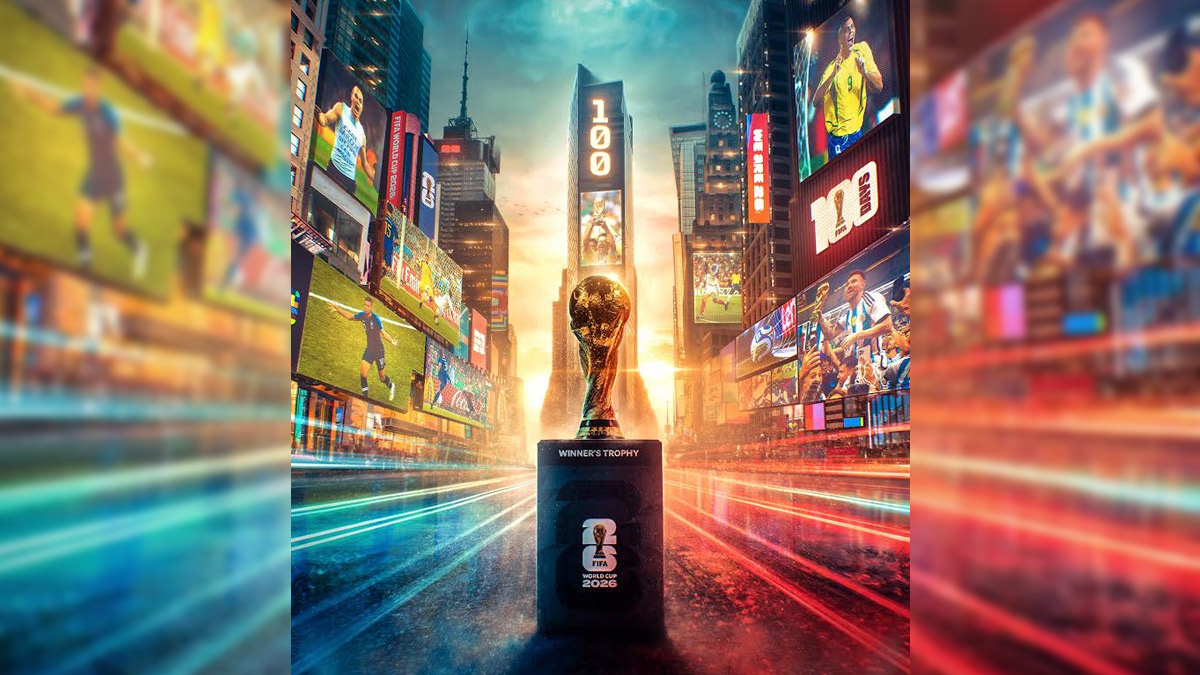
MUMBAI: The world’s biggest sporting event cannot find a single taker in the world’s most sports-mad nation. Fifa’s television rights for the 2026 World Cup remain unsold in India, and the clock is ticking loudly.
To shift the property, world football’s governing body has already swallowed hard and cut its asking price from $100m to $35m, bundling in the 2030 edition as a sweetener. It has not worked. Indian broadcasters have looked at the offer, done the sums and quietly walked away.
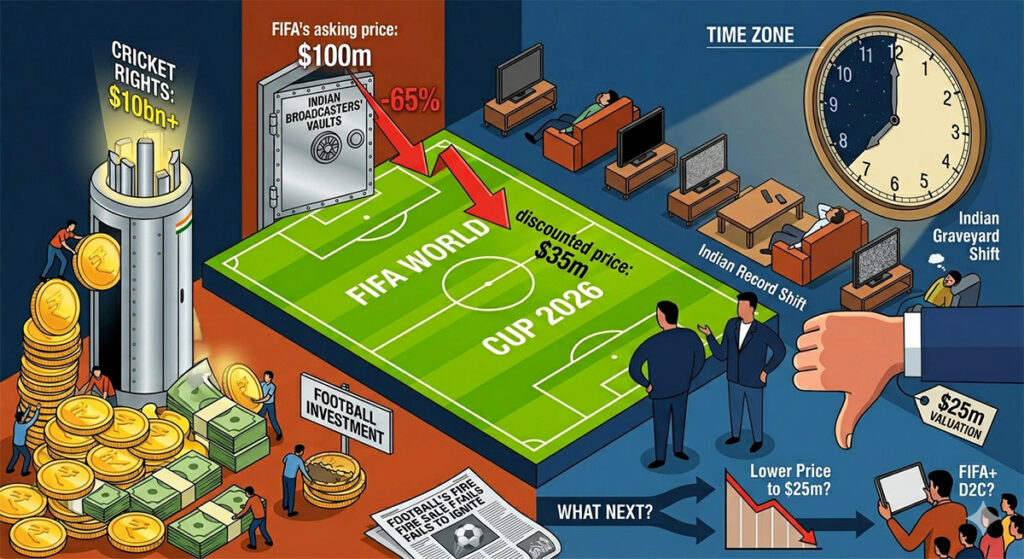
The reasons are brutally simple. The 2026 tournament, co-hosted by the United States, Canada and Mexico, kicks off in a time zone that turns India’s primetime into a graveyard shift. Most matches will air between midnight and 7am IST, a scheduling catastrophe for advertisers chasing mass reach. The 2022 Qatar edition was a gift by comparison, with matches dropping neatly into Indian evenings. North America offers no such luxury.
The market itself has also changed beyond recognition. The merger of Star India and Viacom18 into JioStar has gutted the competitive tension that once sent sports rights prices soaring. Where rival bidders once slugged it out, there is now a single dominant buyer, and it is in no hurry. JioStar has valued the rights at roughly $25m, a full $10m below Fifa’s already-discounted floor price. That gap has so far proved unbridgeable.
Broadcasters are also nursing a ferocious cricket hangover. Between 2022 and 2023, Indian media houses committed well over $10bn to cricket rights alone, covering IPL, ICC events and BCCI domestic fixtures combined. After a binge of that scale, appetite for a football package that delivers a fraction of the ratings, in the dead of night, is close to zero.
The economics of football broadcasting make the maths even harder. Cricket, with its natural breaks every few overs, is an advertiser’s paradise. Football offers a 15-minute halftime and precious little else. Recovering a nine-figure rights fee from a single half-hour ad window is a stretch at the best of times. These are not the best of times: the Indian government’s tightening grip on real-money gaming and gambling advertising has vaporised a category that once underwrote the economics of big sporting events.
Nor is the World Cup an anomaly. Indian Super League valuations have cratered. English Premier League rights have softened across successive cycles. The cooling of football as a broadcast commodity in India is structural, not cyclical.
With the tournament opening on 11th June, Fifa is running out of road. It may yet blink and meet JioStar at $25m. Or it may go direct, streaming the entire tournament on its own platform, Fifa+, or cutting a digital deal with YouTube, and hoping that a generation of Indian football fans finds its way there without a broadcaster to guide them.
Either way, the beautiful game’s Indian chapter is looking decidedly ugly.






